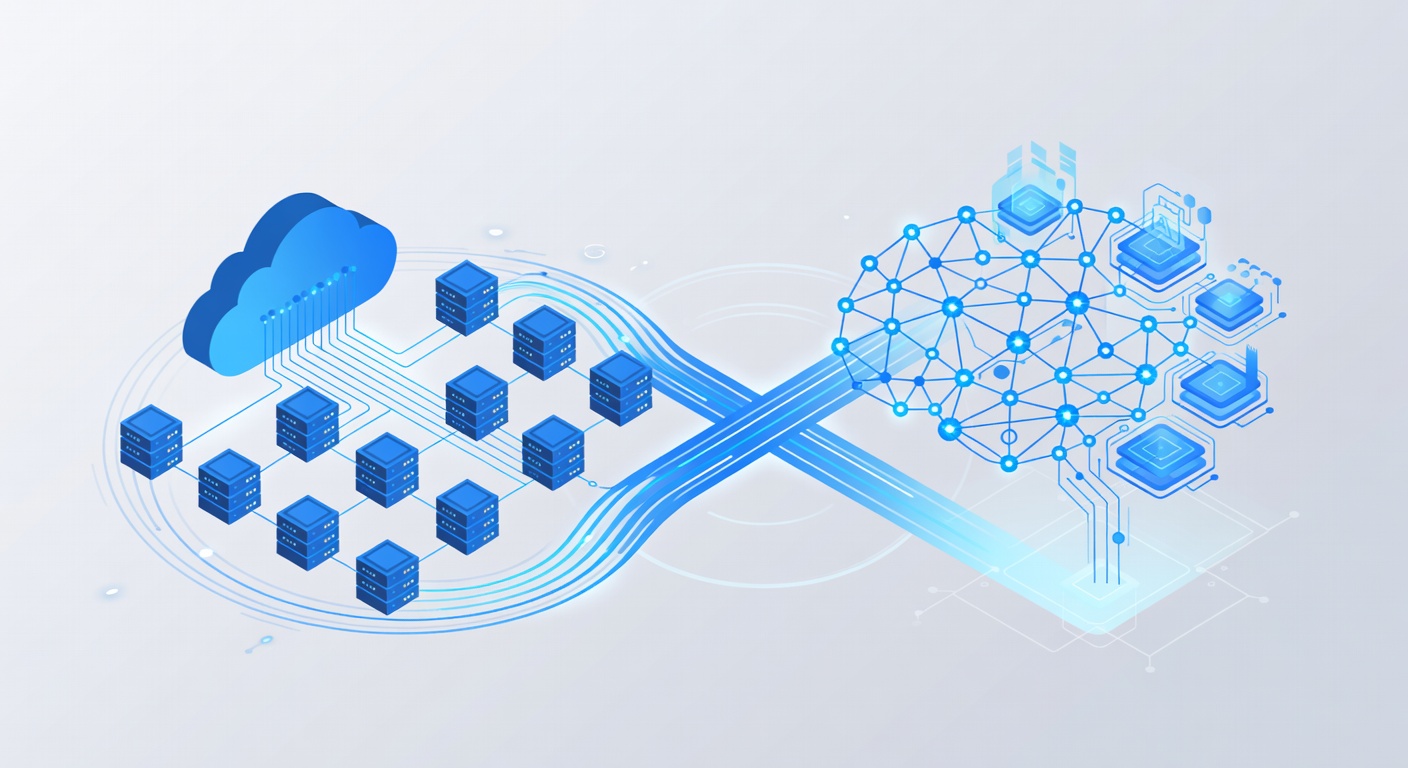
Costruire App Pronte per il Prodotto Senza il Boilerplate: Il Vantaggio dei Framework Full-Stack Dichiarativi
Applicazioni in produzione senza boilerplate: perché vale la pena puntare sui framework full-stack dichiarativi
Sviluppare applicazioni web moderne è diventato troppo complicato. REST API, librerie per la gestione dello stato, configurazioni ORM e tool di build: tutto questo solo per creare un semplice CRUD. Ma esiste davvero un modo più semplice?
Il problema dello sviluppo web tradizionale
Quando inizi a costruire un'applicazione web collegata a un database, devi prendere decine di decisioni prima ancora di scrivere la prima riga di logica di business.
- Quale ORM usare? E quale query builder? E come farli comunicare con il framework?
- Come strutturare le API? REST, GraphQL o endpoint personalizzati?
- Quale strategia adottare per la gestione dello stato sul frontend?
- Come gestire autenticazione e autorizzazione su più livelli?
- Serve un build tool? TypeScript? Un transpiler?
Ogni scelta aggiunge carico mentale e rischi. Soprattutto perché queste decisioni sono già state prese dalla community: continuiamo a reimplementare gli stessi pattern.
L'approccio dichiarativo full-stack
Immagina un framework che ti permette di definire l'intera applicazione in modo coerente. Data model, relazioni, endpoint API, componenti UI e controlli di accesso: tutto in un'unica visione. Niente disallineamenti tra frontend e backend. Niente cambi di contesto tra linguaggi diversi.
Il risultato? Ridurre lo sviluppo a ciò che conta davvero.
Cos'è davvero l'"essential complexity"
L'essenziale è la difficoltà intrinseca del problema che stai cercando di risolvere. La tua logica di business, le relazioni tra i dati, i requisiti specifici: questo è essenziale. Tutto il resto è complessità accidentale.
Un buon framework elimina la complessità accidentale con questi Mitteln:
- Usando un solo linguaggio orientato agli oggetti per la maggior parte della logica
- Generando automaticamente le API dal data model
- Offerendo un layer di view funzionale e reattivo che si sincronizza con i dati
- Controllando gli accessi a livello di database (dove è più sicuro)
- Permettendo deploy istantanei senza lunghe fasi di build
L'architettura che lo rende possibile
Backend: Python con un ORM robusto
Il backend si basa su un ORM sofisticato (come SQLAlchemy) che non nasconde SQL, ma lo arricchisce con abstraktionen Pythonic. Ti offre:
- La piena potenza di SQL quando ti serve
- Query basate su expressions che sono componibili e ispezionabili
- Patterns di inheritance che si mappano cleanly su il tuo domain model
- Hook custom per validation, computed properties e logica di business complessa
- Il database relazionale come single source of truth
Frontend: componenti reattivi e dichiarativi
Il frontend non è un problema separato. È generiert dal data model, collegato direttamente al backend e si updatet reattivo quando i dati si ändern. Non c'è Redux boilerplate. Non c'è prop-drilling. Semplicemente componenti dichiarativi che beschreiben ciò was angezeigt werden soll.
La magia: access control basato su graph
Questo è il punto d'interesse. Invece di spargere permission checks nel code, un sistema graph-based access control delega tutte le calculation di privilege al database stesso. Il backend può:
- Definire permissions in Python (territorio familiare)
- Avere queste permissions enforced automaticamente a livello di database (sicuro)
- Applicarle consistentemente across tutte le APIs (affidabile)
- Scale orizzontalmente senza coordination issues (pratico)
L'editor point-and-click self-hosting
Il vero highlight è un editor point-and-click che genera application code con questo framework.
Du könntest denken: "Low-code Plattformen generano sempre garbage code che man non maintainen kann." Ma questo è verschieden.
Der editor genera non AST soup, sondern clean, well-structured code nel framework's idiom. Du kannst:
- L'editor per rapid prototyping verwenden
- In hand-coded components droppen, wenn du fine-grained control brauchst
- Die kanonische application definition als readable text files maintainen
- Version control normal verwenden (inklusive branching)
Der editor ist "self-hosting", weil er mit seinem eigenen framework gebaut ist, ma la kanonische definition lebt in deinem codebase, nicht in einer database. Es ist eine forcing function per simplicity e maintainability.
The editor doesn't generate AST soup. It generates clean, well-structured code in your framework's idiom. You can:
- Use the editor to rapidly prototype
- Drop into hand-coded components when you need fine-grained control
- Maintain the canonical application definition as readable text files
- Use version control normally (including branching)
The editor is "self-hosting" in that it's built with its own framework, but the canonical definition lives in your codebase, not locked in a database. It's a forcing function toward simplicity and maintainability.
Performance: nessun compromesso
La gente glaubt nicht, che es keine performance penalty gibt for using a declarative framework and editor.
A well-designed architecture che eliminates abstraction layers anche eliminates the bloat che da defensive programming kommt. Wenn dein ORM SQL fluent spricht, wenn dein frontend framework reaktiv nativ versteht, wenn dein access control in der database lebt, wo es gehört—bist du nicht slower. Du bist oft faster.
The framework can be implemented in JavaScript (with a minimal transpiled functional language for specific tasks) on the frontend and Python on the backend. But the point isn't the languages—it's the coherent architecture.
Cosa significa questo per il tuo processo di sviluppo
Wenn du ein framework like this adoptierst:
Settimana 1: Definisci il tuo data model e le relazioni. Gli API endpoints e il database schema sono generati.
Settimana 2: Design dein UI. Das framework hält es synchronized con deinem backend automaticamente.
Settimana 3: Implementa business logic da dove gehört—an einem Ort, in einer Sprache, with clear intent.
Settimana 4: Deploy. Kein build process. Keine environment variables zu juggle. Keine Gebete, dass dein staging environment production entspricht.
Was früher months of scaffolding brauchte, braucht jetzt days.
La filosofia UNIX a tutti i livelli
Ein wirklich excellent framework folgt der UNIX philosophy: do one thing well, compose with other tools, keep interfaces simple and text-based.
This means:
- Your application definition is serializable text, not binary blobs
- You can grep your codebase and understand it
- You can build tooling around your application (migrations, analytics, testing)
- New developers can read and understand the code without learning framework magic
- You're not locked into a vendor's ecosystem
Real Talk: Warum das jetzt wichtig ist
Web development hat um 2016 herum ein plateau erreicht. Die core patterns wurden gefi
gured out:
- Single Page Applications with reactive views ✓
- ORMs that map objects to relations ✓
- RESTful APIs ✓
- SQL databases scaled horizontally ✓
- Plugin architectures for extensibility ✓
Seitdem haben wir mostly deck chairs rearranged. Neue frameworks entstehen wöchentlich, ma sie lösen solved problems with slightly different aesthetics.
The real innovation ist nicht another JavaScript framework. Es ist die Erkenntnis, dass database-backed CRUD applications eine fundamental structure haben, und diese structure can be declared rather than implemented.
Die praktischen Vorteile
For startups:
- Ship features faster
- Reduce your team size (weniger specialist roles)
- Iterate quickly based on user feedback
- Maintain code that's actually maintainable
For enterprises:
- Rapid prototyping without technical debt
- Consistent architecture across teams
- Clear audit trails (permissions in der database)
- Easy to scale (horizontal scaling with relational databases)
For individual developers:
- Spend time on your product, not your stack
- Learn one coherent framework, not ten fragmented libraries
- Feel the joy of building software that's both fast and elegant
Was du aufbauen solltest
If du frameworks evaluierst oder own stack building considerst, look for:
- Declarative data modeling - Your schema is your contract
- Automatic API generation - Don't write CRUD endpoints manually
- Reactive frontend bindings - Your UI stays in sync automatically
- Database-level access control - Permissions are enforced at the source
- Minimal build time - Deploy instantly
- Self-contained definitions - Your application fits in a directory you can version control
La Zukunft: Wo wir herkommen
Die nächste wave di web development wird durch frameworks definiert sein, die deine intelligence respektieren und deine time achten. Sie werden:
- Eliminate boilerplate without sacrificing clarity
- Scale from solo developer to enterprise team
- Support multiple target platforms (web, mobile, desktop) from one definition
- Embrace database-backed applications as a first-class pattern
Wir sind nicht at der "point-and-click programming" dystopia, wo non-technical people unmaintainable code generieren. Wir are at der "intelligent abstraction" utopia, wo developers at a higher level arbeiten, but die generated code still their code is—readable, debuggable, and under their control.
Vorwärts gehen
Die beste Zeit, bessere development practices zu adoptieren, war vor 5 years. La second-best time ist now.
Start evaluating frameworks not by their flashiness or community size, but by whether they eliminate accidental complexity. Ask:
- Can I understand the entire application architecture in an afternoon?
- Is the generated code readable?
- Can I deploy without a build step?
- Does my database schema reflect my domain model directly?
- Can I control access at the most secure layer (the database)?
If a framework can answer "yes" to these questions, you've found something worth exploring.
The future of web development isn't more tools. It's better frameworks. And that future is already here—you just might not have noticed it yet.