When Your Host Goes Down: Why Infrastructure Resilience Matters More Than Ever
When Your Host Goes Down: Why Infrastructure Resilience Matters More Than Ever
We've all been there. You're in the middle of a product launch, your metrics are climbing, and suddenly—silence. Your website responds with a 503. Your API returns nothing. Your users are refreshing frantically, and your Slack channel is erupting. Your hosting provider's status page finally updates: "We're investigating."
These moments are brutal, but they're also incredibly revealing.
The Hidden Cost of Downtime
Most people calculate downtime in terms of immediate lost revenue. But that's only the surface-level damage. Consider what actually happens during a hosting outage:
- Trust erosion: Every second your service is unreachable, users lose confidence. A 2-hour outage can take weeks to recover from in terms of reputation.
- Cascading failures: If your infrastructure isn't properly isolated, one failure can trigger problems across multiple services.
- Data integrity risks: Some outages involve not just unavailability, but data inconsistency or loss.
- Team burnout: Your engineering team gets paged at 3 AM, firefighting instead of building.
The financial impact extends far beyond lost transactions. SaaS companies see churn increases. E-commerce platforms lose more than just conversion—they lose customer lifetime value.
Why Hosting Infrastructure Fails
Most major outages aren't the result of a single catastrophic event. They're the result of cascading failures:
Hardware failures are inevitable. Drives fail, network equipment degrades, power supplies wear out. What separates reliable hosts from unreliable ones is redundancy. When NameOcean powers services with Vibe Hosting, we're not just relying on one data center or one set of equipment. We're designing around failure as a certainty.
Software bugs and updates cause more outages than hardware these days. A routine patch that wasn't properly tested in production can bring everything down. Database migrations, kernel updates, or misconfigured load balancers—these are the real villains in modern infrastructure stories.
Resource exhaustion sneaks up on you. A sudden traffic spike, a runaway process, or inefficient queries can max out CPU, memory, or database connections. Without proper autoscaling and monitoring, your infrastructure doesn't just slow down—it collapses entirely.
Network issues are often overlooked. BGP hijacks, DDoS attacks, or misconfigured routing can partition your infrastructure from the rest of the internet. You could have perfect internal connectivity but zero external access.
The NameOcean Difference: Resilience by Design
Here's what we believe: your infrastructure should survive failure as the default state, not as an afterthought.
With Vibe Hosting, our AI-powered platform handles complexity so you don't have to. Our infrastructure features:
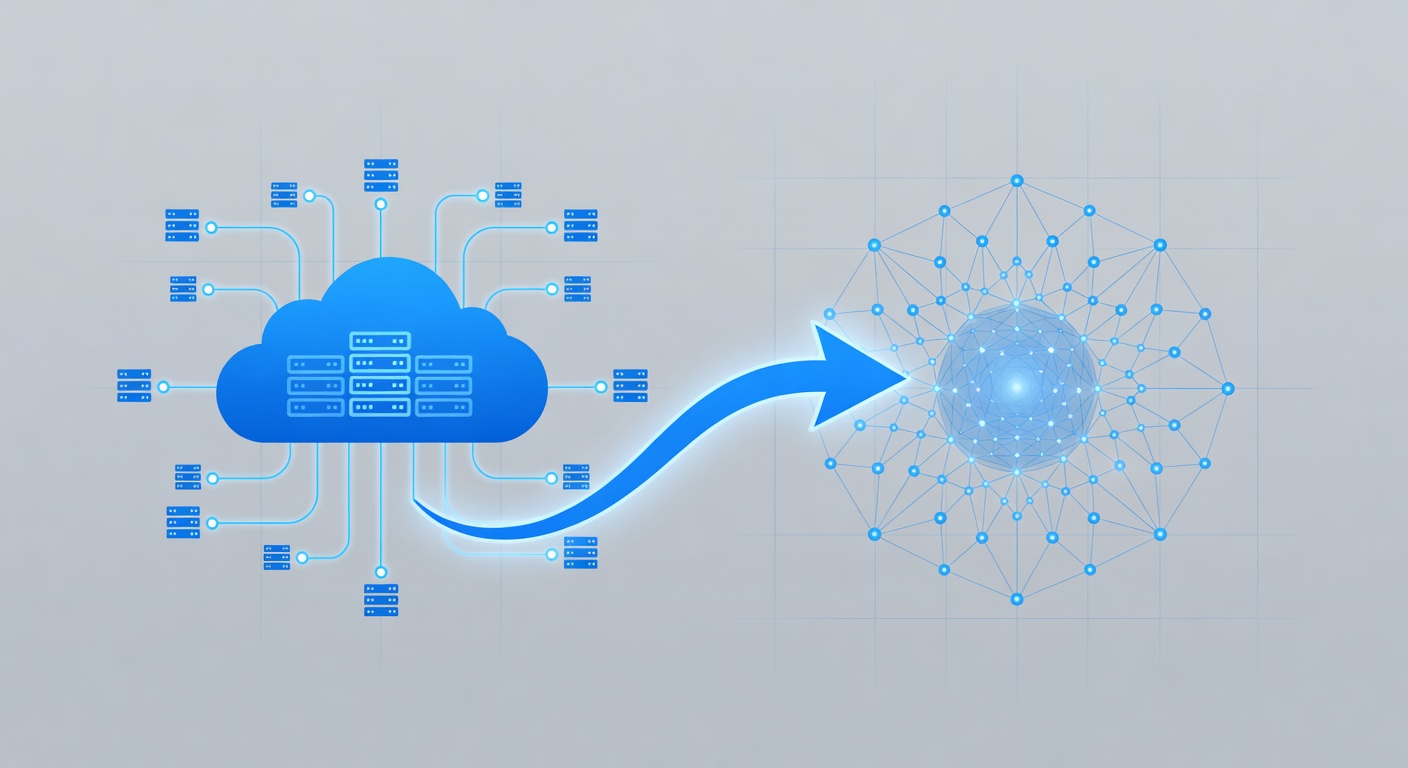
- Multi-region redundancy: Your applications aren't living in a single data center. We distribute workloads across geographically diverse regions with automatic failover.
- Intelligent health monitoring: Our AI systems continuously analyze your infrastructure's health, predicting failures before they happen and shifting load preemptively.
- Automated recovery: When something does fail—and it will—our systems automatically remediate without human intervention.
- Database replication: Your data isn't sitting on a single disk. We maintain synchronized replicas across multiple availability zones.
What You Should Be Doing Right Now
If you're currently hosted on unreliable infrastructure, here's your action plan:
Audit your current setup: Where do single points of failure exist? Is your database on a single server? Is your DNS dependent on one provider? Are you backing up your data?
Implement health checks: Set up comprehensive monitoring that goes beyond "is the server responding?" Monitor application-level metrics, database performance, and external dependencies.
Test your failover procedures: Don't find out during an incident that your backup system doesn't work. Run fire drills. Break things intentionally in staging to see how your systems respond.
Choose infrastructure with redundancy built-in: Not all hosting is created equal. When evaluating providers, ask about their SLA guarantees, but more importantly, ask how they achieve them. Do they have multiple data centers? Automated failover? 24/7 monitoring?
Use a reliable DNS provider: Your domain registrar should offer robust DNS infrastructure with global distribution. At NameOcean, we ensure that even if your web server goes down, at least your DNS keeps pointing users in the right direction.
The Philosophy: Expect Failure, Design for Resilience
The most successful teams we work with don't ask "if" their infrastructure will fail—they ask "when" and "how will we respond?" This mindset shift changes everything.
You can't prevent all failures. But you can:
- Design systems that degrade gracefully instead of catastrophically
- Build monitoring that alerts you before users notice
- Create runbooks that your team can follow when chaos strikes
- Choose infrastructure partners who've done this engineering work already
Your uptime isn't just a technical metric—it's a promise to your users that you're reliable. It's a competitive advantage. And in 2024, it's table stakes.
Moving Forward
When you're evaluating your hosting options, don't just compare price and specs. Compare resilience. Compare how they handle failure. Compare whether they're reactive or proactive.
NameOcean's Vibe Hosting brings AI-powered infrastructure that anticipates problems and solves them before they impact your users. But regardless of who you choose, make resilience a first-class citizen in your infrastructure decisions.
Your 3 AM future self will thank you.