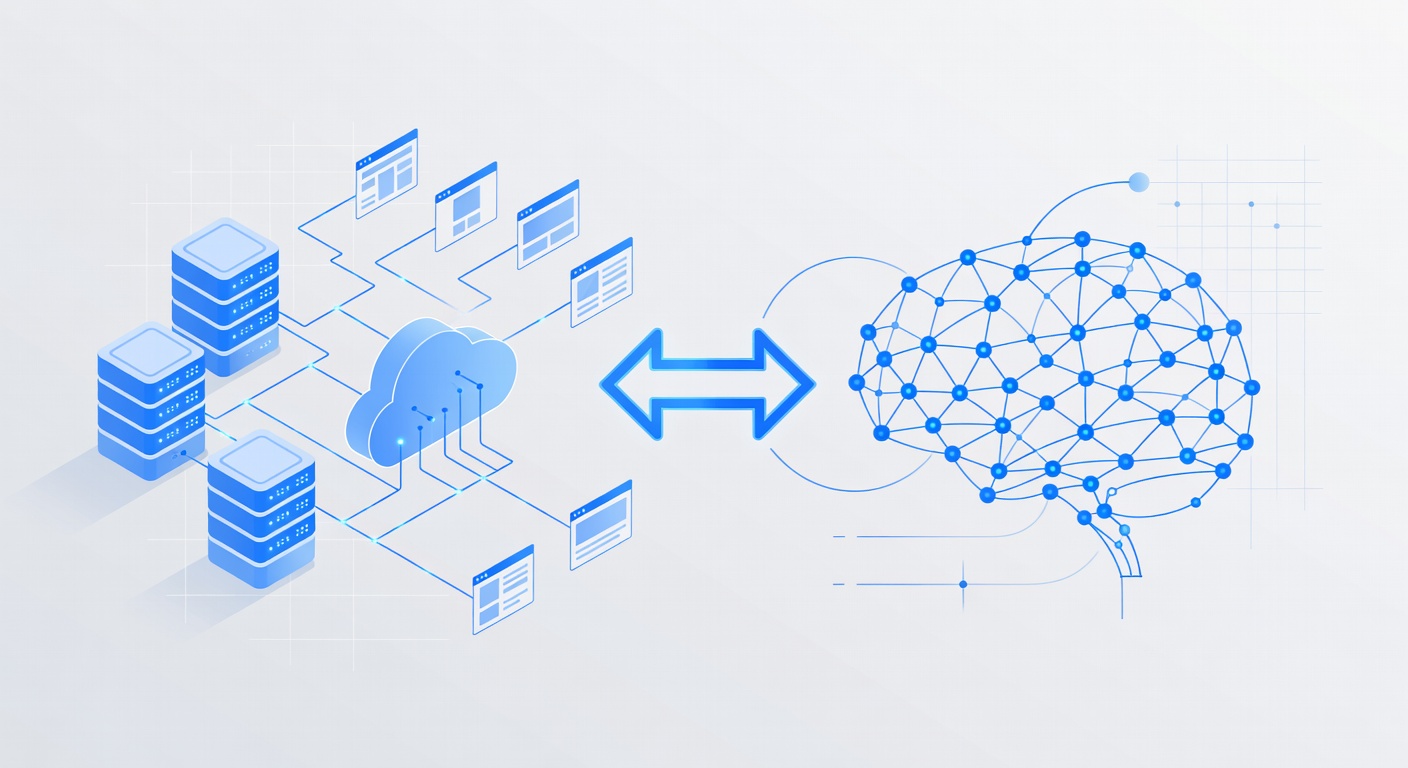
Deploy AI Agents Anywhere: How Remote Agents are Changing the Game for Developers
The Rise of Remote Intelligence
We've hit an inflection point in AI-assisted development. For years, developers have been constrained by the choice between running models locally (limited by hardware) or relying on clunky cloud APIs (limited by flexibility). The gap between these two worlds was real, and it slowed innovation.
That's changing.
What's New: Remote Agents in Vibe
The latest release introduces remote agents that can run directly in the cloud, and the execution model is beautifully simple. You can spin up these agents from three entry points:
- From your CLI — For developers who live in the terminal
- From Le Chat interface — For those who prefer a conversational approach
- Programmatically — For teams building custom workflows
This flexibility matters. Not every developer thinks the same way, and forcing a single interface is a recipe for friction.
Mistral Medium 3.5: The Engine Behind the Scenes
The backbone here is Mistral's Medium 3.5 model—a sweet spot between capability and cost-efficiency. It's purpose-built for tasks that require reasoning without the overhead (both computational and financial) of flagship models. For most real-world applications, this is actually the better choice than reaching for the biggest model available.
Think of it like choosing between a sports car and a pickup truck. Sometimes you don't need the Ferrari; you need something reliable that gets the job done efficiently.
Work Mode: Multi-Step Tasks, Made Simple
But here's where it gets really interesting: Le Chat now includes Work mode, specifically designed for complex, multi-step tasks.
In traditional AI workflows, you'd break down complex problems manually:
- First prompt: "Analyze this..."
- Second prompt: "Now take that and..."
- Third prompt: "Finally, combine these..."
Work mode eliminates that friction. The agent understands the scope of your work, orchestrates multiple steps intelligently, and handles the handoffs between tasks. It's the difference between coordinating a team of people via email versus having a skilled project manager who knows how to delegate.
Why This Matters for Your Stack
For Startups: You can prototype AI-driven features without owning expensive GPU infrastructure. Deploy on day one, optimize on day 100.
For Enterprise Teams: Remote agents integrate cleanly into existing CI/CD pipelines. Whether you're using GitHub Actions, GitLab CI, or custom orchestration, these agents can be triggered and monitored like any other cloud service.
For Solo Developers: The CLI access means you can automate complex tasks without leaving your development environment. Fire up an agent, let it work, check results in your code editor.
The Technical Reality
Let's be honest about what's happening under the hood:
- Cloud-native execution means your agents scale automatically—no "server maxed out" errors at 2 AM
- Model inference is optimized for Mistral's infrastructure, so latency is predictable
- Cost structure is transparent—you're paying for tokens used, not idle time
There are still considerations. Network latency, state management across distributed agents, and error handling in async workflows require thoughtful architecture. But the platform abstracts away the worst of it.
Getting Started
The entry barrier is genuinely low:
If you're a CLI person, you can launch your first remote agent with a few lines of code. If you prefer exploring through conversation, Le Chat's new interface walks you through the setup process intuitively.
The documentation is solid, and the community is actively sharing patterns for common use cases.
Looking Ahead
What's exciting isn't just the technical accomplishment—it's what it enables. Teams can now:
- Build AI features that scale without rearchitecting
- Experiment with agent-based workflows cheaply
- Deploy to production with confidence using the same tools used in development
The next frontier is probably refinement: tighter integration with data pipelines, better observability dashboards, and more sophisticated agent orchestration patterns.
Final Thoughts
Remote agents represent a maturation of the AI development ecosystem. We're moving past the "wow, AI works" phase into the "how do we build reliable systems with AI" phase. Tools like these aren't flashy, but they're the unglamorous infrastructure that actually ships products.
If you've been sitting on AI feature ideas, waiting for the tooling to mature—this might be the moment.