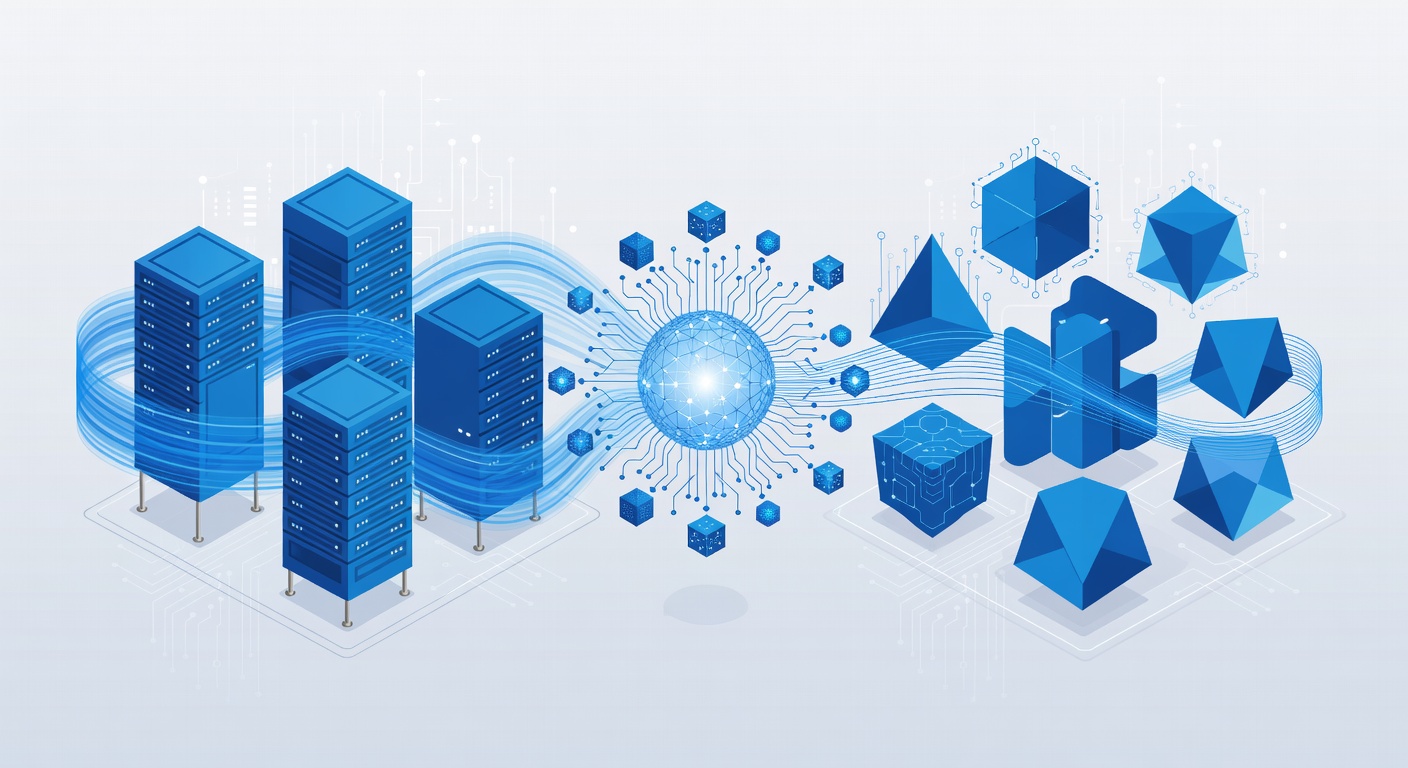
Building Smarter AI Agents: The Dev-Loop Coordinator That Changes the Game
The AI Agent Coordination Challenge
We're living in an exciting time. AI models can write code, debug issues, and suggest optimizations faster than ever before. But here's the catch: orchestrating multiple AI agents across a development pipeline? That's a different beast entirely.
Most developers treating AI as a black box—throw a prompt at it, get code back. But production systems need something more sophisticated. They need coordination. They need agents that work together, understand context, and respect the constraints of your development workflow.
What Is a Dev-Loop Coordinator?
Think of a dev-loop coordinator as the traffic controller for your AI workforce. Rather than having standalone agents operating independently, a coordinator ensures that:
- Sequential operations make sense — Agent A completes its task before Agent B begins
- Context flows properly — Each subsequent agent understands what previous agents decided
- Feedback loops exist — When something fails, the system can retry, escalate, or pivot intelligently
- Humans stay in control — Critical decisions still require human review and approval
This is particularly powerful in development workflows where quality and consistency matter. An AI agent might generate test cases, but another agent should validate them. One might refactor code, while another ensures no regressions occurred.
Why This Matters for Your Stack
At NameOcean, we're bullish on AI-assisted development—it's core to our Vibe Hosting philosophy. But we're equally committed to responsible AI implementation. A dev-loop coordinator brings several advantages:
Better code quality: When AI agents work in sequence with built-in checkpoints, you catch issues earlier. No more "the AI wrote it, so it must be right" thinking.
Reduced hallucinations: AI models sometimes confabulate answers. A coordinator can validate outputs against your codebase, dependencies, and test suites before moving forward.
Auditability: You can trace exactly which agent made which decision and why. This is invaluable for compliance-heavy environments.
Scalability: Whether you're using 2 AI agents or 20, a coordinated approach prevents chaos and keeps resource usage predictable.
Real-World Scenarios
Imagine a typical workflow:
- Agent 1 (Analyzer) examines your codebase and identifies technical debt
- Agent 2 (Designer) proposes refactoring strategies
- Agent 3 (Implementer) writes the refactored code
- Agent 4 (Validator) runs tests and compares performance metrics
- Human Review — You approve changes before they hit production
Without coordination, each agent works in a vacuum. With it? You get a cohesive, intelligent development pipeline.
The Open-Source Advantage
The fact that tooling like this is emerging as open-source projects is fantastic. It means the community can:
- Build on proven patterns
- Contribute specialized agents for their domains
- Avoid reinventing coordination logic
- Maintain transparency about how AI decisions are made
If you're experimenting with AI-assisted development, exploring these community projects gives you a head start. You're not building the coordination layer from scratch; you're building on top of battle-tested abstractions.
Getting Started
If you're interested in exploring dev-loop coordinators for your projects, here are some next steps:
- Audit your current workflow — Where are the bottlenecks? Where would intelligent agents help most?
- Identify your agents — What specific tasks could be automated?
- Design your loop — What should the sequence look like? What are your validation checkpoints?
- Start small — Implement a 2-3 agent loop for a non-critical task first
- Iterate — Add more agents and sophistication as you gain confidence
The Future of Development
We're moving toward a world where developers spend less time on mechanical tasks and more time on architecture, design, and problem-solving. But that shift only works if we can trust the AI agents doing that mechanical work.
Dev-loop coordinators are a crucial piece of that puzzle. They bridge the gap between raw AI capability and production-grade reliability.
At NameOcean, we're investing heavily in these concepts through Vibe Hosting and our AI development tools. Because the future isn't just about faster code—it's about smarter, more reliable systems built collaboratively between humans and machines.
What AI-assisted development challenges are you facing? Let's talk about how coordination tools could help your team move faster without sacrificing quality.