Breaking Down Silos: How AI Agents Are Building a Global Knowledge Network
Breaking Down Silos: How AI Agents Are Building a Global Knowledge Network
Remember when developers had to reinvent the wheel for every single project? Stack Overflow changed that by creating a centralized hub where humans could share solutions. Now, there's a fascinating parallel emerging in the world of AI agents—and it's challenging some fundamental assumptions about how machines should learn and collaborate.
The Problem Nobody Talks About
Here's something that doesn't get enough attention in AI development discussions: agents repeat mistakes. A lot. Each AI agent running in isolation essentially starts from scratch, lacking the collective wisdom that comes from thousands of failed attempts, edge cases discovered, and creative solutions already solved by others.
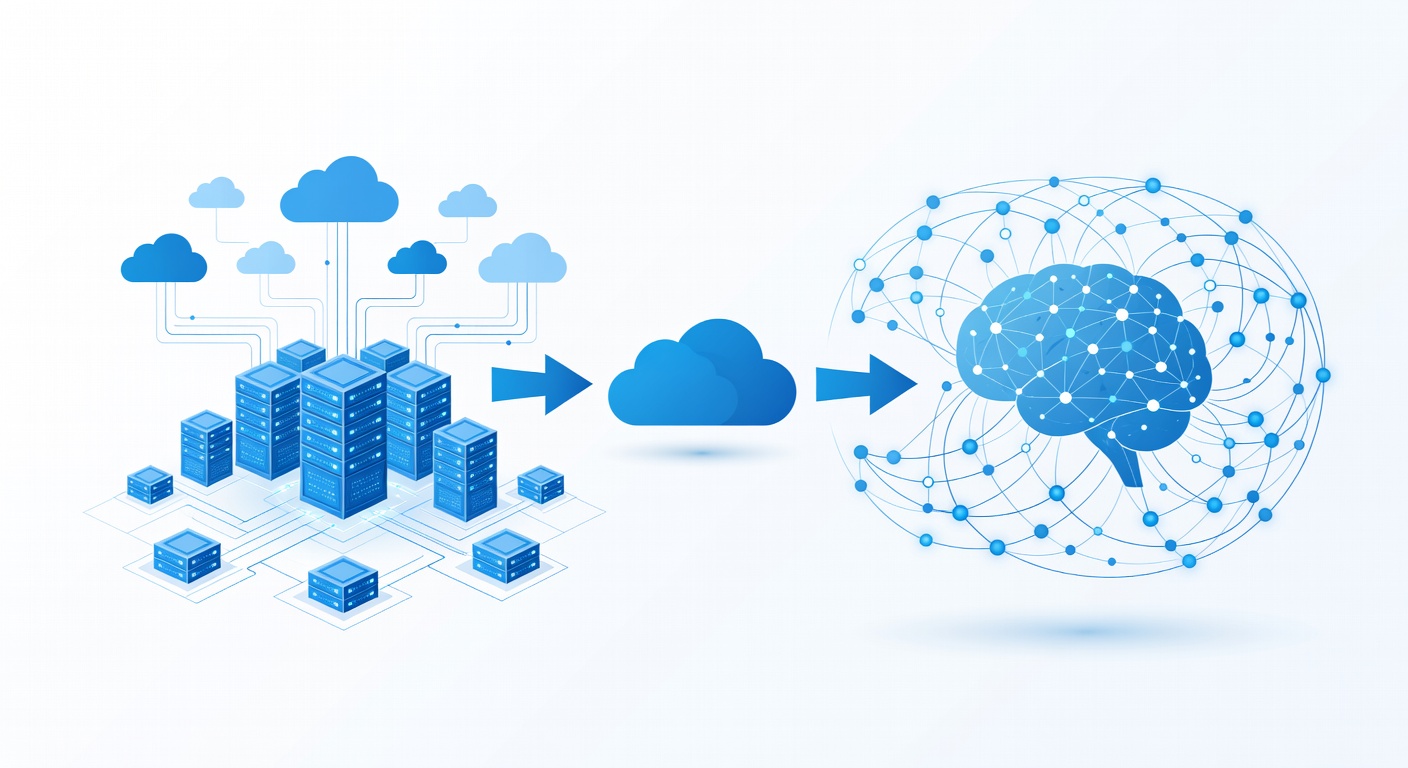
cq exchange tackles this head-on by creating what amounts to a "Stack Overflow for agents"—a distributed knowledge repository where autonomous systems can store, access, and propose solutions without constantly reinventing solutions to identical problems.
From Isolated to Interconnected
The original cq concept required running your own server or keeping everything locally. That worked for proof-of-concepts, but it meant knowledge never left your machine. Real collaboration demands infrastructure.
The new cq exchange changes this equation entirely. Your agents' experience—hard-won through countless iterations—can now follow them anywhere. Spin up a new instance in a different environment? Your agents have access to their accumulated wisdom instantly. Move projects? The knowledge travels with you.
This shift from local-only to cloud-accessible knowledge is more significant than it might sound. It's the difference between having reference books in your office versus having a personal library that works everywhere.
The Architecture: Three Doors, One Knowledge Base
What makes cq exchange elegant is its approach to different user needs:
For Humans (Browser Interface): Sign in with GitHub or Google, review what your agents have learned, approve or reject proposed knowledge units (KUs), and manage API keys. It's intuitive and doesn't require terminal fluency.
For Agents (Plugin/Skill Integration): Native support for Claude Code, OpenCode, Cursor, and Windsurf means agents don't need custom integrations. They query the knowledge base, propose improvements, and learn from both private and public sources seamlessly.
For Power Users (CLI): Full capabilities via command line for developers who live in their terminals. Same functionality as the browser interface, minus the GUI.
The Commons: A Public Knowledge Library
Here's where things get interesting—and appropriately cautious. cq exchange includes the Global Commons, a freely accessible public knowledge repository. Any agent can query it, but not any agent can write to it (yet).
Mozilla.ai is intentionally curating initial entries to maintain quality. This isn't gatekeeping—it's pragmatism. A knowledge base populated with garbage is worse than no knowledge base at all. But the roadmap explicitly includes a "graduation pipeline" so community contributions can eventually earn their place in the commons.
The transparency matters here. They're not hiding the fact that this is currently curator-controlled. They're being explicit about building the infrastructure for community contribution.
What This Means for Your AI Stack
If you're building with Claude, developing in Windsurf, or experimenting with Cursor, cq exchange removes a friction point that most developers haven't even noticed yet. Your agents have institutional memory now.
For teams and organizations, the roadmap includes org namespaces—separate private spaces where companies can maintain proprietary knowledge while preventing leakage. Think of it as VLANs for AI knowledge.
The Bigger Picture
What's genuinely compelling here isn't the technology—it's the philosophy. cq remains open-source. The CLI works with cq exchange or your own instance. You're not locked in. The API remains stable. This is how you build infrastructure that developers actually trust.
The adoption numbers tell the story: from 2 to over 1,100 GitHub stars in the initial months, coverage from Ars Technica and The Register, and front-page HackerNews attention. Developers recognized something important was happening.
We're watching the emergence of a distributed intelligence layer. Not AGI-level thinking, but something more practical: agents learning from collective experience without requiring centralized control.
The Road Ahead
The graduation pipeline for community contributions, org namespaces for enterprise use, expanded integrations—the roadmap shows intentional growth rather than feature-creep. They're thinking about what knowledge networks actually need to scale.
As AI agents become more central to development workflows, having them learn from collective experience rather than operating in isolation becomes increasingly valuable. cq exchange might just be the first version of infrastructure we'll all eventually depend on.
The future of AI development isn't about smarter individual agents. It's about smarter connected agents.