Beyond Grep and Prayer: How AI-Powered Code Graphs Are Transforming Development Workflows
Beyond Grep and Prayer: How AI-Powered Code Graphs Are Transforming Development Workflows
We've all been there. You're deep in a refactoring job, and you need to find every place where a particular function is called. You fire up grep, cross your fingers, and hope the pattern matching catches everything. Maybe it does. Maybe it doesn't. Welcome to the era of "grep and pray"—a phrase that captures the frustration of searching codebases the old-fashioned way.
But what if your development tools actually understood your code's structure instead of just pattern-matching strings?
The Intelligence Gap in Modern Development
Traditional code search and navigation tools are surprisingly dumb. They work at the surface level—finding text matches, highlighting occurrences, maybe offering basic syntax coloring. For anything deeper, you're on your own.
This creates a productivity drain that compounds over time:
- Refactoring becomes risky. You miss edge cases because tooling can't distinguish between a function name used as a variable versus an actual function call.
- Onboarding is painful. New team members spend weeks learning where things are and how they connect.
- Bug hunting is inefficient. You trace through call stacks manually, following breadcrumbs instead of following a map.
- Multi-file changes require mental context-switching. Your brain becomes the dependency resolver.
Enter Graph-Powered Code Intelligence
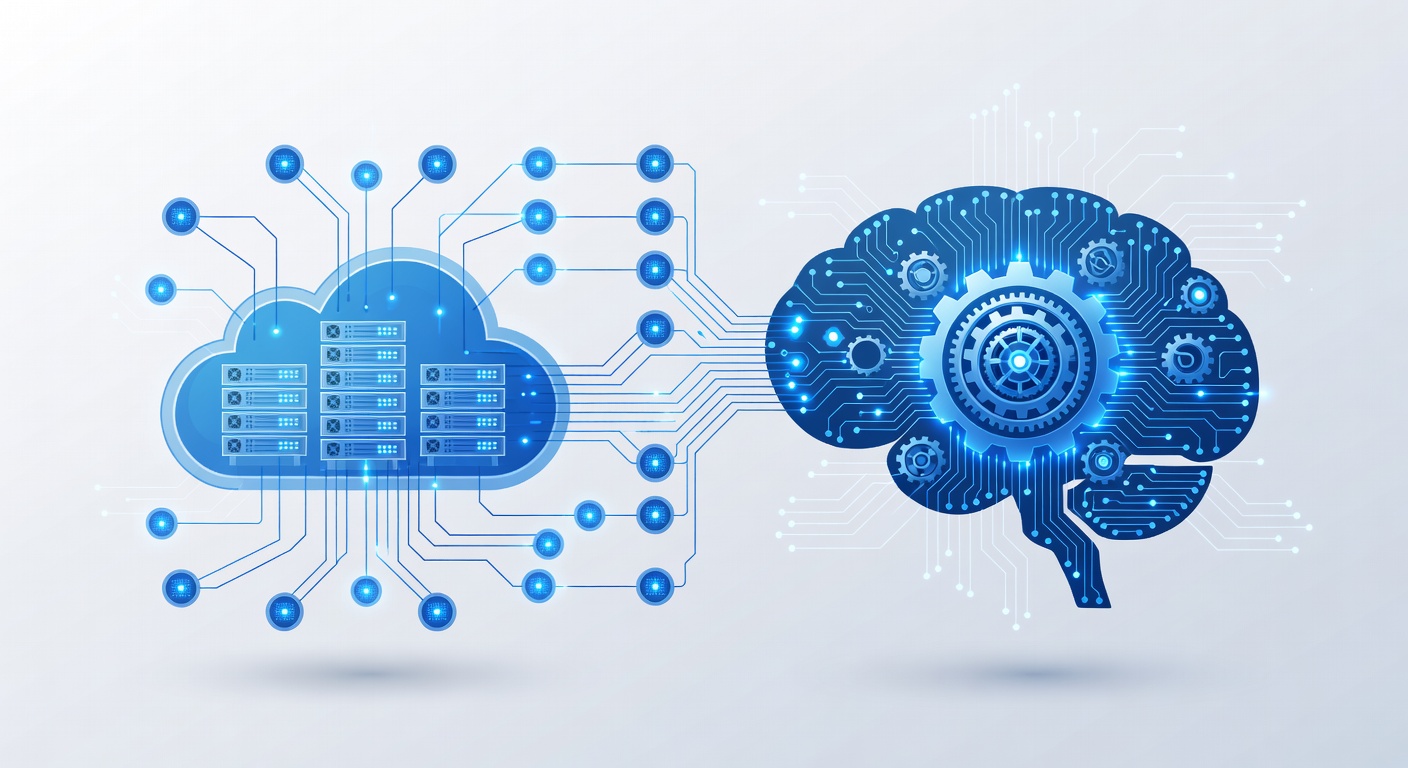
The emerging solution uses graph databases and AI to create a semantic understanding of your entire codebase. Think of it as building a knowledge graph where nodes represent functions, classes, variables, and files—and edges represent relationships like "calls," "inherits from," "imports," or "is imported by."
When your development environment understands these relationships, something magical happens:
Precise refactoring. Rename a function, and the system knows exactly which 47 places need updating—not just string matches, but actual references based on scope and type.
Context-aware code completion. The AI doesn't just suggest common keywords; it suggests the functions and variables that actually make sense given your codebase's architecture.
Intelligent debugging. When an error occurs, you get a trace that shows not just where it happened, but the graph path that led there—the actual dependency chain that matters.
Multi-agent collaboration. Multiple AI agents can work simultaneously on different parts of your codebase without stepping on each other's toes, because they share the same semantic understanding.
From Static Analysis to Living Intelligence
What's particularly interesting is how this approach moves beyond static analysis. Traditional static code analysis gives you a snapshot: "Here's what your code looks like right now." Graph-based intelligence gives you a living model that evolves with your codebase.
- Continuous understanding. As your code changes, the graph updates, keeping AI insights current.
- Cross-language support. Whether you're working with Python, JavaScript, Go, or a polyglot codebase, the graph understands relationships across language boundaries.
- Custom insights. Different team members can query the graph differently—a security auditor sees potential vulnerabilities, a performance engineer sees inefficient patterns, a DevOps engineer sees deployment dependencies.
The Practical Impact on Your Team
For developers, this means:
- Confidence in changes. You're not hoping you caught everything. You know you did.
- Faster iteration. Less time spent searching, more time spent building.
- Better code reviews. When reviewers understand the full dependency graph, they catch issues that would otherwise slip through.
For teams and organizations:
- Reduced technical debt. Dead code is identified and eliminated. Unnecessary dependencies are surfaced.
- Better architecture decisions. You can see actual usage patterns, not just intended ones.
- Knowledge preservation. The graph becomes institutional memory—even as team members move on, the understanding of how the system works persists.
The Multi-Agent Future
One of the most exciting aspects of graph-powered development is multi-agent coding. Instead of one AI assistant helping one developer, you have coordinated agents that can:
- Parallelize work. Different agents handle different modules simultaneously without conflicts.
- Specialize by domain. One agent focuses on performance optimization while another handles security hardening.
- Understand trade-offs. Because they share the same graph model, agents can negotiate and make informed decisions about competing priorities.
This is especially powerful for large codebases where coordinating changes across multiple files has traditionally been one of the biggest pain points.
What This Means for NameOcean Users
At NameOcean, we're thinking about how these principles apply to cloud infrastructure and AI-assisted development workflows. Imagine deploying code with the same confidence that comes from codebase-aware intelligence:
- Your infrastructure graph. Just as code has dependencies, your cloud resources have relationships—APIs depend on databases, frontends depend on APIs, everything depends on DNS.
- Intelligent deployments. Deploy changes knowing exactly which services are affected, with zero ambiguity.
- Vibe Hosting integration. Our AI-powered Vibe Hosting can leverage codebase intelligence to automatically optimize performance, handle scaling, and prevent deployment conflicts.
Getting Started with Graph-Based Development
If this approach resonates with you, here's how to start thinking about it:
- Audit your current workflow. How much time do you spend searching vs. understanding vs. building?
- Experiment with graph-aware tools. Tools like SoulForge demonstrate what becomes possible when AI understands your codebase's structure.
- Think in relationships. Start documenting not just what your code does, but how it relates to other parts of your system.
- Consider your infrastructure. Apply the same thinking to your hosting, DNS records, and cloud architecture.
The Bottom Line
The era of grep and prayer is ending. A new generation of development tools is emerging that understands code at a semantic level, enabling confidence, speed, and collaboration that wasn't possible before.
For developers who've spent years wishing their tools were smarter, this is the moment we've been waiting for. Your codebase is about to become a lot easier to work with—and your productivity will reflect it.
What aspects of code intelligence would make the biggest difference in your daily work? The conversation is just beginning, and the possibilities are expanding rapidly.