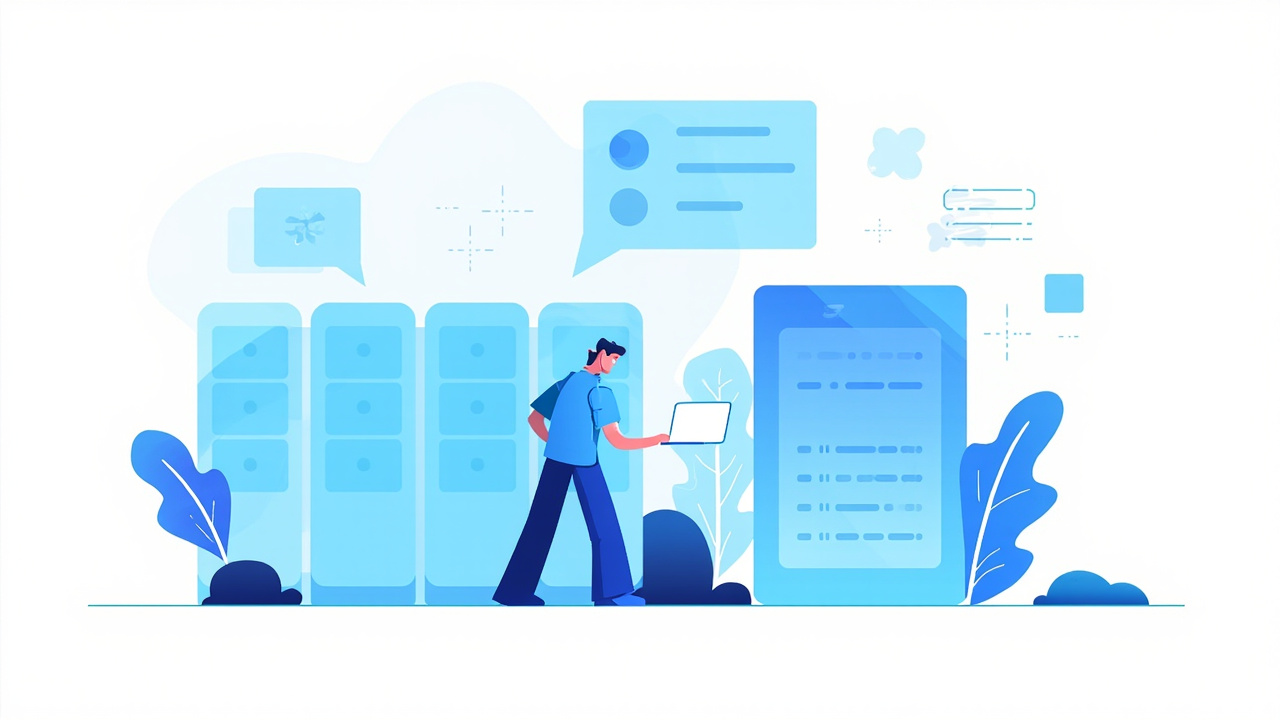
Why Self-Hosted AI Agents Are the Future for Developers and Startups
Full blog post in markdown
Why Self-Hosted AI Agents Are the Future for Developers and Startups
The AI landscape is shifting. While cloud-based AI services offer convenience, they come with trade-offs that many developers and startups are no longer willing to accept: data privacy concerns, recurring subscription costs, dependency on third-party infrastructure, and a lack of true continuity between sessions.
Enter self-hosted AI agents — a new category of tools that brings the power of AI directly onto hardware you control. These aren't your average chatbots. They're persistent, autonomous, and capable of learning over time.
The Problem with Stateless AI
Traditional AI interactions are essentially stateless. Each conversation starts fresh, with no memory of previous exchanges. For developers building AI-powered workflows, this limitation creates friction. You constantly have to re-explain context, re-upload files, and re-establish parameters.
Cloud-based solutions attempt to solve this with session management, but the data stays on someone else's servers. For startups handling sensitive business data or developers working on proprietary projects, this raises legitimate concerns.
What Makes Self-Hosted AI Different
Self-hosted AI agents flip this model entirely. Imagine an AI that:
- Remembers everything across sessions without manual intervention
- Operates autonomously on a schedule you define
- Learns and improves by retaining skills and procedures
- Runs on your infrastructure — whether that's a local machine, a VPS, or cloud hosting
This isn't science fiction. Projects like Hermes are making this a reality, and the developer community is taking notice.
Three Pillars That Change Everything
Persistent Memory Architecture
The most significant advancement in self-hosted AI is layered memory that accumulates across sessions. Unlike traditional AI interactions that reset with each conversation, these agents maintain context and learn from past interactions. This means your AI assistant gets genuinely smarter over time, understanding your projects, preferences, and workflows at a deeper level.
For developers, this translates to less repetitive prompting and more meaningful assistance. For startups, it means an AI that becomes a true long-term collaborator rather than a one-off tool.
Autonomous Scheduling
Built-in cron schedulers enable AI agents to fire tasks while you're offline. Set up recurring automation, and the agent handles it automatically. This transforms AI from a reactive tool into a proactive teammate that can manage ongoing tasks without constant supervision.
Think about the possibilities: automated reporting, scheduled data processing, routine system maintenance, and more — all running on your schedule, on your hardware.
Skills System
Self-hosted AI agents can save and retain reusable procedures automatically. As you work with the agent, it learns new skills that persist across sessions. Each interaction makes it more capable, creating a compounding effect where the AI becomes increasingly valuable over time.
Web UI: Making Self-Hosting Accessible
One of the barriers to self-hosted AI has traditionally been the technical complexity of command-line management. Modern self-hosted agents address this with user-friendly web interfaces that provide:
- Real-time interaction monitoring
- Memory visualization tools
- Skill management dashboards
- Conversation history with full context
- File handling and code execution capabilities
- Multi-model support for flexibility
This accessibility means developers don't need to be DevOps experts to benefit from self-hosted AI. The web UI brings the power of these tools to a broader audience.
Who Should Care?
Developers building AI-powered applications benefit from complete control over their AI infrastructure and the ability to customize behavior without vendor lock-in.
Startups handling sensitive data can maintain privacy without sacrificing AI capabilities. Your data stays on your servers, addressing compliance requirements and security concerns.
Power users wanting full control appreciate the transparency and customizability that self-hosted solutions offer. You're not locked into a vendor's roadmap or pricing changes.
Privacy-conscious users finally have an AI solution that doesn't require trusting third-party servers with potentially sensitive information.
The Self-Hosting Advantage
Self-hosted AI agents represent a fundamental shift in how we think about AI deployment. They offer unique advantages that cloud-based solutions simply cannot match:
- Complete data ownership — your information never leaves your infrastructure
- Persistent memory — context accumulates across sessions
- Autonomous operation — works on your schedule, even when you're offline
- No recurring API costs — pay once for hardware, use indefinitely
- Full customization — modify, extend, and integrate as needed
Getting Started
Setting up a self-hosted AI agent is more accessible than ever. Multiple deployment options exist, from simple Docker containers to more advanced configurations. Most solutions support various authentication methods including OAuth, API keys, and local deployment.
Documentation and community resources make the learning curve manageable for developers at all levels. Whether you're a seasoned DevOps engineer or a developer just exploring self-hosting for the first time, there are entry points for every skill level.
The Bigger Picture
Self-hosted AI agents are part of a broader movement toward decentralized, user-controlled technology. As developers and startups become more aware of the trade-offs involved in cloud-only solutions, demand for self-hosted alternatives will likely grow.
The tools are maturing rapidly. The communities are growing. And the use cases are expanding beyond early adopters into mainstream development workflows.
If you've been waiting for an AI solution that truly respects your data, operates on your terms, and improves over time, self-hosted agents might be exactly what you've been looking for.
Have you explored self-hosted AI solutions? Share your experience in the comments below.
Read in other languages: