When Redundancy Isn't Enough: The Railway Outage and Control Plane Dependencies
The Setup: Multi-Cloud Should Mean Bulletproof, Right?
If you've been in the infrastructure game long enough, you know the pitch: spread your workloads across AWS, Google Cloud, and your own hardware, and you're protected against any single provider's outage. It sounds logical. It should work.
Railway, a modern cloud deployment platform, believed this too. Their customers' applications ran across Google Cloud, AWS, and Railway Metal—their own private infrastructure. By every conventional measure, they had redundancy locked down.
Then, on the evening of May 19, 2026, everything fell apart. Not because of a hurricane, a zero-day exploit, or even a true GCP infrastructure failure. Google Cloud's automated systems incorrectly suspended Railway's production account with zero warning. And eight hours later, after engineers scrambled through the night, Railway was finally back online.
The gut-wrenching part? The actual workloads were running fine the entire time.
The Invisible Bottleneck: Your Control Plane is Critical Infrastructure
Here's where the architecture gets interesting—and where the lesson hits hard.
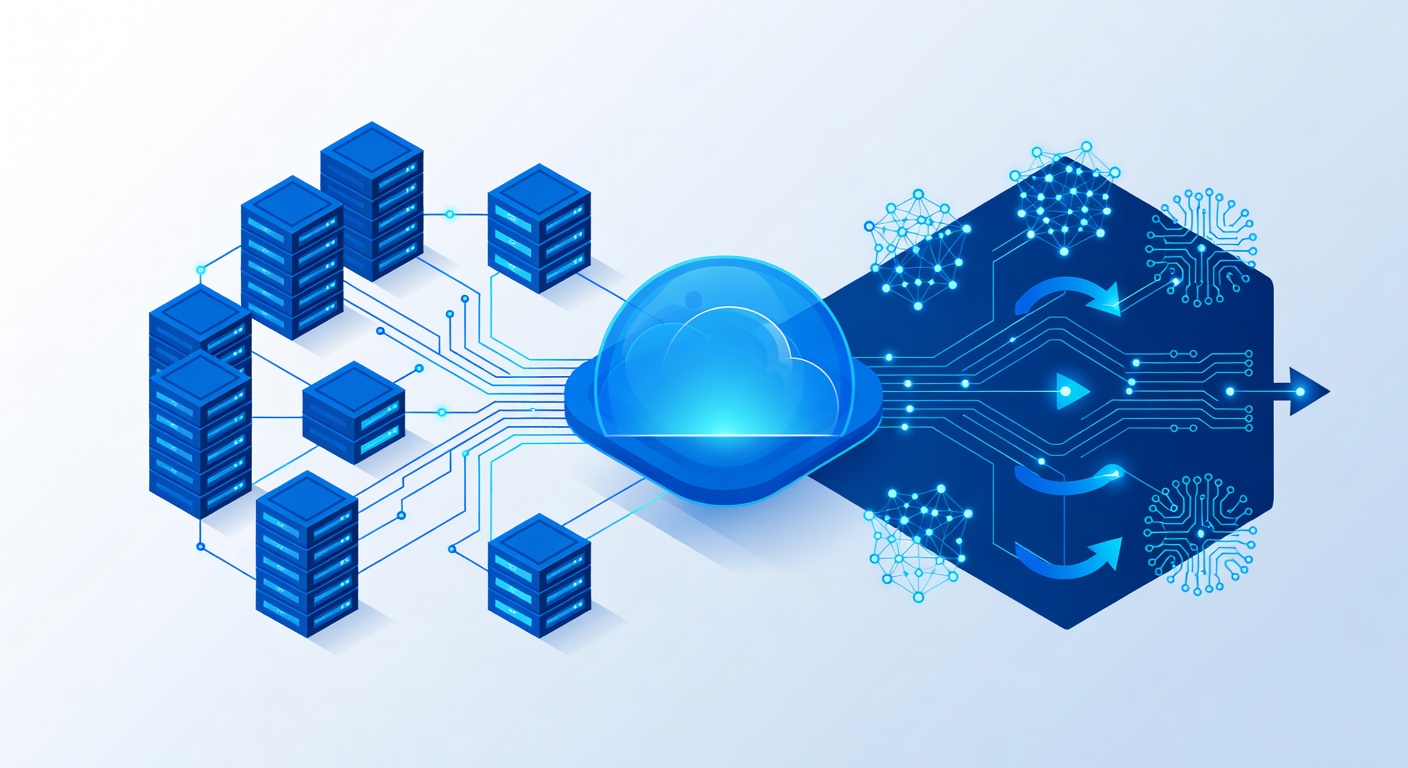
Every request coming into a Railway-hosted application doesn't go directly to that application. Instead, traffic hits edge proxies: intelligent reverse proxies that sit at the edge of the network and figure out where to route each request. These proxies need to know something crucial: where does this app actually live right now?
That routing information comes from a control plane—essentially a database of "this workload lives here, that workload lives there." And Railway's control plane? Hosted entirely on Google Cloud.
When GCP suspended the account, the control plane went dark. The edge proxies didn't immediately freak out, though. They had cached routing data—basically, a local copy of the routing table that stayed fresh for about 35 minutes. Requests continued flowing. Workloads on AWS and Railway Metal hummed along peacefully.
Then the cache expired.
At that moment, the proxies had no idea where to send traffic. Every single request—regardless of whether the underlying workload was healthy and running on AWS or Railway Metal—returned a 404. From a customer's perspective, Railway was completely down.
The Cascade Effect: When One Failure Triggers Another
Just when the situation couldn't get worse, it did.
The sheer volume of failed requests and retry attempts triggered GitHub's rate-limiting on Railway's OAuth endpoints. This wasn't a GitHub outage; it was GitHub doing exactly what it should do—protecting itself from what looked like an attack.
The consequence? Users couldn't log in to Railway. Deployments couldn't be triggered. Even as the control plane came back online and other services recovered, this secondary failure kept blocking user access. It was like finally getting the front door unlocked only to find the alarm system still armed.
The Real Insight: Redundancy Without Orchestration is Theater
This incident exposes something that trips up even experienced architects: there's a difference between distributed workloads and distributed control.
Railway had achieved the first. Their actual application containers were running across multiple clouds and bare metal. That's hard to do well, and they did it.
But the control plane—the thing that tells the world where those workloads actually are—lived in one place. A single automated action in GCP's account management system, meant to catch suspicious activity, took down a company's entire routing infrastructure.
This is why we see increasing attention to control plane redundancy in cloud architecture conversations. It's not glamorous. It doesn't show up in benchmark performance metrics. But when it fails, it fails catastrophically.
What This Means for Your Architecture
If you're building infrastructure, especially if you're betting on multi-cloud resilience, Railway's incident offers some hard-won wisdom:
Control planes and data planes are different beasts. Your compute can be distributed, but if your routing, orchestration, and service discovery all live in one place, you haven't bought what you think you've bought. That distribution becomes window dressing.
Caching is a temporary band-aid, not a solution. Yes, Railway's cached routing data bought them 35 minutes of continued operation. That's better than nothing. But eventual cache expiration meant the clock was counting down from the moment GCP went down. You need architectural solutions, not just tactical time-buyers.
Cascading failures are real, and they compound rapidly. Once GitHub started rate-limiting, the recovery process became slower and more complex. Every failed request generates new failure conditions. This is why incident response procedures matter as much as architecture choices.
Talk to your cloud provider's automated systems. Railway couldn't prevent GCP's account suspension system from triggering—that's Google's security infrastructure doing its job. But understanding what triggers those automations and having clear communication channels (like emergency support escalations) gives you time to intervene.
The Silver Lining
To their credit, Railway took this seriously. They've publicly committed to removing GCP from their data plane's hot path and extending control plane redundancy across AWS and Railway Metal. That's the kind of expensive, disruptive work that actually fixes these problems.
For the rest of us watching from the sidelines, it's a reminder that cloud architecture is still a game of finding hidden dependencies and single points of failure. The ones we find in our war rooms are learning experiences. The ones we discover at 22:19 UTC in production tend to be expensive.
What's your experience with multi-cloud setups? Have you discovered similar hidden dependencies in your own infrastructure? The incident response community learns best from shared stories—drop your thoughts in the comments or ping us on social media.