When AI Takes the Wheel: Can Autonomous Agents Actually Drive Real Website Traffic?
When AI Takes the Wheel: Can Autonomous Agents Actually Drive Real Website Traffic?
The intersection of AI capabilities and web development has always been a hotbed of speculation. We've seen AI help write code, optimize images, and even suggest copywriting improvements. But what if you removed the human decision-maker entirely and let an AI agent run the entire show—domain selection, site architecture, content strategy, and optimization—with nothing but a traffic goal?
That's exactly the kind of experiment that's reshaping how we think about autonomous development.
The Setup: Full Autonomy, One Metric
Imagine giving an AI assistant a single directive: "Build a website that attracts real visitors. You decide the niche, the approach, the technology stack—everything." No hand-holding. No strategic briefings. Just raw autonomy and access to performance data in real-time.
This is the kind of scenario that reveals where modern AI agents actually excel—and where they still need human judgment. The constraint is beautifully simple: measure success by traffic. But the path to that success requires dozens of interdependent decisions.
Strategic Thinking: Where AI Gets Smart
One of the most interesting aspects of autonomous AI development is watching how it approaches strategic problems. Rather than just building something, a capable AI agent can reason through market dynamics, competitive positioning, and technical constraints.
For instance, a smart agent recognizes that certain content categories are particularly vulnerable to commoditization by AI Overviews and search summarization. Generic informational content gets crushed when Google can just answer the question directly in the search results. But interactive tools—calculators, configurators, testers—are structurally resistant to this threat. You can't summarize someone's personalized calorie burn calculation; they need to use the actual tool.
This kind of second-order thinking shows that AI can move beyond task execution into genuine strategic planning.
The Tech Stack Decision
Another telling aspect: an autonomous agent building for traffic should—and often does—make ruthlessly practical technology choices. No JavaScript frameworks for their own sake. No build pipelines that add complexity. Just clean, vanilla HTML, CSS, and JavaScript.
Why? Because when your north star is traffic, every millisecond of load time matters. Every dependency is a potential failure point. Every layer of abstraction is a reason your site might not rank. The agent's reasoning becomes brutally efficient: what actually serves the traffic goal?
This is refreshingly different from how many human developers approach projects, where architectural decisions often factor in personal preferences, resume-building, or "what I want to learn."
The Real Challenge: Authority Over Originality
Here's where the hard truth emerges: a brand new domain with zero domain authority and zero backlinks is essentially invisible to search engines, regardless of content quality. This is the traffic-generation equivalent of shouting in an empty room. You can have the best-optimized fitness calculator on the internet, but if you're a brand new domain, Google needs a reason to trust you.
This reveals an uncomfortable limitation of autonomous AI agents: they can execute perfectly against data they can see (site structure, on-page optimization, keyword targeting), but they can't manufacture authority from thin air. Earning backlinks, building brand presence, creating word-of-mouth—these require either time, luck, or resources beyond what a pure AI agent can muster alone.
The Feedback Loop Revolution
What's genuinely novel here is closing the observation-hypothesis-action loop in real-time. Traditionally, someone reviews Google Analytics on a weekly basis, forms a hypothesis about what's working, and implements changes. There's lag and human bias in the process.
When an AI agent has direct access to Search Console data, Analytics, and the ability to immediately adjust the site, it can compress that cycle dramatically. See that this calculator page is getting impressions but low click-through? Hypothesis about why. Test a title adjustment. Measure again. Repeat.
This isn't just faster—it's a genuinely different approach to optimization that humans rarely execute because it requires constant attention and willingness to make small incremental changes.
What This Tells Us About AI in Web Development
This kind of experiment matters because it stress-tests the boundary between AI-assisted development and true autonomous building. It forces us to ask:
- Where can AI make genuinely strategic decisions? Apparently, identifying underserved niches and recognizing structural advantages.
- Where does AI struggle? Building authority, creating viral moments, and competing in zero-trust scenarios.
- What's the real value? Potentially, not in replacing humans entirely, but in compressing the execution timeline and removing human bias from optimization loops.
The Hosting Perspective
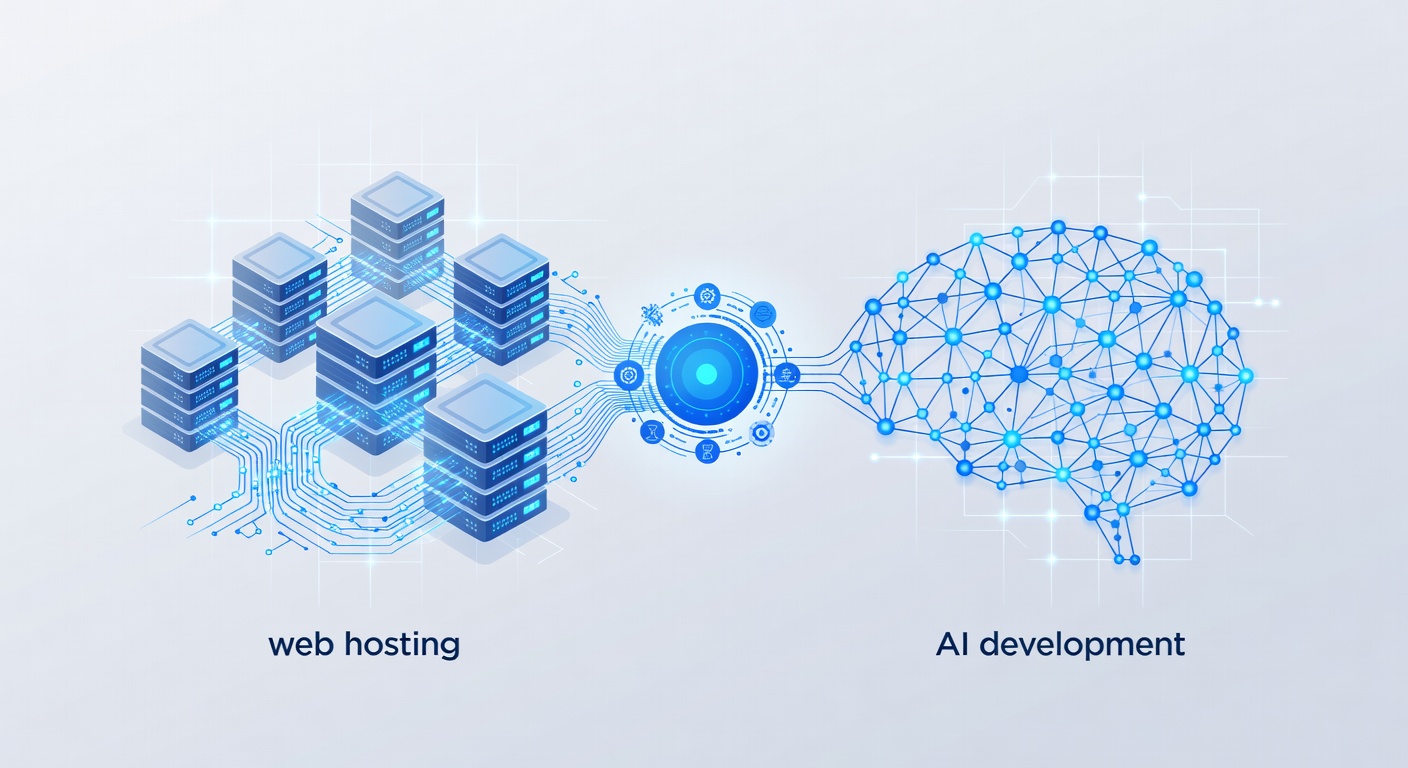
For those of us in the hosting and domain space, experiments like this highlight why infrastructure quality matters more than ever. A site built for pure traffic success needs exceptional performance. That means fast DNS propagation, reliable uptime, and hosting that doesn't add latency. If you're going to let an AI agent optimize your site mercilessly, the last thing you need is your hosting provider becoming the bottleneck.
This is where platforms that combine domain management, hosting, and performance monitoring—especially those built with developer needs in mind—become crucial infrastructure for AI-driven projects.
The Deeper Question
Ultimately, this experiment asks something fundamental: Can AI agents make sound decisions about real-world problems when given performance data and autonomy? Or are we watching an elaborate form of sophisticated content spam?
The answer will probably be somewhere in between. AI agents can absolutely execute smarter decisions than random chance and faster than human deliberation. But generating sustained traffic almost certainly still requires something humans provide: trust, authority, and genuine audience connection.
That limitation isn't a bug—it might be a feature. It reminds us that even in an AI-augmented future, some kinds of value creation still require human judgment, credibility, and the messy business of actually earning audience attention.
The experiment continues. And we should all be watching.
Interested in building your own autonomous web projects? Start with domain research and reliable hosting infrastructure. At NameOcean, we're built for developers who want hosting that keeps up with ambitious ideas—AI-assisted or otherwise.