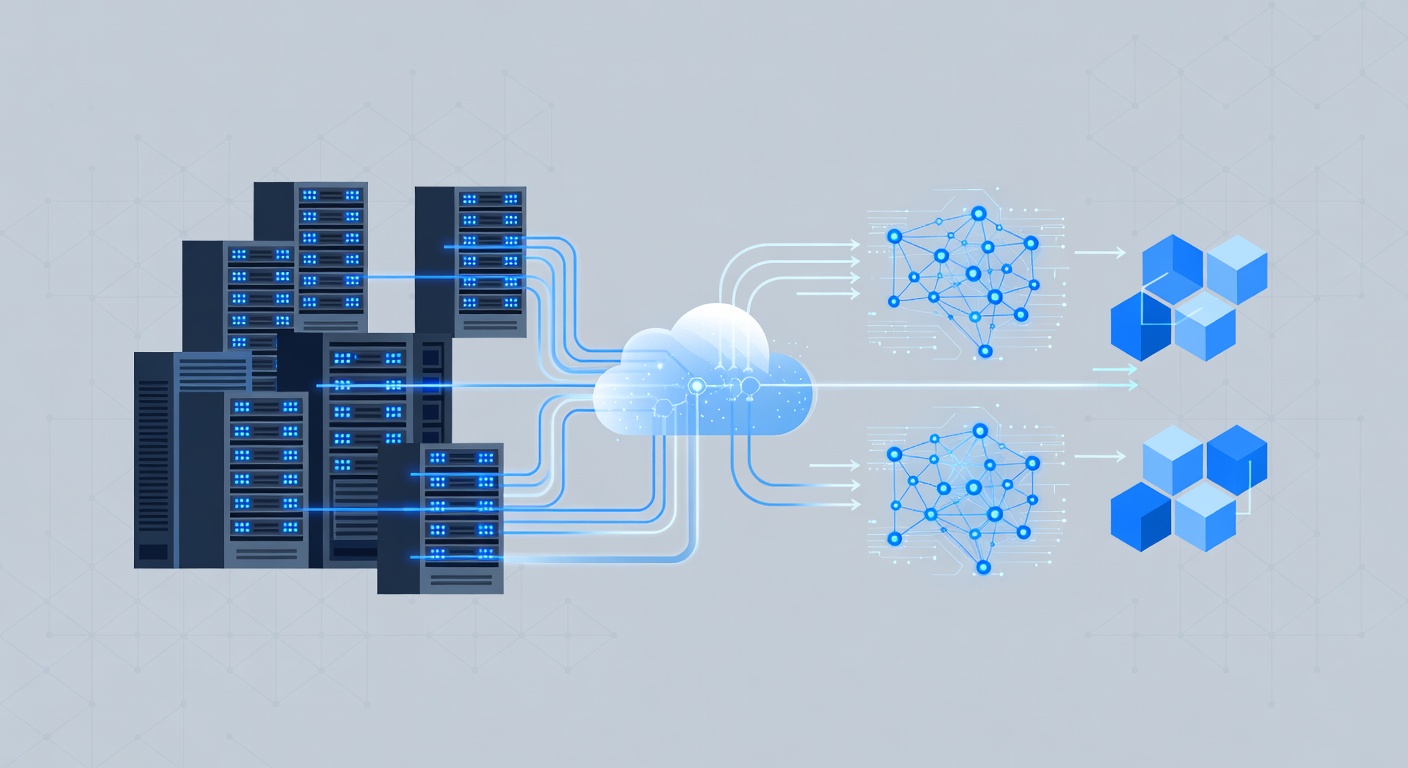
The Human Era of the Web: Why We Should Remember How We Built the Internet
The Human Era of the Web: Why We Should Remember How We Built the Internet
There's something profoundly humbling about remembering that the internet—the infrastructure running your cloud deployments, the DNS systems routing your API calls, the SSL certificates securing your transactions—was built entirely by human hands without a single AI assistant in sight.
When Humans Had to Get It Right
From ARPANET's first tentative packet transmissions to the explosive growth of the World Wide Web, developers faced a stark reality: there was no algorithm to consult, no machine learning model to suggest the next optimization, no GitHub Copilot to autocomplete your TCP/IP implementation.
Tim Berners-Lee sketched HTML on napkins. Jon Postel argued passionately about DNS conventions. Early registrars manually managed domain databases. The first SSL implementations were debugged by determined engineers staring at hex dumps at 3 AM. Every protocol, every standard, every architectural decision came from human intuition, debate, and sometimes just educated guessing.
And somehow, it worked. More than worked—it scaled to billions of devices.
The Stubbornness Factor
What strikes me most about this era isn't the technical elegance (though plenty exists). It's the raw stubbornness. Engineers shipped software on floppy disks knowing it might reach twelve people. They built redundancy into systems because they had to—because the alternative was catastrophic failure with no rollback plan.
When DNS was designed, nobody imagined we'd query it billions of times per second. When the first domain registries went live, there was no automation, no instant provisioning, no API-driven workflows. Everything happened through manual intervention, careful documentation, and the kind of tribal knowledge that got passed down person-to-person.
This constraint—the absence of machines to handle complexity—forced clarity. When you can't automate away a problem, you have to understand it.
What Changes Now
The Museum of the Human Web exists for a reason: we're entering a fundamentally different era. AI isn't replacing the need for human creativity and decision-making in web infrastructure—but it's changing how we approach the work.
Your next domain registrar might use machine learning to predict optimal DNS configurations. Your cloud hosting platform could leverage AI to automatically optimize your SSL certificate chains. Development workflows that took weeks of human coordination might happen in hours with AI assistance.
This isn't inherently bad. It's evolution, same as it always was.
But here's what matters: understanding the history of how we built these systems with nothing but human effort makes us better stewards of them now.
When you appreciate that someone manually debugged a DNS server to handle 10,000 queries per second—and that was considered revolutionary—you approach your own infrastructure decisions differently. When you know that early web pioneers had to invent load balancing concepts because machines couldn't help them, you grasp why those concepts matter.
The Bridge Between Eras
For those of us building on NameOcean's infrastructure—registering domains, configuring DNS records, managing SSL certificates, scaling cloud applications—we're living in the transition moment. We still have human judgment. We still make intentional architectural choices. But increasingly, those choices happen in collaboration with AI tools.
The question isn't whether that collaboration will happen. It will. The question is whether we'll remember the human principles that got us here:
- Reliability matters more than speed. The early web prioritized uptime because failure was unforgivable.
- Clarity beats cleverness. The DNS system's genius lies in its simplicity, not its complexity.
- Documentation is sacred. When there's no algorithm to ask, written knowledge becomes the foundation.
- Humans must stay in the loop. The best decisions about infrastructure are still made by people who understand the tradeoffs.
Worth Preserving
The Museum of the Human Web isn't nostalgic hand-wringing. It's preservation—archaeological work on the recent past to understand how we got here.
When you register your next domain, push code using AI assistance, or configure DNS to scale across multiple regions, you're building on foundations laid by humans who had no shortcuts. They figured it out through argument, iteration, and refusal to accept "impossible."
That lineage matters. Especially now.
The Internet Archive and Computer History Museum preserve these artifacts and stories so we remember the human decisions that shaped our digital world. As we move forward with AI-assisted development and machine-enhanced infrastructure, that memory is more valuable than ever.