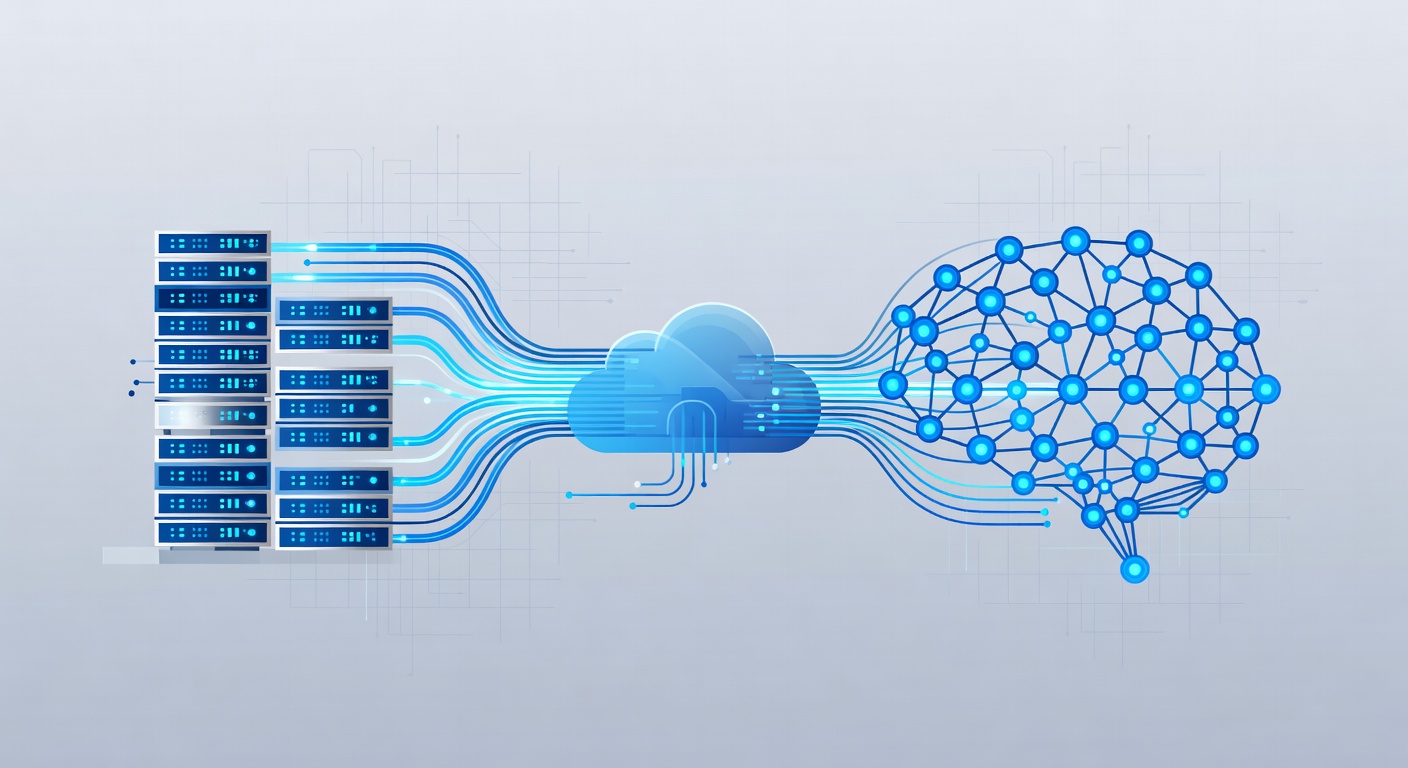
The Future of Developer Tools: What Knowledge Workers Need in 2026
The Future of Developer Tools: What Knowledge Workers Need in 2026
If you're building software in 2024, you're already using tools that barely existed five years ago. GitHub Copilot, containerized everything, and serverless architectures are now table stakes. But what about 2026? What's the next wave of tooling that will separate efficient teams from those constantly fighting their infrastructure?
The Convergence of Development and Operations
The old silos between developers and ops teams have been crumbling for years, but by 2026, the fusion will be nearly complete. The knowledge worker of the future—whether they call themselves a full-stack developer, platform engineer, or DevOps architect—won't have the luxury of pushing problems downstream.
This means your tooling needs to reflect reality:
- Infrastructure as code won't be optional anymore; it'll be the default way teams think about deployment
- Observability moves from "nice to have" to "how you actually develop"—understanding your application's behavior in production becomes as natural as running local tests
- Security scanning shifts left, integrating into your editor and CI/CD pipeline before code review
At NameOcean, we're seeing this shift impact how teams approach domains and DNS management too. Modern developers expect their infrastructure—including domain configuration—to be scriptable, versionable, and integrated with their deployment pipelines.
AI-Assisted Development: Beyond Code Completion
By 2026, AI in development tools will have matured beyond syntax completion. Yes, GitHub Copilot and similar tools are impressive, but they're still relatively narrow in scope.
The next generation will:
- Understand architectural context and suggest structural improvements, not just fill-in-the-blank code
- Catch security vulnerabilities before they become problems, learning from your codebase patterns
- Optimize performance by analyzing your actual usage patterns and suggesting refactors
- Generate test cases automatically based on your code structure and edge cases
This is where "Vibe Coding"—intuitive, AI-assisted development—becomes genuinely useful rather than a novelty. Tools that understand why you're building something, not just what you're building, will define the experience.
The Cloud Native Operating System
Kubernetes adoption will be complete by 2026, but most teams won't be managing it directly anymore. Platforms like ECS, GKE, and specialized PaaS solutions will abstract away the complexity while keeping the power.
What this means for your tooling stack:
- Local development environments will be indistinguishable from production (containerized, networked, observable)
- Configuration management becomes declarative by default—no more SSH-ing into servers
- Resource management will be automatic, with AI optimizing your cloud spend in real-time
For teams managing multiple domains, DNS infrastructure, and SSL certificates across cloud providers, integration becomes critical. Expect tools that tie together your entire technical foundation—compute, networking, security—as one cohesive system.
The Domain and Infrastructure Integration
Here's something specific: by 2026, managing your domain won't be separated from managing your hosting, SSL certificates, and cloud infrastructure.
Smart teams are already seeing the benefits:
- One-command deployments that handle DNS propagation, SSL issuance, and server configuration
- Infrastructure snapshots that include your complete domain and DNS setup
- Disaster recovery that's actually tested and automated because it's part of your deployment pipeline
This is why NameOcean's approach to cloud hosting integrates domain management with infrastructure—it's not just convenience, it's the future of how technical teams will work.
Knowledge Work Optimization
The real trend isn't about individual tools getting smarter—it's about the interaction between tools becoming seamless.
By 2026, your ideal workflow looks like:
- Write code locally in a containerized environment that mirrors production
- AI tools provide suggestions based on architectural patterns and past performance
- Push to version control, triggering automated tests, security scans, and performance analysis
- Deployment updates infrastructure, DNS, SSL, and monitoring in one declarative action
- Observability dashboards show you exactly what's happening, with AI flagging anomalies before they're problems
This isn't science fiction. The pieces already exist. The question is whether they'll be integrated into cohesive platforms or remain fragmented.
Preparing Your Team for 2026
If you want to be ready, start now:
- Invest in containerization for local development
- Automate everything that can be automated—your deployment pipeline is your documentation
- Integrate observability into development, not just production
- Choose tools that play well together—avoid lock-in, but prefer platforms that understand your entire stack
- Learn infrastructure as code whether you're a backend developer or frontend specialist
- Embrace AI assistance while maintaining skepticism about what it can actually do
The teams thriving in 2026 won't be the ones with the fanciest individual tools. They'll be the ones who've built cohesive, automated systems where development, operations, and infrastructure work as one unit.
The future of knowledge work is less about breakthrough innovations and more about maturation and integration. The tools are coming—but the real competitive advantage goes to teams that can orchestrate them into something greater than the sum of their parts.
What tools are you betting on for 2026? Let us know in the comments.