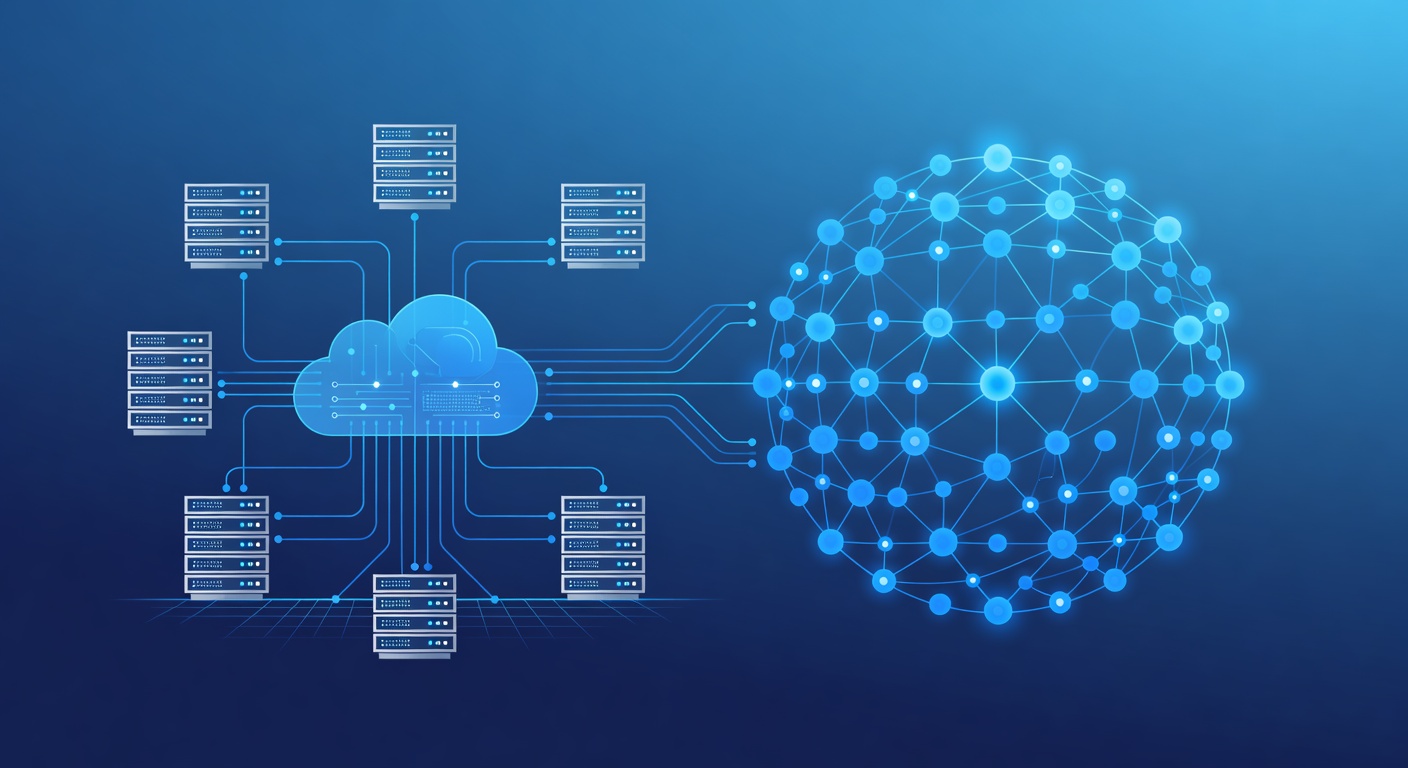
The Bifurcated Internet is Here: Preparing Your Content for Both Humans and AI
The Internet Wears Two Faces Now
Remember when optimizing for search engines meant stuffing keywords and hoping Google would notice? We're entering something far more nuanced. The rise of AI agents—autonomous systems that crawl, analyze, and interact with your content without human intermediaries—is forcing a fundamental rethinking of how we structure information online.
Publications like The Economist aren't waiting for this shift to complete itself. They're actively building dual-track content strategies: material designed to delight human readers and material engineered specifically for machines to understand, extract, and act upon.
This isn't about deceiving anyone. It's about recognizing that AI and humans consume information fundamentally differently.
How AI Actually Reads Your Website
When a human visits your site, they're looking for narrative flow, engaging prose, visual hierarchy, and context. They skip around, scan headlines, and decide in milliseconds whether to stay. They bring intuition.
AI agents? They're looking for semantic clarity, structured data, consistency, and machine-readable patterns. They want to know: What is this page really about? What relationships exist between pieces of information? Can I reliably extract facts and act on them?
A human reads your blog post about SSL certificates. An AI agent reads your structured data markup, your schema.org tags, your OpenGraph metadata, and your content architecture to understand why that post matters and where it fits in the larger information landscape.
The Vibe Shift: Building for Both Audiences
What The Economist calls "vibe-coding culture" is actually something more practical: it's treating your website architecture as a dual-purpose system. Your beautiful, human-friendly interface sits atop a rigorously organized information structure that machines can navigate with confidence.
This means:
Semantic HTML isn't optional anymore. Using proper heading hierarchies, article tags, and structured data isn't pedantic—it's essential. Your content needs to communicate meaning, not just appearance, to both eyes and algorithms.
Content relationships matter. AI agents benefit from explicit connections between related content. Internal linking strategies, breadcrumb navigation, and topic clustering aren't just for SEO juice anymore—they're how machines understand your knowledge landscape.
API-first thinking applies everywhere. Even if you're not building an actual API, thinking like you are changes how you organize information. Can your content be easily extracted and recombined? Is your data structure logical and predictable?
Metadata is the new real estate. Title tags, meta descriptions, and alt text used to be an afterthought. Now they're critical translation layers between human-readable and machine-readable content. Write them like they matter—because they do, to two different audiences.
What This Means for Your Domains and Hosting
If you're hosting on platforms like NameOcean with AI-powered infrastructure, this shift actually simplifies some things. Modern cloud hosting can handle the computational load of AI agents crawling and analyzing your content. Your uptime becomes more critical than ever—machines don't forgive downtime the way humans do.
Your domain structure itself matters more too. Clear, logical URL patterns help both humans and AI agents understand your information architecture. A domain that's easy to navigate by hand is usually easier for machines to parse.
DNS configuration, SSL certificates, and infrastructure optimization all play supporting roles in this dual-track internet. You can't optimize for AI agents if your site is slow, insecure, or unreliable.
The Content Strategy That Works Now
Forward-thinking publishers aren't creating different content for machines. They're creating better-structured content that serves both audiences. A well-written article with clear metadata, logical formatting, and explicit relationships to related content naturally becomes more valuable to AI agents.
Think of it like writing a paper for both your professor and Wikipedia. The core quality of the work doesn't change—but how you organize it, source it, and connect it absolutely does.
The Competitive Advantage is Real
Here's what most businesses haven't grasped yet: AI agents will become an increasingly important source of traffic, context, and distribution in the coming years. The websites that prepare now—that build this dual-audience approach into their DNA—will have a structural advantage when the shift completes.
Whether it's AI-powered customer service agents pulling information from your knowledge base, or sophisticated search systems that reward machine-readable content, or entirely new forms of distribution we haven't imagined yet—the foundations you build today matter.
Your Next Move
Start auditing your content infrastructure. Not your copy—your structure. Are your pages semantically sound? Is your metadata thoughtful? Do your information relationships make sense to a machine reader?
If you're building on modern platforms like NameOcean, you've already got the foundation. Now it's time to build the superstructure: content that speaks fluently to both humans and machines, domains that organize information logically, and hosting that can handle both audiences reliably.
The bifurcated internet isn't coming. It's already here. The question is whether you're prepared for both lanes.