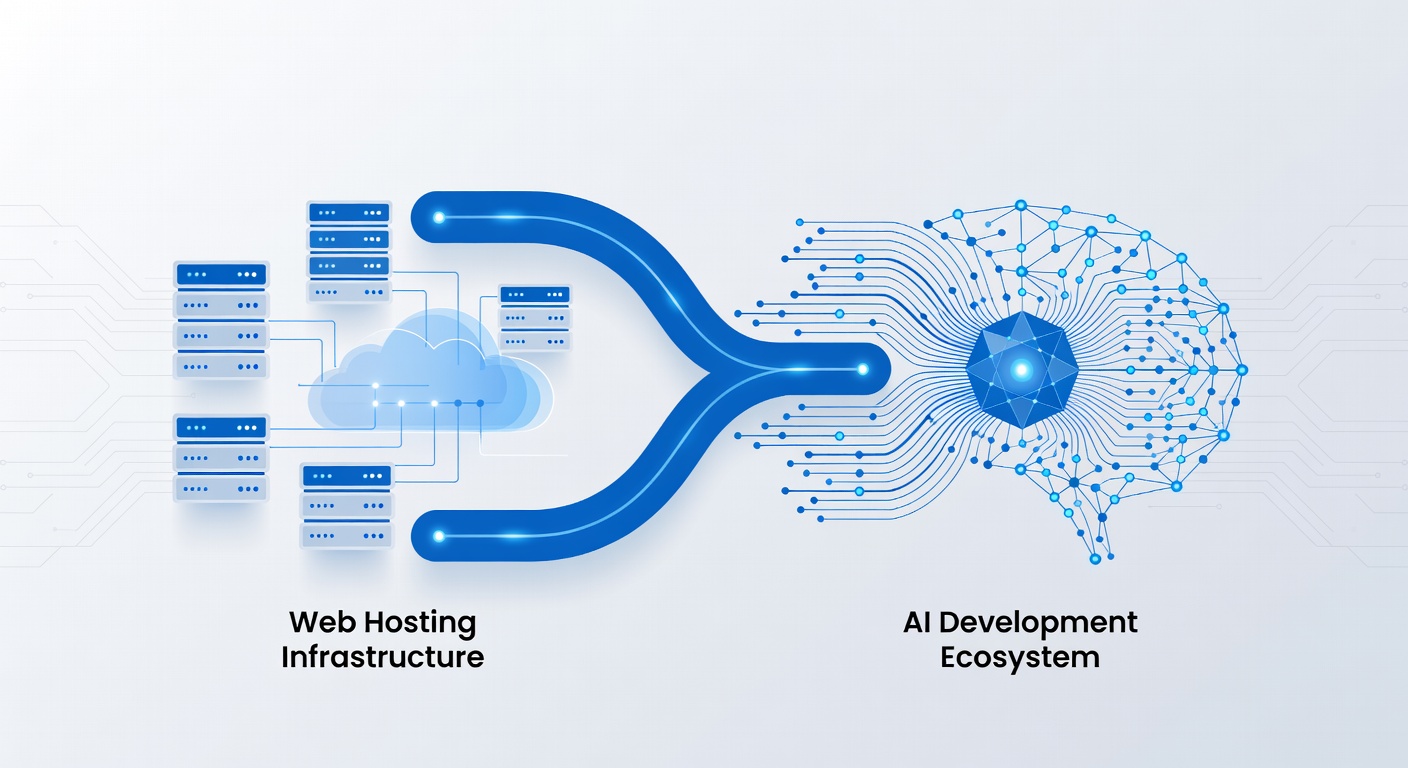
The AI Revolution in Development: Are We Witnessing Coding's Industrial Transformation?
The AI Revolution in Development: Are We Witnessing Coding's Industrial Transformation?
There's a thought-provoking parallel we should examine: the evolution of woodworking from a revered craft to an industrialized process offers a revealing lens for understanding where software development might be headed in the age of AI.
From Artisans to Assembly Lines: A Historical Pattern
Consider how furniture manufacturing evolved. Centuries ago, master craftspeople spent years perfecting their trade through guild apprenticeships. They understood wood intimately—its grain, its behavior, its possibilities. The work was slow, expensive, and required genuine mastery.
Then came industrialization. Factories emerged. Processes became standardized. Most importantly, the skill barrier dropped dramatically. Today, mass-produced furniture comes from optimized factory systems where workers follow established procedures. The artisan knowledge that once defined the craft has largely been abstracted away into machine design and factory optimization.
The parallel to software development is striking—and worth taking seriously.
The AI-Powered Development Factory
We're witnessing the early stages of something similar in coding. Tools like GitHub Copilot, Claude, ChatGPT, and specialized AI coding assistants are beginning to automate the routine aspects of programming. These aren't just code completion tools anymore; they're intelligent systems that can:
- Generate boilerplate code instantly
- Debug problems by analyzing error patterns
- Suggest architectural improvements
- Write entire functions from natural language descriptions
- Handle repetitive integration tasks
For junior developers and small teams, this is genuinely transformative. Tasks that once took hours now take minutes. The barrier to shipping functional code has dropped significantly.
But here's where the analogy gets uncomfortable: as AI handles more of the "writing" aspect of coding, what happens to the craft itself?
The Deskilling Question
In woodworking, industrialization didn't eliminate the craft—it relocated it. Traditional woodworking still exists, but it's now positioned as an art form rather than the dominant mode of production. The skilled work shifted to designing and optimizing the machines that mass-produce furniture, not to making furniture itself.
Could we see similar stratification in development?
The scenario might look like this:
- Commodity Development: Routine CRUD applications, standard integrations, and conventional projects get handled by developers proficient in AI tooling rather than deep programming knowledge
- Specialist Engineers: The premium value moves to those who understand system design, security architecture, performance optimization, and the hairy problems that AI still struggles with
- Tool Builders: Like the machinery designers in manufacturing, the real scarcity might be people who build and optimize the AI systems themselves
This isn't necessarily bad—it's potentially quite good. It could democratize software creation, allowing more people to build functional applications. But it raises legitimate questions about what "being a coder" actually means in such a world.
Why This Isn't Quite the Same
Before we panic, let's acknowledge the differences between software and physical manufacturing:
Software is infinitely reproducible. A well-designed manufacturing process reduces costs through volume. Code, once written, costs nothing to replicate. This creates different economic incentives.
Domain knowledge matters more. You can factory-produce generic furniture, but building financial systems, medical software, or infrastructure requires deep contextual understanding that's harder to commoditize.
The problem space keeps expanding. Industrialization capped what furniture could do. Software's capabilities keep growing, generating new categories of problems that require genuine innovation.
AI itself is still evolving. Current AI tools excel at pattern matching and code generation but struggle with novel architecture decisions, security reasoning, and understanding implicit requirements.
What Should We Actually Do?
Here's the practical take: don't bet your career on AI doing the work you currently do exactly the way you do it. Instead:
Go deeper, not wider. Instead of trying to learn more frameworks and languages, develop genuine expertise in systems thinking, architecture, and problem domain knowledge. These are harder for AI to replicate.
Embrace AI as a force multiplier. The developers who'll thrive aren't those competing with AI on commodity tasks—they're the ones using AI to move faster on meaningful problems. Learn to work alongside these tools effectively.
Develop judgment. As AI generates more code, the ability to evaluate quality, security, correctness, and fit becomes more valuable. That's human work.
Build in domains with stakes. Increasingly, coding skills are becoming a commodity. But understanding fintech, healthcare, infrastructure, or your industry? That creates defensible value.
The Romantic View vs. Reality
We still teach woodworking in schools, typically as an art form or craft hobby—not as industrial training. There's something we've collectively decided is worth preserving about the traditional practice, even though it's economically obsolete.
Perhaps coding will follow a similar path. Some developers will specialize in the craft—writing elegant, efficient code as a form of expression and mastery, even when AI could generate something functional. Others will focus on the industrial application of these tools, becoming expert users of AI-assisted development to maximize productivity.
Neither path is wrong. Both might coexist.
The Bottom Line
The AI revolution in development isn't coming—it's already here. And yes, it will change what "being a programmer" means. Some coding work will be deskilled and automated. That's honestly fine. A lot of programming is tedious.
But the fundamental challenge of building things that solve real problems, scale reliably, and remain secure? That's not going away. Neither is the satisfaction of creating something elegant and efficient.
The question isn't whether AI will change development—it already is. The question is whether you'll evolve with it or resist it. The developers thriving right now aren't the ones worried about AI stealing their jobs. They're the ones learning to amplify their impact with these new tools.
Your move.
At NameOcean, we're watching how AI shapes not just development practices but the entire infrastructure stack—from cloud hosting architecture to the automation of domain management. Whether you're building your next project with AI assistance or setting up infrastructure to support it, the fundamentals of solid architecture, security, and performance remain paramount. That's where human expertise still reigns supreme.