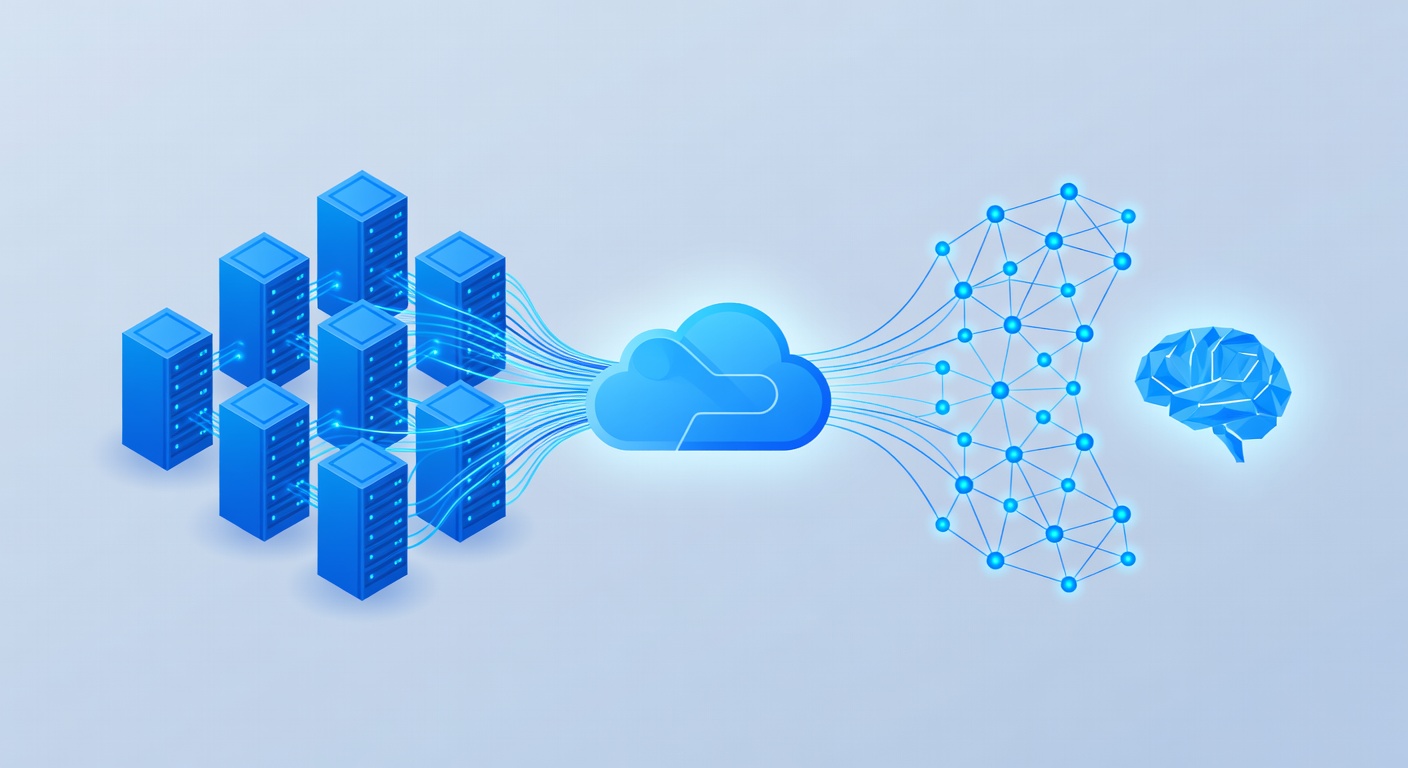
Taming the AI Agent Chaos: Why You Need a Unified Control Plane for Your Coding Assistants
Taming the AI Agent Chaos: Why You Need a Unified Control Plane for Your Coding Assistants
We're living in the golden age of AI-assisted development. GitHub Copilot, Claude, ChatGPT, local models—developers now have an embarrassment of riches when it comes to AI coding companions. But here's the uncomfortable truth: managing multiple AI agents across your development environment is like herding cats during a thunderstorm.
The Multi-Agent Problem Nobody Wants to Talk About
Think about your current setup. You've probably got:
- An AI assistant integrated into your IDE
- Another one handling code review workflows
- Maybe a specialized model for infrastructure-as-code
- Perhaps a local agent for sensitive internal projects
Each one has its own rules. Different permission scopes. Separate configurations. Different command sets. It's a recipe for inconsistency, security gaps, and developers wasting time wrestling with tool disagreements.
The real cost? Cognitive load. Developers shouldn't need to be system administrators for their AI toolchain. But right now, that's exactly what's happening.
Introducing the Canonical Source Concept
This is where AgentsMesh enters the chat. The project proposes a radical simplification: one reliable canonical source for everything your AI agents need to know.
Instead of scattered configuration files, environment variables, and hardcoded permissions buried in different repos, imagine this:
- A single declaration of agent capabilities
- Unified permission models that actually make sense
- Consistent command vocabularies across all tools
- Synchronized state that keeps agents from conflicting
It sounds simple. That's because it should be simple. But until now, nobody's built it properly.
What Makes AgentsMesh Different
The project isn't just about configuration management—it's about creating an actual mesh topology for AI agents. Think microservices architecture, but for your coding assistants.
Key components include:
MCP (Model Context Protocol) Support - Rather than creating yet another proprietary standard, AgentsMesh leverages MCP as the foundation. This means it's extensible and aligns with the broader ecosystem of AI tools.
Hook System - Define what triggers agent actions and how they respond. No more black-box decision-making—you see exactly why your AI assistant is doing what it's doing.
Skill Declaration - Explicit, versioned skill definitions that agents can discover and validate before execution. An agent won't attempt something it hasn't been explicitly granted permission to do.
Permission Boundaries - Fine-grained controls that go beyond simple "yes/no" access. You can specify exactly what an agent can touch, modify, or observe in your codebase.
Why This Matters for Your Team
Security - Security through configuration. Rather than trusting individual agents' internal safety mechanisms, AgentsMesh makes permissions auditable and centralized. This is especially crucial if you're using multiple third-party AI services.
Consistency - When all agents read from the same rulebook, they behave predictably. Your team learns one mental model instead of debugging why Claude does something different from Copilot.
Onboarding - New developers can inherit the exact same agent configuration. No "well, on my machine I set this up..." conversations anymore.
Compliance - For enterprises dealing with regulatory requirements, having a single audit trail for agent actions and permissions is invaluable.
The Syncing Problem (The Real Reason This Matters)
Here's what elevates this beyond just "nice-to-have" infrastructure: synchronization.
Agents drift. You update a permission in one place and forget to propagate it elsewhere. You add a new command to Copilot but forget to enable it for your local Claude instance. You change how a hook works and suddenly workflows break.
AgentsMesh's syncing mechanism ensures that configuration changes cascade consistently across your entire agent ecosystem. Think of it as GitOps for AI agents.
Where This Fits in Your Stack
If you're running a serious development operation—especially one using Vibe Hosting or similar AI-powered deployment platforms—you need this yesterday.
Consider this scenario: You've got a cloud-hosted application using AI-assisted code generation. Your local development environment has different agents than your CI/CD pipeline. Your code review automation has its own ruleset. Without a unified control plane, you're debugging "works on my machine" issues amplified across multiple AI dimensions.
AgentsMesh becomes the central nervous system for your entire AI-augmented development workflow.
The Future of Agent Orchestration
What's particularly interesting about this approach is that it's agnostic about the future. New AI models will emerge. Your tool preferences will evolve. But if you've built on a solid foundation of canonical rules and synchronized state, switching or adding agents becomes a matter of registering them with your mesh—not rebuilding your entire workflow.
This is exactly the kind of infrastructure that feels boring until you need it. Then it becomes indispensable.
Getting Started
The AgentsMesh project is still evolving, but the core concepts are solid:
Map your current agent landscape - What agents are you actually using? What rules do they follow today?
Define your canonical rules - What should all agents agree on regarding permissions, hooks, and commands?
Implement gradual adoption - Start with one agent type, then expand as you gain confidence.
Build your audit trail - Use the syncing mechanism to maintain compliance and security records.
Final Thoughts
The era of isolated AI coding assistants is ending. We're moving toward agent ecosystems—coordinated networks of specialized AI tools working within clear boundaries. AgentsMesh represents one of the first serious attempts to make that vision practical.
Whether you're running a startup leveraging AI for rapid development or an enterprise managing dozens of AI integrations, unified agent governance isn't optional anymore—it's foundational infrastructure.
The question isn't whether you'll need something like AgentsMesh. The question is whether you'll build it yourself or adopt something that's already battle-tested.
What's your experience managing multiple AI agents in development? Are you hacking together solutions, or is this pain point something you've already felt? The conversation around agent orchestration is just beginning—and tools like this will shape how we build software for the next decade.