Running Your Own AI Coding Assistant: Why Local-First AI Development Matters
Running Your Own AI Coding Assistant: Why Local-First AI Development Matters
The cloud has been good to us. But lately, something's shifted in the developer community. More teams are asking: why do I need to send my code to someone else's servers just to get AI assistance?
Enter Eve Agent V2—an open-source autonomous AI coding agent that runs entirely on your machine, powered by Ollama. It's a glimpse into what development infrastructure might look like when you're not dependent on external APIs, rate limits, or vendor lock-in.
The Local-First Revolution in AI Development
For years, AI coding assistants meant one thing: cloud services. You'd write code, send snippets to a remote API, wait for responses, and hope your proprietary logic stayed private. The model lived somewhere else. The computation happened on someone else's infrastructure.
Eve Agent V2 flips this on its head.
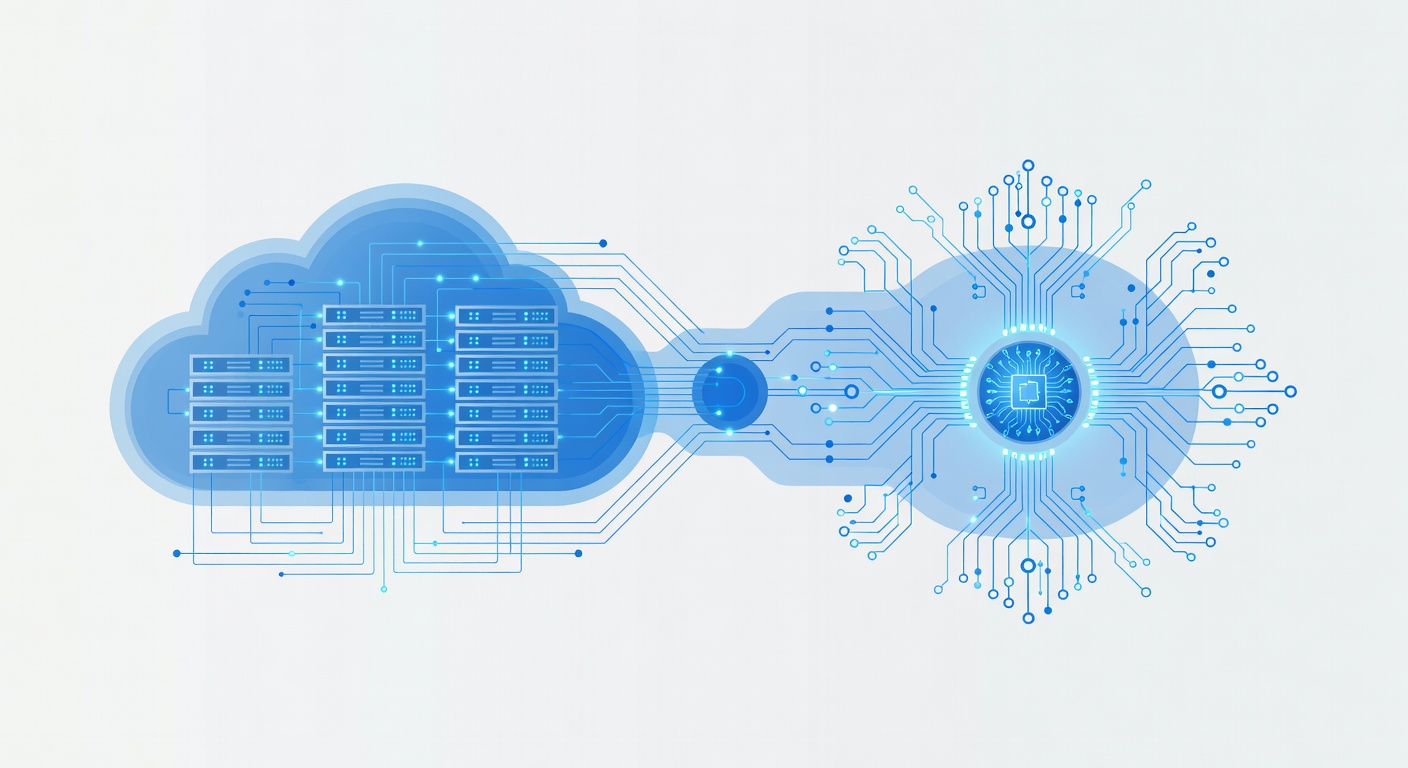
By leveraging Ollama—a lightweight framework for running large language models locally—Eve Agent creates an autonomous coding agent that lives on your machine. Your code never leaves your disk. Your prompts don't ping a distant server. The entire feedback loop happens in your local environment.
For security-conscious teams, compliance-heavy organizations, and developers who simply prefer owning their tools, this is game-changing.
What Makes Eve Agent V2 Different?
Most AI coding assistants are passive. You ask them a question, they give you an answer. Eve Agent V2 is autonomous. It can:
- Analyze your codebase and understand project structure without external calls
- Execute code locally to test ideas and iterate on solutions
- Self-correct by examining errors and adjusting its approach
- Run independently without waiting for API responses
This isn't just a chatbot that knows Python syntax. It's an agent with reasoning capabilities, capable of breaking down complex development tasks into smaller steps and working through them methodically.
Ollama: The Unsung Hero of Local AI
If you haven't encountered Ollama yet, it's worth understanding. This framework makes running large language models on consumer hardware surprisingly practical. Instead of needing expensive GPU clusters or cloud credits, you can run capable models on your MacBook, Linux machine, or modest server.
Eve Agent V2 integrates seamlessly with Ollama, which means:
- No subscription fees – your only costs are hardware and electricity
- Instant availability – no queue times or rate limit nightmares
- Full transparency – you control exactly which models run and how they work
- Offline capability – your coding agent works without an internet connection
For indie developers and bootstrapped startups, this shifts the economics dramatically.
Real-World Scenarios Where Local AI Shines
Sensitive Codebases: Fintech companies, healthcare platforms, and government contractors often can't use cloud-based AI tools due to compliance requirements. A local agent solves this completely.
High-Volume Assistance: Need to refactor a massive codebase? With a local agent, you're not burning through API quotas or racking up bills per request.
Custom Workflows: Want your coding agent to integrate with internal tools, proprietary databases, or custom development processes? Local-first architecture makes this far easier.
Learning and Experimentation: AI development itself requires iteration. Running models locally lets you experiment with different architectures and prompts without worrying about costs.
The Trade-Offs Worth Considering
Local-first development isn't a magic bullet. Your machine needs adequate hardware—Eve Agent V2 benefits from solid CPU performance and adequate RAM. Model quality varies; you're typically working with open-source models rather than OpenAI's latest release.
But here's the thing: the gap is closing rapidly. Open-source models are improving month-over-month. Hardware costs continue dropping. And for many use cases, "good enough and locally owned" beats "slightly better and cloud-dependent."
Getting Started with Eve Agent V2
If this resonates with you, the barrier to entry is refreshingly low:
- Clone the Eve Agent V2 repository from GitHub
- Install Ollama on your system (it takes minutes)
- Pull a suitable LLM model (the repo documentation guides you through options)
- Configure Eve Agent to point to your local Ollama instance
- Start working with your autonomous coding assistant
The documentation is community-driven and pragmatic. You're not learning a proprietary platform—you're learning tools that will remain relevant regardless of how the AI landscape shifts.
What This Means for Your Infrastructure Choices
As a developer thinking about your tech stack, Eve Agent V2 represents something bigger: the recognition that valuable AI capabilities don't require centralized cloud services.
This has implications for how you think about:
- Where you run your code – local-first doesn't mean no cloud, but you control the choice
- Data privacy – sensitive information stays under your roof
- Cost predictability – no surprise API bills from unexpected usage spikes
- Tool ownership – you're building with open-source tools you can fork and modify
For hosting and infrastructure decisions specifically, this reinforces why platforms like NameOcean matter. You want infrastructure partners who respect your autonomy—whether that's domain management, DNS control, or cloud hosting—and let you build on your own terms. Local AI agents fit naturally into that philosophy.
The Bigger Picture: Who Controls Your Development Tools?
Eve Agent V2 is technically impressive, but it's philosophically important too. It's a statement that developers don't need to outsource their AI-assisted development to cloud platforms.
As more teams embrace local-first AI agents, we'll likely see:
- Better integration with open-source ecosystems
- More specialized models optimized for specific languages and frameworks
- Community-driven improvements rather than waiting for vendor updates
- Cost models that reward efficiency rather than consumption
The era of "cloud services only" for AI development isn't ending, but the era of "cloud services or nothing" is over.
Next Steps
If you're curious about autonomous coding agents, frustrated with API costs and rate limits, or just want to understand what local AI development looks like in practice—give Eve Agent V2 a try.
The repository includes examples, documentation, and an active community. The worst case? You learn more about how LLMs work and why local-first architecture matters. The best case? You discover your next essential development tool.
The future of AI-assisted development probably includes both cloud and local solutions. But increasingly, developers get to choose which makes sense for their situation. That's genuine progress.
Curious about building with your own infrastructure? At NameOcean, we believe developers should own their tools—from domain registrations to cloud hosting to the development agents they use daily. What would your ideal local-first development setup look like?