Running AI Locally vs. Cloud: Why Your Mac Deserves Both Options
The AI Paradox: Local Power Meets Cloud Scale
We're living in an interesting moment in AI development. On one hand, you've got massive language models hosted in the cloud that can do incredible things. On the other hand, you've got increasingly powerful local models that can run right on your MacBook. But here's the thing nobody's really talking about: you don't have to choose.
The rise of hybrid AI approaches is reshaping how developers think about architecture, latency, privacy, and cost. And if you're building on the web or running applications in the cloud, this matters more than you think.
Why Local AI is No Longer a Compromise
Five years ago, running serious AI models locally was a non-starter. You'd get toy models, limited capabilities, and sluggish performance. Today? That's changed dramatically.
Modern Macs with Apple Silicon (M1, M2, M3, and beyond) have neural engines and GPU acceleration that make running local language models genuinely practical. We're talking about:
- Instant inference without network latency
- Complete data privacy (your prompts never leave your machine)
- Zero per-request costs once the model is downloaded
- Full control over which models you run and how
For developers, this is game-changing. You can prototype AI features locally, iterate quickly, and only spin up cloud resources when you need to scale or handle concurrent users.
The Cloud Argument Still Holds
But before you rush to download every model on Hugging Face, let's be real: cloud AI still dominates for good reasons.
Cloud providers give you:
- Massive model libraries without storage constraints
- Consistent performance across different hardware
- Built-in scaling for production workloads
- Specialized hardware like NVIDIA GPUs or TPUs
- Managed services that handle updates and maintenance
The cloud is perfect for users hitting your API at scale, running expensive inference operations, or needing the latest frontier models that require serious compute.
The Hybrid Approach: Best of Both Worlds
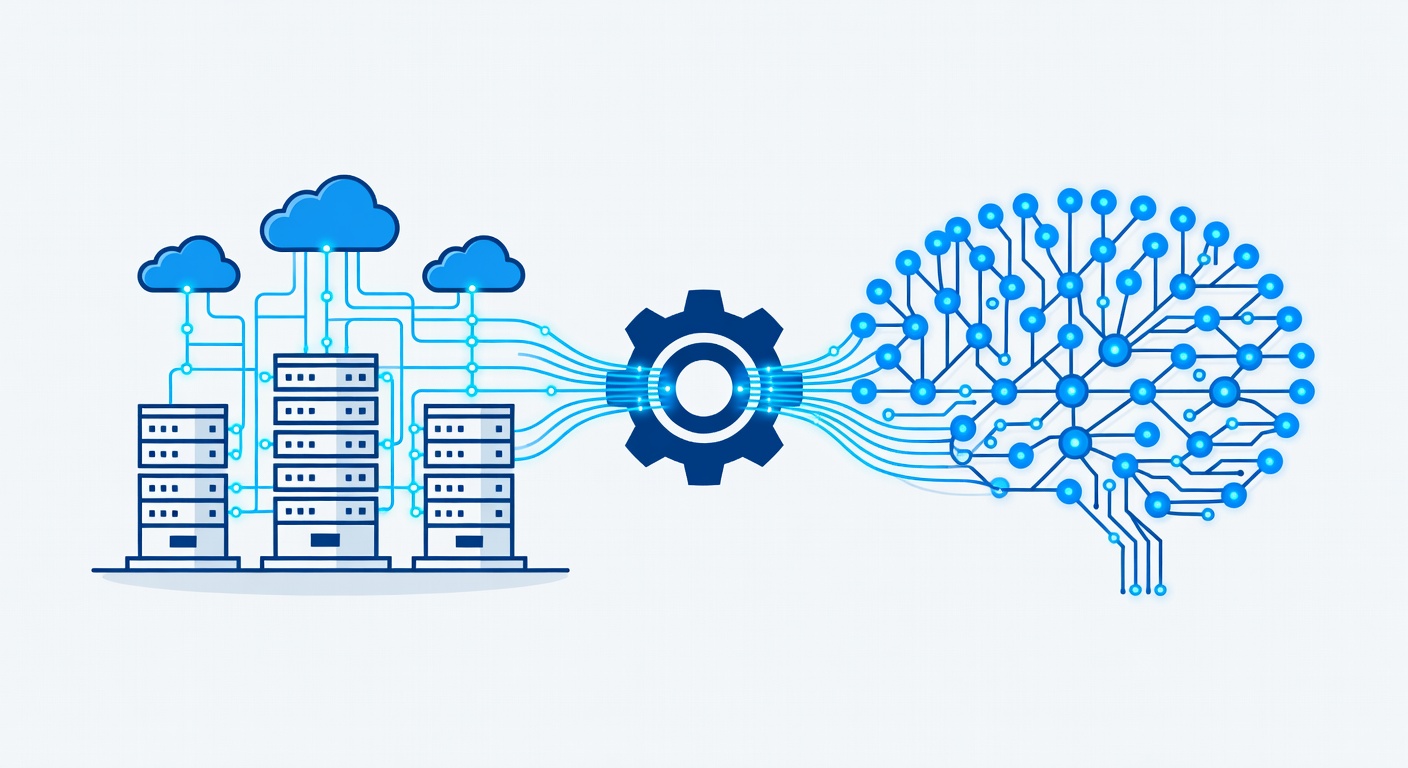
Here's where it gets interesting. The smartest developers aren't picking sides anymore. They're building hybrid architectures where:
- Local models handle the basics — quick tasks, simple completions, and testing
- Cloud models handle the heavy lifting — complex reasoning, long-context processing, and production traffic
- Smart routing decides which to use — based on complexity, latency requirements, and cost
Think of it like DNS failover, but for AI. Your application probes the request, decides if it can be handled locally, and routes accordingly. This gives you both the speed of local inference and the power of cloud computing.
Implications for Your Infrastructure
If you're hosting applications with NameOcean or any other cloud platform, this hybrid approach influences several decisions:
API Design: Build endpoints that work with multiple AI backends. Design your APIs so you can swap between local and cloud models without rewriting client code.
Cost Optimization: Run a local model for user requests that hit your API 100 times per day. Save cloud inference costs. Reserve your expensive cloud models for the genuinely complex requests.
Latency Strategy: Local inference happens in milliseconds. Cloud inference adds network round trips. For user-facing features, consider local-first with cloud fallback.
Data Privacy: GDPR, HIPAA, and similar regulations love local processing. If you handle sensitive user data, local models might be your compliance tool of choice.
The Developer Experience Argument
Beyond the technical benefits, there's something deeply satisfying about running powerful AI tools on your own hardware. You're not dependent on API rate limits, regional availability, or vendor pricing changes. You can work offline. You can experiment freely.
For startups and independent developers, this democratizes access to AI capabilities that were previously locked behind expensive APIs and enterprise licensing.
What This Means Going Forward
The days of "cloud AI OR local AI" are ending. The future is about intelligent orchestration between the two. Your tech stack needs flexibility to run models wherever makes sense—whether that's on your Mac, your user's device, or your cloud infrastructure.
As you plan your AI-powered applications, think about:
- Which inference workloads can run locally without compromising your user experience
- Where cloud models add genuine value
- How to architect for easy switching between backends
- Privacy and compliance implications of each choice
The best AI applications won't be purely local or purely cloud. They'll be smart enough to know which approach to use, when, and why.
And for developers building on modern hosting platforms, that flexibility is becoming a fundamental requirement, not a nice-to-have feature.
The bottom line: Don't view local and cloud AI as competitors. View them as complementary tools in your development arsenal. The future belongs to developers who can orchestrate both seamlessly.