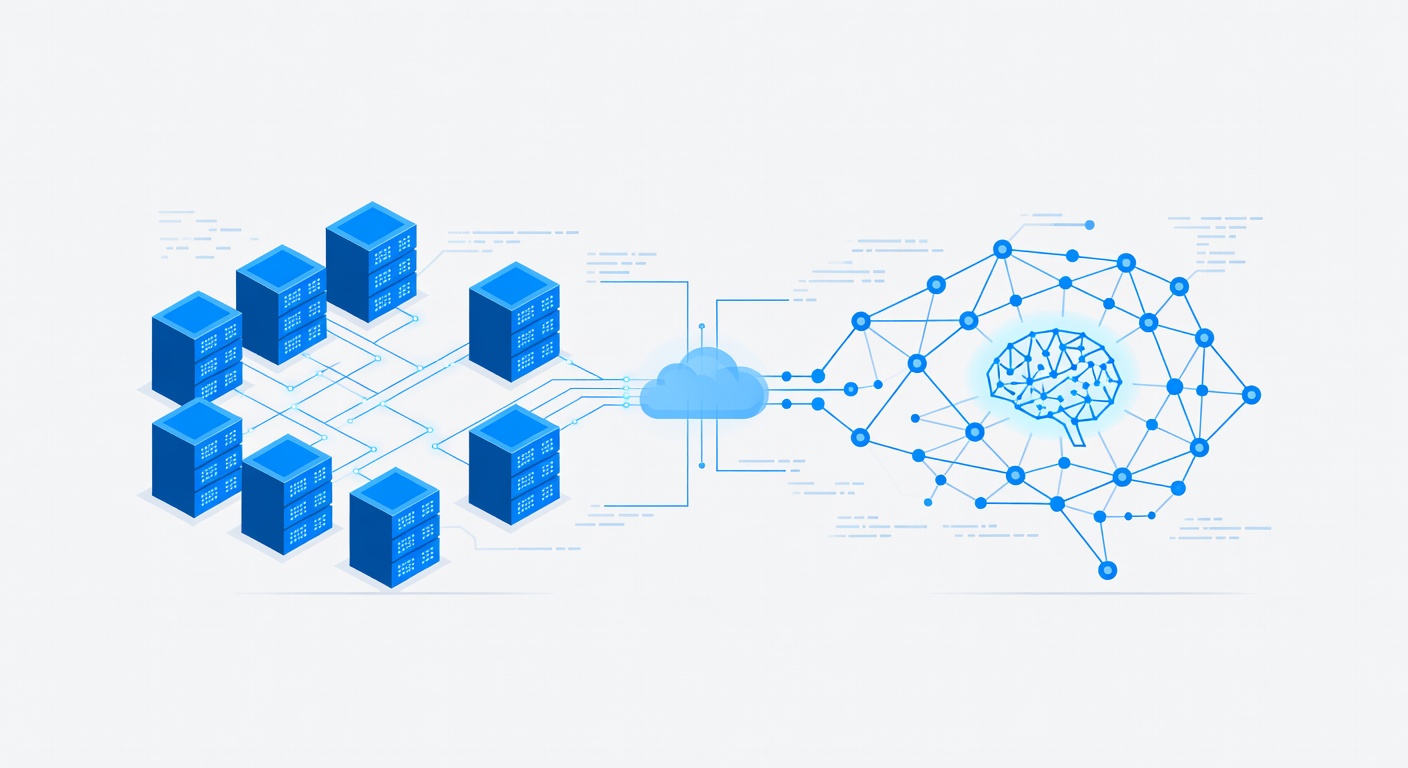
Making Network Infrastructure Invisible: How AWS is Revolutionizing Cloud Networking
The Network Nobody Wants to Think About
Here's something you probably don't realize: you care deeply about your network infrastructure, but only when it's broken.
Think about it. When your domain resolves instantly, when your SSL handshake completes in milliseconds, when your cloud resources communicate flawlessly—you barely notice. It's background magic. But the moment latency spikes or a connection drops, suddenly networking becomes the most frustrating part of your entire application stack.
This tension isn't new, but AWS's approach to solving it represents a fundamental shift in how we think about cloud infrastructure.
The 15-Year Quest to Get Out of Your Way
At its core, AWS's networking philosophy is deceptively simple: the network should be like a light switch. You flip it. It works. You move on with your life.
The reality, however, has been messier. For over a decade and a half, AWS engineers have been quietly building toward an ambitious goal—removing the friction from networking entirely. This wasn't just a nice-to-have optimization. It was born from necessity.
Back in 2010, when cloud was still finding its footing, AWS recognized a critical problem: traditional networking architectures simply couldn't scale to meet the demands of a hyperscaler. The vertically integrated model that equipment vendors relied on—where one company controlled hardware, firmware, and software in a locked ecosystem—was fundamentally limiting innovation and driving up costs.
Sound familiar? It should. That's exactly what happened with mainframes, before the server industry disrupted everything.
Taking Control: From Outsourced to In-House
AWS made a bold decision: own the entire networking stack.
Instead of relying on third-party vendors, AWS began designing its own hardware and developing proprietary software. This wasn't about vendor lock-in for customers—it was about vendor independence for AWS itself.
Today, AWS's network infrastructure consists of three core components:
- Network devices (switches and routers) built on custom ASICs (application-specific integrated circuits)
- Optical transceivers that transmit data via laser signals
- Cabling infrastructure (fiber optic and copper)
What makes this approach remarkable is the philosophy behind it. Most networking vendors build different hardware for different network layers—one ASIC for aggregation networks, another for core networks, another for border networks. Each has different performance requirements, memory needs, and throughput characteristics.
AWS does something different: they use one unified ASIC design for everything.
This might sound inefficient on paper. It's not. Here's why.
The Power of Constraint-Driven Design
By limiting themselves to a single ASIC design, AWS engineers had to get creative. Instead of throwing specialized hardware at specialized problems, they poured engineering effort into software optimization and algorithmic cleverness.
The payoff? Massive operational simplification.
When you manage a global cloud network with millions of instances, supply chain logistics matter. A single ASIC design means:
- Simplified procurement – No juggling multiple SKUs with competing supply chains
- Easier scaling – Adding capacity is straightforward when you're expanding the same architecture
- Consistent reliability – Engineers gain deep expertise in one platform rather than spreading knowledge across multiple architectures
- Faster innovation – Software updates benefit the entire network simultaneously
But here's the deeper insight: constraint breeds innovation. By forcing themselves to solve functionality problems in software rather than hardware, AWS created a more flexible, more updatable, more intelligent network.
What This Means for the Rest of Us
If you're building on AWS—or any cloud platform—this philosophy has practical implications for how you architect your systems.
First, trust the platform abstraction. AWS's investment in networking infrastructure means you can build with confidence that the foundation is solid. DNS resolution, inter-AZ communication, NAT gateway performance—these aren't afterthoughts. They're engineered to the level of core AWS infrastructure.
Second, understand your latency profile. As networks become more invisible and reliable, the remaining performance differences come from architectural choices. Are you placing compute near databases? Are you minimizing cross-AZ traffic? These decisions matter more as the baseline network quality improves.
Third, focus on your own domain. The whole point of this infrastructure invisibility is freeing you to concentrate on what actually matters—your application logic, your user experience, your business value. Let AWS sweat the networking details.
The Future: Networks That Anticipate
What's genuinely exciting is where this goes next. A network designed from first principles, controlled end-to-end, optimized entirely in software—this is a foundation for intelligent networking.
AI-assisted infrastructure optimization. Predictive traffic shaping. Anomaly detection that catches problems before they impact users. These aren't science fiction when you control the entire stack and treat it as a unified system.
At NameOcean, we see this philosophy playing out across our platform too. Whether you're managing domains, configuring DNS, deploying SSL certificates, or leveraging our AI-powered Vibe Hosting, the goal is the same: make infrastructure invisible so you can focus on building something great.
The networking teams toiling away in those Cupertino labs aren't trying to make themselves famous. They're trying to make their work disappear into the background. And that's exactly how it should be.
What aspects of cloud infrastructure do you wish were more invisible in your daily workflow? The best ones are probably the ones you never have to think about.