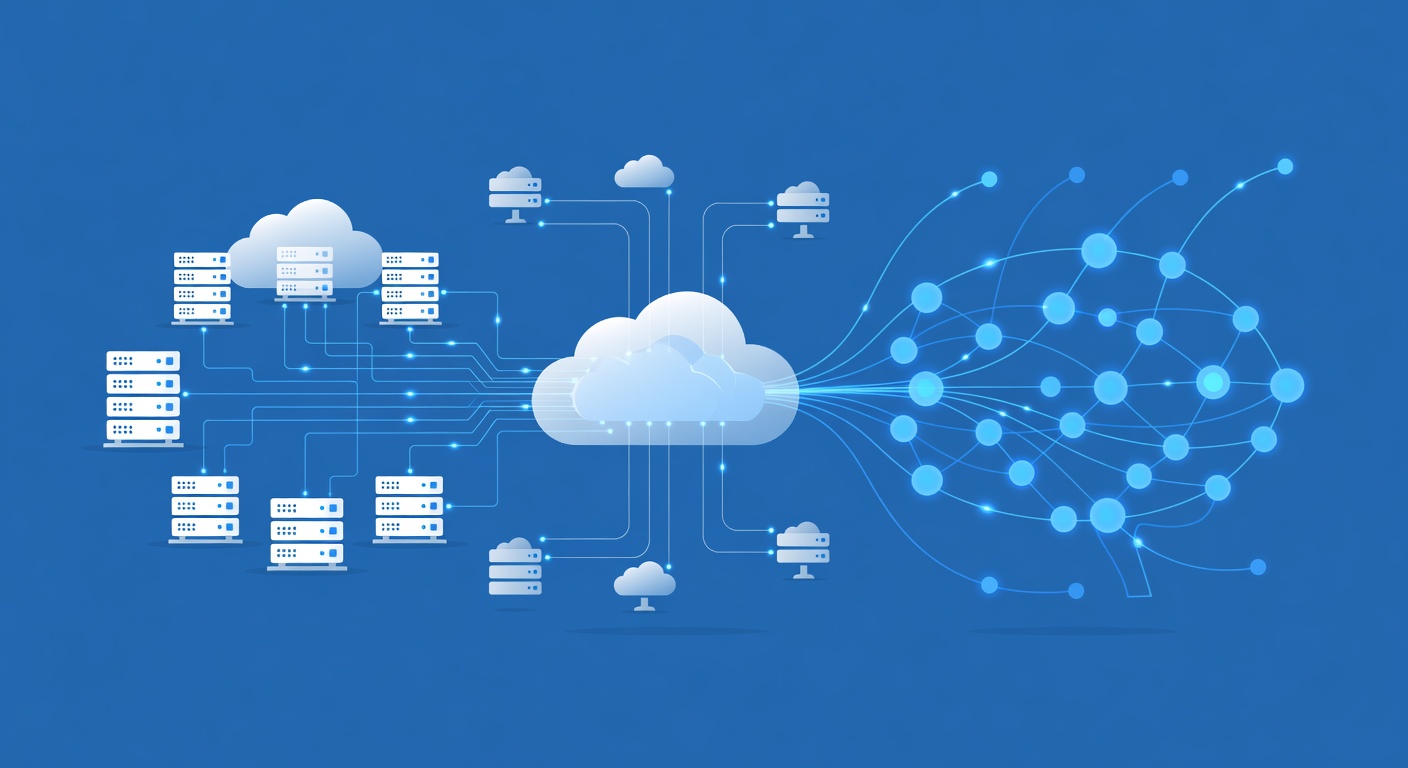
Git as Your AI Safety Net: Version Control Essentials for AI-Assisted Development
Git as Your AI Safety Net: Version Control Essentials for AI-Assisted Development
You're using Claude, ChatGPT, or Copilot to generate code. Things are moving fast. Your project structure is evolving by the hour. Suddenly, you realize that beautiful function the AI generated three prompts ago? It's now incompatible with your current approach, and you have no idea what changed.
Welcome to the world of AI-assisted development—where traditional version control transforms from a "nice to have" into absolute survival equipment.
Why Git Matters More When Machines Are Writing Code
Here's the uncomfortable truth: AI models are incredible at generating code, but they have no memory between sessions. They can't apologize for that breaking change. They won't remember your project's architecture decisions from yesterday.
This is precisely why Git becomes your safety harness.
When you're building with AI assistance, you're essentially running rapid experiments. Sometimes the AI nails it on the first try. Sometimes it generates three different approaches before hitting the sweet spot. Without version control, you're working in a fog where every keystroke could overwrite something important.
Think of Git as checkpoints in a video game. Except instead of dying and reloading, you're preserving working states of your codebase while AI explores different solutions.
Setting Up Your First Repository (The Right Way)
You don't need to be a Git wizard to make this work. Let's demystify the basics.
Initial Setup
git init my-ai-project
cd my-ai-project
Congratulations. You've created your first repository. But before you start committing AI-generated code everywhere, we need to talk about what shouldn't go in Git.
The .gitignore File: Your First Line of Defense
This is where most non-developers stumble. When working with AI tools, you'll accumulate files that have no business in version control:
- Node modules and dependencies: Let your package manager handle these
- Environment files (.env): Never commit API keys or secrets—this is non-negotiable
- AI conversation exports: Those JSON files from ChatGPT sessions? Keep them locally
- Build artifacts: Compiled files, dist folders, and generated outputs
- Cache files: Virtual environments, node_cache, pip caches
Here's a practical .gitignore template for AI development projects:
# Dependencies
node_modules/
venv/
env/
__pycache__/
*.pyc

# Environment variables
.env
.env.local
.env.*.local

# IDE and editor files
.vscode/
.idea/
*.swp
*.swo

# AI tool outputs and logs
*.log
ai_outputs/
conversation_exports/
temp_generations/

# Build and compiled files
dist/
build/
*.egg-info/

# OS files
.DS_Store
Thumbs.db
Start with this, customize it for your stack. You'll thank yourself when you accidentally try to commit your entire node_modules folder and discover Git has already saved you from that disaster.
The Art of Meaningful Commits in an AI World
Here's where things get interesting. Traditional developers might commit after completing a feature. When you're working with AI, your workflow is different.
Commit after each meaningful AI interaction, not after each keystroke. For example:
- After the AI generates a working API endpoint
- After you've validated the generated code against your requirements
- After you've integrated an AI-suggested solution with your existing codebase
- Before asking the AI to refactor something risky
Don't commit every single prompt-response cycle. That's noise. But do commit whenever you have something that works or represents a stable intermediate state.
Your commit messages should be conversational but informative:
✓ "AI generated working authentication flow - tested with local credentials"
✓ "Integrated Claude's database schema suggestion - passes validation"
✗ "update code"
✗ "ChatGPT response 12"
The goal is that future-you (or a team member) can understand why something is in the codebase and what problem it solves.
Worktrees: Running Multiple AI Experiments in Parallel
Here's an advanced technique that becomes invaluable when working with AI: Git worktrees. This lets you maintain multiple parallel branches of your project simultaneously.
Imagine this scenario: You're exploring two different architectural approaches with AI assistance. You want to test both without constantly switching branches. Worktrees make this possible.
git worktree add ../project-experiment-1 -b feature/ai-architecture-v1
git worktree add ../project-experiment-2 -b feature/ai-architecture-v2
Now you have two separate working directories. One can be running your original codebase while the other explores an AI-generated architectural overhaul. You can test both approaches independently, commit changes separately, and merge the winner back into main when ready.
This is particularly useful when:
- You're comparing different AI model outputs
- You want to test a risky refactoring suggestion in isolation
- Multiple team members are working with different AI agents on different features
- You're prototyping multiple solutions to the same problem
Branching Strategies for AI-Assisted Work
Your branching approach should reflect how AI changes the development flow.
Recommended pattern:
- main: Production-ready code only
- develop: Stable, tested integrations of AI-generated features
- feature/ai-[description]: Individual AI experiments and generations
- test/[description]: For validating AI outputs before merging to develop
This gives you flexibility to explore AI suggestions (feature branches) while maintaining stability in your main codebase.
The Real Power: Rollback and Recovery
Here's what makes Git truly indispensable for AI development:
You ask an AI to optimize your database queries. It generates something that looks brilliant. You integrate it. Suddenly, your application is 30% slower, and you're not sure why.
Without Git? You're debugging blindly, trying to reconstruct what changed.
With Git? You're one command away from the previous stable state:
git revert [commit-hash]
That's not just convenience. That's the difference between a 5-minute recovery and a 5-hour debugging session.
Practical Workflow: Your Daily AI Development Cycle
Here's how a typical day might look:
- Morning: Pull latest from develop branch, review what the AI did yesterday
- Exploration: Create a feature branch for today's AI-assisted work
- Generation: Work with your AI tools, committing after each significant result
- Testing: Validate outputs, run your test suite
- Integration: When stable, merge back to develop
- Review: Document what worked, what didn't, why you kept certain approaches
This rhythm—branching, generating, committing, testing, integrating—protects your project while keeping the creative flow moving.
Don't Let This Become Overhead
The final tip: Keep it simple. You don't need complex Git workflows to protect yourself from AI chaos. A straightforward branching strategy with meaningful commits and a solid .gitignore covers 90% of what you need.
The goal isn't to become a Git expert. The goal is to have a reliable checkpoint system so that when your AI experiments go sideways, recovery isn't catastrophic.
Git transforms AI-assisted development from "hope nothing breaks" into "let's explore, test, and move forward confidently."
Your Next Steps:
- Set up your first repository with a proper .gitignore
- Make your first commit after a meaningful piece of AI-generated code
- Explore branching once you're comfortable with basic commits
- Consider worktrees when juggling multiple AI experiments
The best time to learn Git was years ago. The second-best time is right now, before your AI project reaches the chaotic moment where you desperately need it.