From Sequential to Parallel: How Multi-Agent AI is Transforming Developer Workflows
From Sequential to Parallel: How Multi-Agent AI is Transforming Developer Workflows
Remember when we thought AI coding assistants were the endgame? GitHub Copilot, ChatGPT, Claude—they've all made solo developers more productive. But here's what nobody talks about: individual speed gains don't always translate to team velocity gains.
Why? Because most development workflows are still fundamentally sequential. One engineer writes a feature. They push a PR. Someone reviews it. Merge. Repeat. Even with an AI co-pilot making that individual faster, you're still waiting for each step to complete before the next one begins.
That's the concurrency problem that's been quietly plaguing tech teams—and now we're seeing creative solutions emerge from the frontlines.
The Orchestrator Paradigm Shift
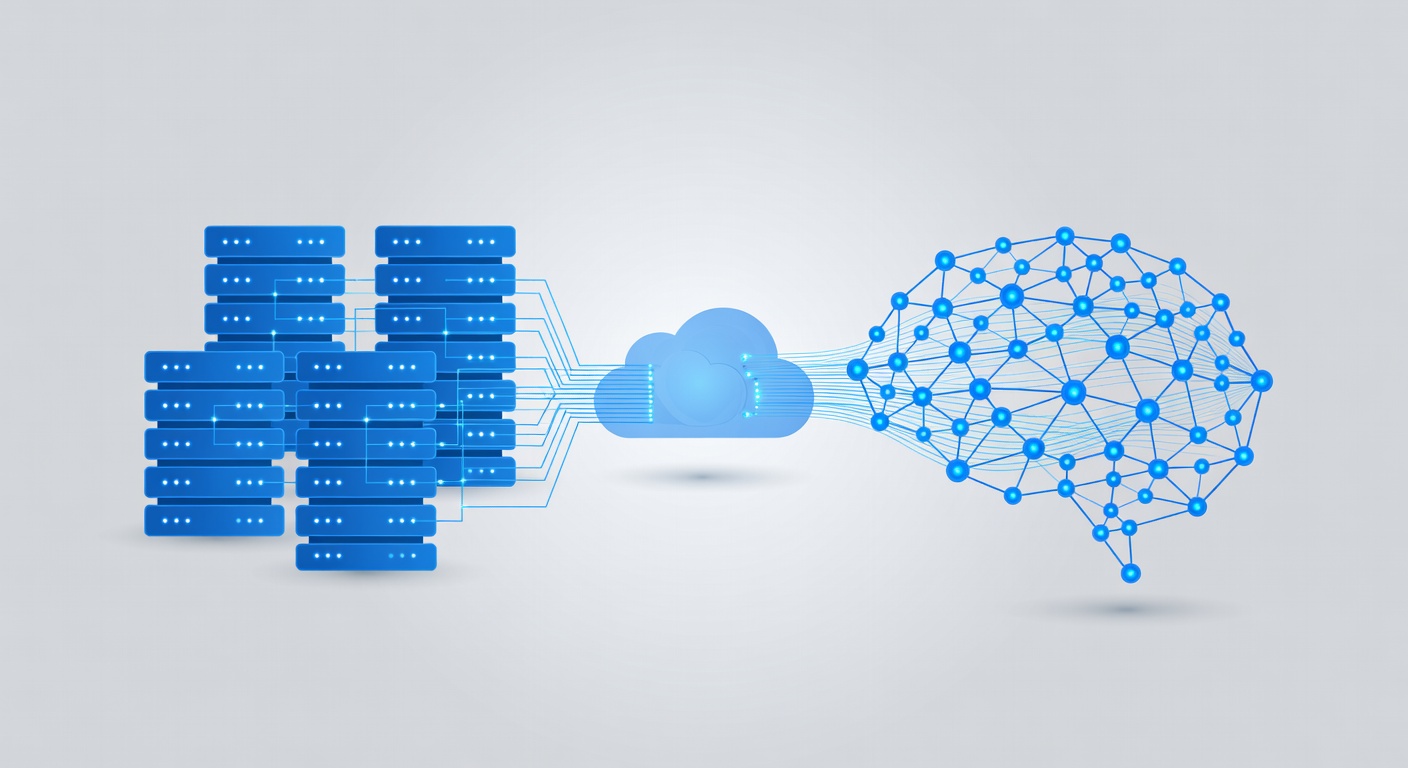
Here's what's changing: developers are evolving from implementers into orchestrators. Instead of an engineer coding a feature while an AI assistant watches over their shoulder, imagine an engineer directing multiple AI agents to work on different parts of a problem simultaneously. One agent handles the API layer. Another tackles the frontend. A third writes tests. All in parallel.
This isn't science fiction—it's happening in engineering teams right now.
The most compelling example comes from real-world adoption patterns. When teams move from single-agent assistance to coordinated multi-agent systems, the productivity gains aren't marginal. We're talking about 3.5x more work shipping through the pipeline per developer. That's not a 10% optimization. That's a fundamental restructuring of how code gets built.
Why This Matters for Your Team
Let's be concrete about what this means:
Traditional workflow: Engineer → AI assists → PR created → Review → Merge → Next task (sequential, bottleneck-heavy)
Orchestrator workflow: Engineer directs multiple agents → Agents work in parallel on related tasks → Integrated results → Single comprehensive PR → Faster merge (concurrent, bottleneck-free)
The shift requires a different mental model. You're no longer thinking "how do I code this faster?" You're thinking "how do I break this problem into parallel-able chunks and coordinate agents to solve them?"
This is especially powerful for:
- Complex features that span multiple subsystems
- Bug fixes that need changes across different layers
- Refactoring projects where parallel work usually causes merge hell
- API development where client and server can be built simultaneously
The DIY-to-Organic Path
What's fascinating is how these tools emerge. The most effective multi-agent orchestration platforms often start as one engineer's side project—built to solve their own specific pain point. No grand roadmap. No executive mandate. Just "this workflow sucks, let me fix it."
When a tool is good enough and solves a real problem, it grows organically. Within months, you can see adoption spread across entire organizations—not because it was mandated, but because other engineers recognize the value and start using it.
This is how you know you're onto something real: developers vote with their keyboard.
What This Means for AI-Assisted Development
The narrative around AI coding is evolving. Early stage: "AI makes you faster at coding." Current stage: "AI lets you rethink how work gets organized."
This has implications:
Tool Design: Single-agent assistance is yesterday's architecture. The next generation of development tools need to handle coordination, context-sharing, and conflict resolution between multiple concurrent AI workers.
Developer Skills: The premium skill isn't "can you code fast?" anymore. It's "can you architect work that AI agents can execute in parallel?"
Team Composition: We might see teams restructure around this capability—fewer pure coders, more people who specialize in breaking down complex problems into parallelizable subtasks.
Knowledge Work Evolution: This is what knowledge work acceleration actually looks like. Not everyone becoming a better coder, but teams becoming more efficient at organizing coding work.
Building Your Own Multi-Agent Workflow
If you want to experiment with this approach, here's a practical framework:
Step 1: Identify parallelizable work. Look at your next feature. What parts could be worked on independently? API contracts, UI components, tests, documentation—these can often proceed in parallel.
Step 2: Define clear boundaries. Agents (human or AI) need crystal-clear specs to work independently. Vague requirements become merge conflicts.
Step 3: Implement coordination. This is where it gets tricky. You need mechanisms for agents to share context, verify compatibility, and resolve conflicts before they become disasters.
Step 4: Iterate. Your first multi-agent workflow won't be perfect. The goal is to find the coordination overhead that works for your team.
The Hosting and Infrastructure Angle
Here's something infrastructure teams should pay attention to: as development velocity accelerates, your deployment and testing infrastructure needs to keep pace. More PRs merging faster means:
- CI/CD pipelines need to handle higher throughput
- Testing frameworks need to catch integration issues faster
- Staging environments need to support concurrent deployments
- DNS and routing need to support blue-green deployments seamlessly
This is where modern cloud hosting becomes critical. You can't orchestrate multi-agent development if your infrastructure can't orchestrate multi-stage deployments. Tools like NameOcean's Vibe Hosting with AI-assisted infrastructure management help you match your dev environment's velocity to your development workflow's velocity.
The Future of Coding
We're in a transitional moment. AI coding assistants proved that machine-assisted development works. But we're just beginning to explore what happens when you stop thinking of AI as a tool and start thinking of it as a workforce that can be orchestrated.
The teams that crack this—that figure out how to break down problems into parallel work, coordinate AI agents to execute simultaneously, and integrate results seamlessly—will have a significant advantage. Not just in code shipped, but in how they think about engineering itself.
The concurrency problem in development wasn't really about code. It was about workflow. And that's finally being solved.
What's your experience with multi-agent workflows? Are you experimenting with parallel AI-assisted development? The best insights come from teams actually doing this work.