DecisionNode: Why Your Development Team Needs an AI-Powered Decision Archive
DecisionNode: Why Your Development Team Needs an AI-Powered Decision Archive
We've all been there. It's 2 PM on a Tuesday, your team is debating whether to implement caching at the database layer or application layer. Someone vaguely remembers a decision made three months ago about this exact thing, but nobody can find the Slack thread, email, or wiki page where it was documented.
This is the problem DecisionNode solves—and it does it brilliantly.
The Real Cost of Forgotten Decisions
Development decisions are like architectural blueprints. They capture why something was built a certain way, which constraints led to that choice, and what tradeoffs were made. Yet most teams treat decision documentation like an afterthought: buried in Confluence pages, scattered across Slack threads, or worse, lost entirely.
The consequence? Developers rehash the same arguments. Teams diverge on best practices. New engineers waste cycles understanding context that should have been preserved. And AI agents? They have no reliable way to understand your codebase's decision-making principles.
Enter Vector Embeddings and Semantic Search
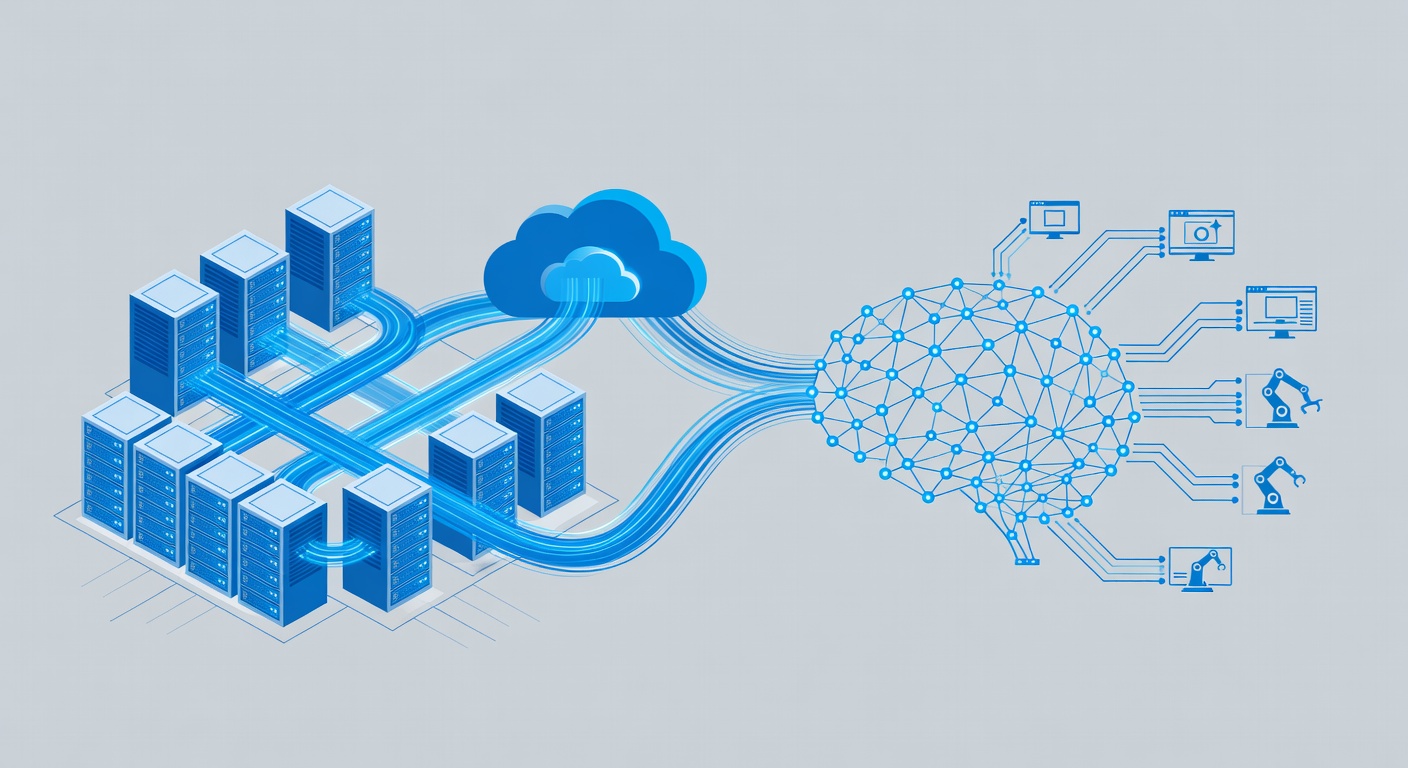
DecisionNode takes a fresh approach by storing development decisions as vector embeddings. Rather than relying on keyword matching or natural language processors that struggle with nuance, vector embeddings capture the semantic meaning of your decisions.
Here's what that means in practice:
Query by intent, not keywords. Instead of searching for "cache database," you can ask "how do we handle performance bottlenecks?" and DecisionNode returns relevant decisions even if they use different terminology.
Context-aware results. The semantic search understands that a decision about Redis vs. Memcached relates to your query about "distributed caching strategies," even with completely different phrasing.
AI-agent ready. Because decisions are stored as embeddings, large language models and AI agents can reason about your architectural choices without parsing messy documentation.
The Architecture: CLI + MCP Server
DecisionNode offers two integration paths:
Command-Line Interface (CLI)
For teams who want to integrate decision capture into their workflow immediately. Store decisions as you make them:
decisionnode add "database-sharding-strategy" \
  "We chose horizontal sharding over vertical partitioning due to expected growth patterns and query patterns. Key constraint: we need sub-100ms response times."
Query semantic relationships:
decisionnode search "How should we scale our data layer?"
Model Context Protocol (MCP) Server
This is where things get interesting for AI-powered development. By exposing DecisionNode as an MCP server, you enable:
- AI agents to understand your architectural constraints before suggesting solutions
- Code review automation that references relevant decisions when evaluating PRs
- Onboarding assistants that can explain why your codebase is structured the way it is
- Intelligent documentation that stays synchronized with actual decision-making
Imagine a GitHub Copilot or Claude instance with direct access to your team's decision history. It stops suggesting patterns your team explicitly rejected and starts understanding the principles driving your architecture.
Real-World Applications
Onboarding new engineers: "Why do we use this ORM instead of raw SQL?" becomes answerable instantly, with full context about performance considerations and team preferences.
Technical debt discussions: When someone proposes refactoring, you can surface all decisions that led to the current approach, ensuring conversations include full context.
AI-assisted development: Your AI pair programmer understands not just how your system works, but why it was built that way—and can respect those constraints in its suggestions.
Architecture reviews: Document decisions as they happen, building an evolving record of your system's design rationale.
Integration with Your Dev Stack
The beauty of DecisionNode is its flexibility. As an MCP server, it integrates with:
- AI development tools and IDEs
- Documentation systems
- CI/CD pipelines (to audit decisions before deployment)
- Knowledge management platforms
- Custom internal tools
Whether you're running on NameOcean's cloud hosting with Vibe Hosting's AI capabilities or managing your own infrastructure, DecisionNode slots cleanly into your workflow.
The Broader Vision
DecisionNode represents a shift in how we think about software development. Rather than separating decision-making from implementation, it weaves them together. Your codebase becomes self-documenting at the architectural level. Your team scales without losing the reasoning behind critical choices.
For startups and growing engineering teams especially, this is crucial. Early decisions compound. A choice made in sprint one shapes your entire trajectory. DecisionNode ensures those decisions don't vanish into organizational memory when the original decision-makers move on.
Getting Started
Head to the DecisionNode repository to explore the implementation. It's open-source, actively maintained, and worth experimenting with in your next sprint.
The teams that win aren't those with the smartest individual decisions—they're the ones who can learn from their decisions. DecisionNode makes that learning systematic and scalable.
Your future self (and your AI agents) will thank you.