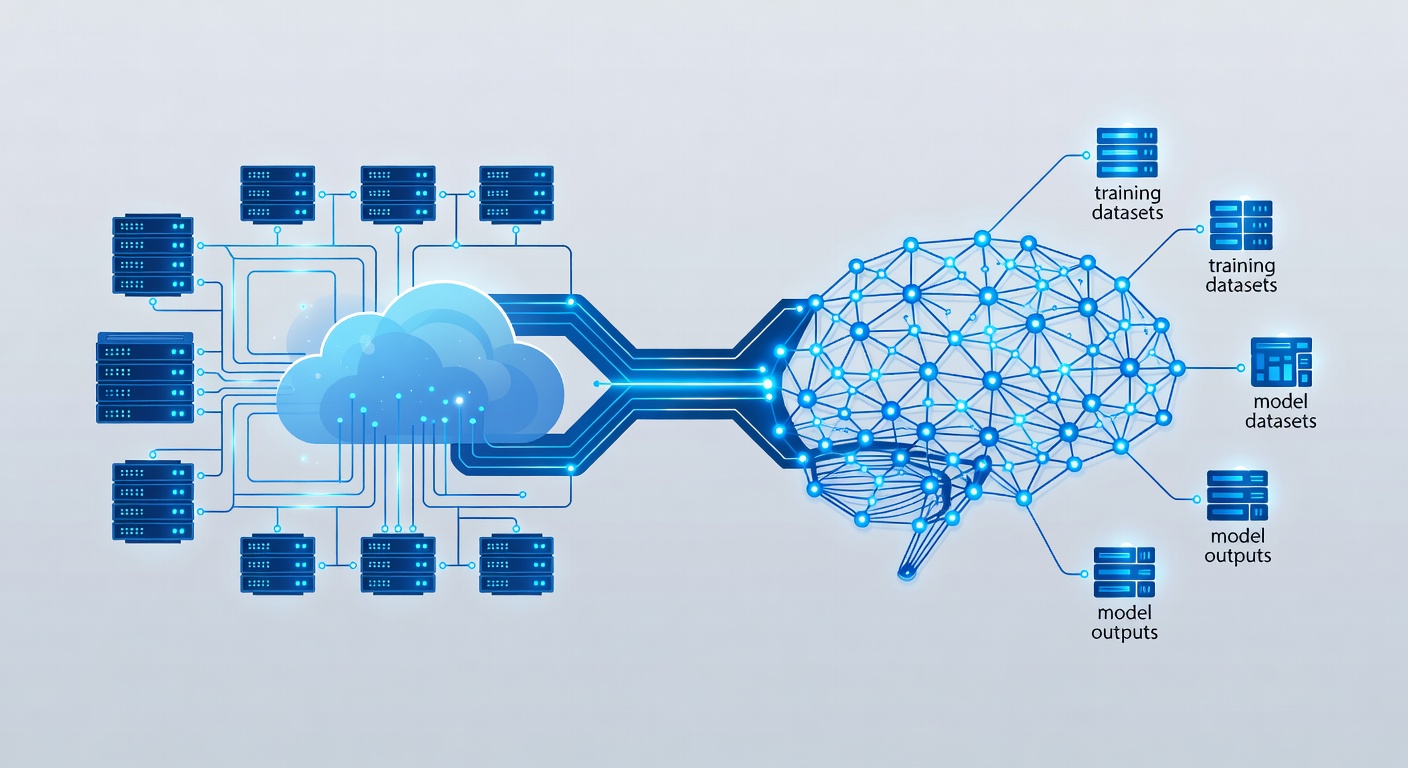
Building Your Own AI Assistant: Why Local-First Rust Agents Are the Future of Developer Tools
Building Your Own AI Assistant: Why Local-First Rust Agents Are the Future of Developer Tools
The Privacy Problem We've Been Ignoring
For years, developers have embraced AI tools that live in the cloud. ChatGPT, GitHub Copilot, and countless other services have become indispensable parts of our workflows. But there's a trade-off we rarely talk about: every keystroke, every prompt, every code snippet you send to these services travels across the internet and gets stored on someone else's servers.
What if there was another way?
Enter Local-First AI Agents
Local-first architecture isn't new—it's been gaining traction in database design and app development for a while now. But applying this philosophy to AI agents? That's where things get interesting.
A local-first AI agent runs entirely on your machine. It doesn't need internet connectivity to function. Your data never leaves your disk. And here's the kicker: you have complete control over what it does and how it behaves.
Projects like Akmon are proving this concept works exceptionally well for terminal-based workflows. For developers who live in the command line, having an intelligent assistant that understands your context, respects your privacy, and operates at the speed of local computation is genuinely transformative.
Why Rust? Why Terminal?
Building an AI agent is computationally demanding. Rust's reputation for performance and safety makes it an obvious choice. You get:
- Zero-cost abstractions that keep memory footprint minimal
- Blazingly fast execution (yes, we went there)
- Memory safety without garbage collection, meaning more predictable performance
- Cross-platform compatibility, so your agent works on Linux, macOS, and Windows
The terminal is the natural habitat for this kind of tool. Developers already spend significant time there. Integrating an AI assistant into your existing shell workflow—whether you're debugging, writing scripts, or exploring unfamiliar codebases—feels natural rather than bolted-on.
What Can Local-First AI Do For You?
Imagine having an AI assistant that:
- Debugs your code without sending it anywhere
- Explains system errors in real-time as they happen
- Suggests optimizations based on your local environment
- Works offline, because it doesn't need cloud APIs
- Learns your preferences without external tracking
For security-conscious teams, regulated industries, or anyone who's uncomfortable with third-party data handling, this is a game-changer.
The Open Source Advantage
What makes projects like Akmon special is their transparency. You can audit the code. You can fork it. You can contribute. The community builds better tools when everyone can see what's happening under the hood.
This openness also means:
- No vendor lock-in — you're not tied to a company's pricing whims
- Customization potential — adapt it to your specific workflow
- Educational value — learning how AI agents work by reading real implementations
- Community-driven evolution — features arrive based on what developers actually need
The Trade-offs Worth Understanding
Let's be honest: local-first AI agents aren't magic. They come with considerations:
Running sophisticated models locally requires decent hardware. You might not get the cutting-edge capabilities of the latest cloud-based GPT versions. Integration with external APIs requires more manual orchestration.
But for many developers, these trade-offs are worth it. You're gaining privacy, speed, and control in exchange for slightly less raw computational power.
Building the Future, One Terminal at a Time
The rise of local-first Rust-based AI agents signals something important: developers are reclaiming agency over their tools. We're moving away from the assumption that everything must live in the cloud, and toward systems designed for real developer workflows.
Whether you're a privacy advocate, someone in a restricted network environment, or simply someone who wants their dev tools to respect their boundaries, projects exploring this space deserve your attention.
The next generation of developer tools won't just be smarter—they'll be more respectful of your data, faster in practice, and fundamentally under your control.
What's Next?
If you're intrigued by local-first AI agents, here's what we'd suggest:
- Explore existing projects on GitHub to understand the architectural patterns
- Experiment with running models locally using frameworks like Ollama or LM Studio
- Consider your own workflows — where would an offline AI assistant add real value?
- Contribute to the community — these projects thrive on developer input
The future of AI-assisted development doesn't have to mean losing control over your code and data. And increasingly, developers are choosing tools that prove it.