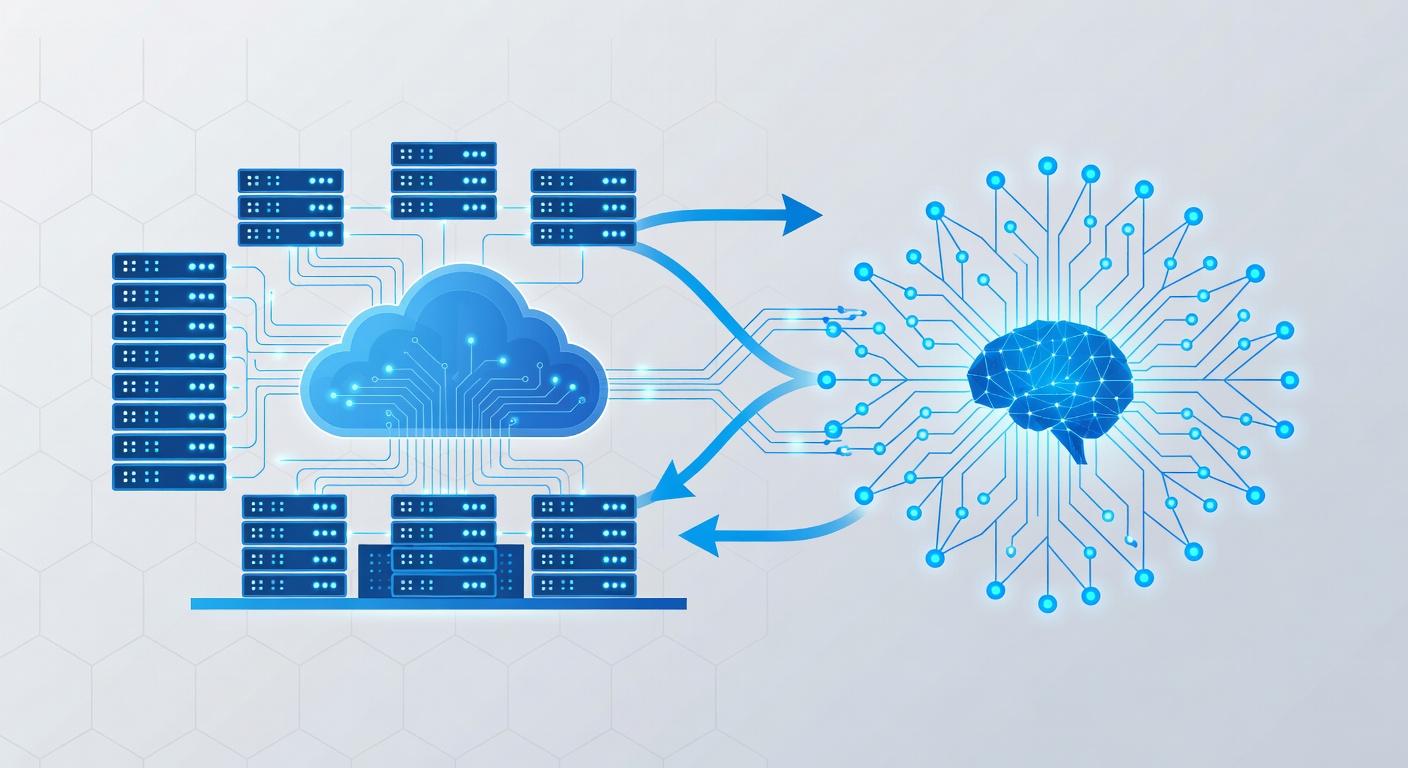
Building Smarter AI Agents: Why Engineering Excellence Matters in the Age of Autonomous Code
Building Smarter AI Agents: Why Engineering Excellence Matters in the Age of Autonomous Code
The Agent Problem We're Actually Facing
When we talk about AI-powered development tools, most conversations fixate on speed: Can it generate code faster than humans? That's the wrong question. The real challenge is quality at scale—can these systems make sound architectural decisions, recognize edge cases, and produce maintainable code that won't haunt your codebase three years from now?
This is where agentic engineering enters the picture. It's not about replacing developers; it's about creating AI systems that reason like experienced developers.
What Does "Better" Agentic Engineering Even Mean?
Traditional code generation works like an assembly line: input requirements, output code. Done. Agentic engineering introduces something fundamentally different—autonomous systems that can:
- Make iterative decisions rather than one-shot generations
- Validate their own work against project standards
- Understand context beyond the immediate prompt
- Learn from feedback within a development session
- Reason about tradeoffs between performance, maintainability, and security
The difference is subtle but profound. A code generator produces output. An engineering agent produces defensible decisions.
Why Microsoft's Approach Matters
Microsoft's AI-Engineering-Coach initiative tackles the structural problem: how do we instill engineering discipline into AI systems? This isn't about writing longer prompts or adding more parameters. It's about architecture.
The project demonstrates principles that matter across your entire AI-powered infrastructure:
1. Context Management Agents need comprehensive project context—not just the file you're editing, but dependencies, deployment patterns, team conventions, and performance requirements. This is where most AI tools fail spectacularly. They optimize locally while ignoring global constraints.
2. Validation Loops Real engineers review their work. So should agents. Building systematic validation into your AI workflow—whether that's unit tests, linting, or peer review simulations—filters out hallucinations before they become technical debt.
3. Decision Documentation When an AI system chooses an approach, can it explain why? Explainability isn't just about trust (though that matters). It's about creating feedback loops that actually improve the system over time.
4. Constraint Awareness Engineering isn't unconstrained optimization. It's solving problems within boundaries—budget constraints, legacy system compatibility, security policies, team skill levels. Agents that ignore constraints produce technically impressive but operationally useless code.
The Real Application: Vibe Hosting and AI-Assisted Infrastructure
Here at NameOcean, we're thinking about agentic engineering specifically in the context of Vibe Hosting—our AI-powered infrastructure platform. The question we're solving: how can an AI agent make infrastructure decisions that feel intuitive rather than algorithmic?
When you're configuring DNS records, deploying SSL certificates, or scaling your cloud resources, you want recommendations that account for your specific context. A better AI agent should:
- Understand your traffic patterns and growth trajectory
- Recognize which optimization choices matter for your business model
- Explain the tradeoffs between cost, performance, and reliability
- Adapt as your infrastructure evolves
That's not trivial. It requires engineering discipline baked into the AI system itself.
Practical Takeaways for Your Projects
If you're integrating AI agents into your development workflow or infrastructure platform, consider these principles:
Start with constraints, not capabilities. What are your non-negotiable requirements? Security policies? Performance thresholds? Team standards? Define these first. Your agent should optimize within these boundaries, not ignore them.
Build validation into the loop. Agents should generate hypotheses, not gospel. Implement testing, review, and feedback mechanisms that treat AI suggestions as starting points rather than finished products.
Document the reasoning. When your agent makes a decision, make sure it can explain the logic. This catches errors and creates opportunities for improvement.
Iterate on your prompts and constraints together. The best results come from tuning both your instructions and your system constraints in parallel, not as separate problems.
Looking Forward
The AI-Engineering-Coach project points toward a future where AI systems aren't just faster code writers—they're thoughtful collaborators. That future depends on raising the bar for what "good" means in agentic systems.
Better engineering doesn't mean more code. It means smarter decisions, sounder reasoning, and systems that understand the problem space as deeply as the prompt itself.
The agents that will genuinely transform development are the ones trained to think like engineers, not just type like them.
Interested in AI-powered infrastructure decisions? Explore NameOcean's Vibe Hosting platform, where our AI agent helps you optimize domains, DNS, and cloud resources with engineering-grade precision.