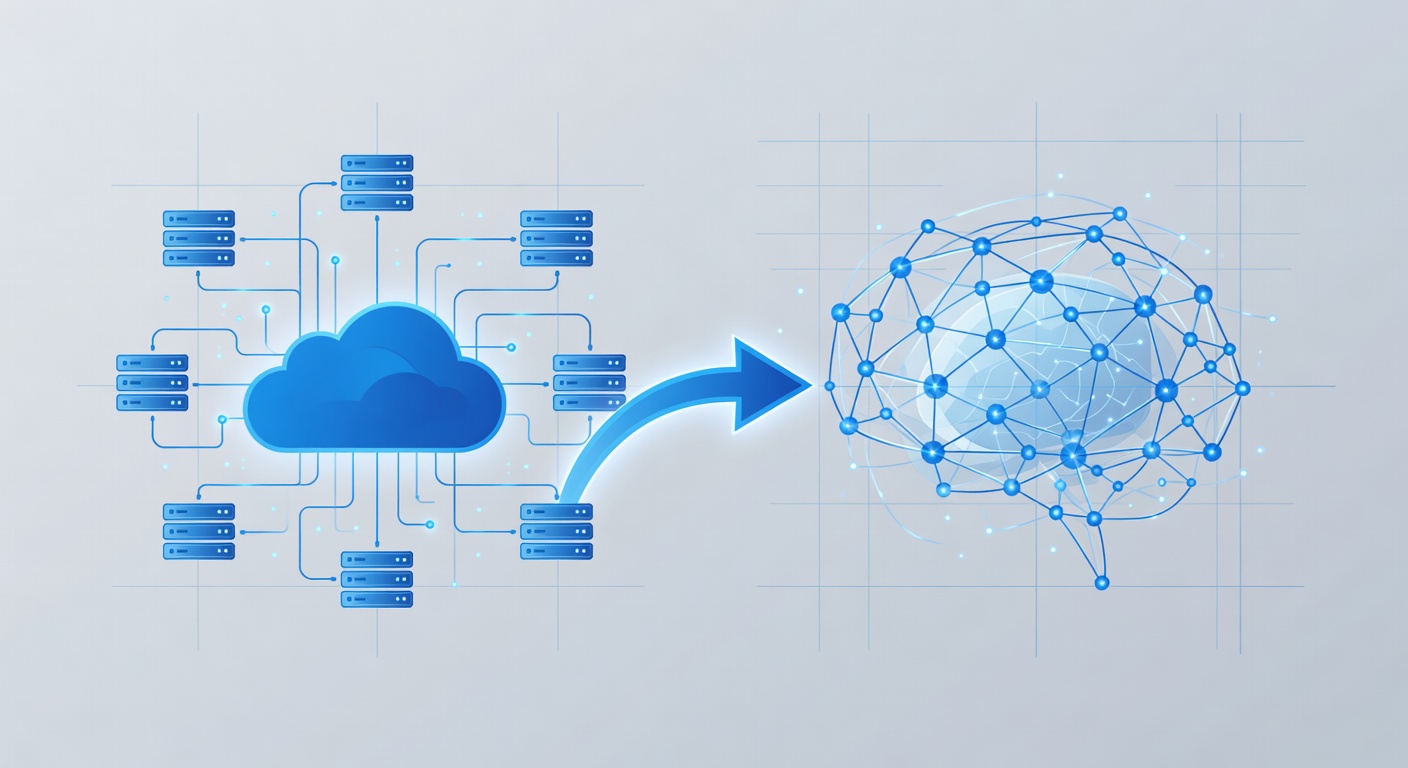
Building Safer AI: How Sandboxed Coding Agents Are Changing Development Workflows
Building Safer AI: How Sandboxed Coding Agents Are Changing Development Workflows
The promise of AI-assisted development is intoxicating. Imagine agents that write code, test it, debug it, and deploy it—all while you sip your morning coffee. The reality? It's more complicated. Giving AI unrestricted access to your codebase or infrastructure is like handing car keys to a teenager who just learned to drive. Thrilling in theory, terrifying in practice.
Enter Mistle: an open-source platform designed to tackle one of the most pressing challenges in AI development—how to safely run and automate coding agents without compromising security or control.
The Problem With Unrestricted AI Code Execution
Today's AI models are genuinely impressive at code generation. They understand context, follow patterns, and can solve non-trivial problems. But they're not infallible, and more importantly, they shouldn't have unfettered access to your systems.
Consider the risks:
- Malicious or buggy generated code accidentally deleting databases or exposing secrets
- Supply chain vulnerabilities introduced through automated dependency management
- Resource exhaustion when an agent spins up infinite loops or expensive operations
- Compliance violations when sandboxless agents interact with regulated data
Traditional approaches to this problem either restrict AI too heavily (rendering it nearly useless) or don't restrict it at all (keeping you up at night). The industry has been searching for a middle path.
What Makes Sandboxing Essential
Sandboxing isn't new. Docker, VMs, and containerization have been around for years. What's different now is the why. We're not just isolating untrusted third-party code anymore—we're isolating AI agents that we've trained to be productive but haven't trained to be trustworthy.
A proper sandbox for coding agents needs:
Execution Isolation: Code runs in a completely separate environment, unable to access the host system or other containers. If an agent goes rogue, the damage is contained.
Resource Limits: CPU, memory, disk, and network quotas prevent runaway processes. An infinite loop stays infinite within its own boundaries.
Audit Trails: Every action the agent takes is logged. You know exactly what executed, when, and with what outcomes. This is critical for debugging and compliance.
Controlled I/O: Agents can read and write files, make API calls, or access databases—but only through explicitly allowed channels. No surprise exfiltration.
Deterministic Environments: The agent operates in a predictable context. Same code always runs against the same tools and dependencies, making results reproducible.
How Mistle Approaches the Problem
Mistle takes an infrastructure-first approach to agent safety. Rather than trying to police agent behavior through software restrictions alone, it builds a secure execution environment from the ground up.
The platform handles the operational complexity of running agents safely, so developers can focus on the interesting problem: what should the agent actually do?
For developers building AI workflows, Mistle abstracts away the infrastructure plumbing. Define what tasks your agent should handle, what tools it can access, and what constraints it operates under. The platform handles the rest.
For teams deploying agents to production, Mistle provides visibility and control. Monitor agent execution in real-time, set resource budgets, enforce approval workflows, and audit everything.
For organizations managing compliance requirements, the detailed logging and isolation guarantees help satisfy security and regulatory mandates.
The Broader Context: AI-Assisted Development at Scale
This tool emerges at an interesting inflection point in AI development. We're moving beyond "AI writes my code snippets" toward "AI autonomously manages parts of my development pipeline."
That shift requires infrastructure designed for this reality. You wouldn't run untrusted binaries on your production servers. Similarly, you shouldn't run unvetted AI agents without sandboxing.
The open-source nature of Mistle is particularly interesting. A closed-source sandboxing platform would face an inherent trust problem—how do you know it actually contains the threat? Open-source code can be audited, forked, and improved by the community. For security-critical infrastructure, that transparency matters.
Practical Implications for Your Stack
If you're experimenting with AI agents—whether through OpenAI's function calling, Claude's tools, or custom implementations—sandboxing should be on your radar.
Consider where agents could add value in your workflow:
- Automated code reviews: Agents analyzing pull requests and suggesting improvements
- Infrastructure automation: Provisioning, monitoring, and incident response
- Documentation generation: Keeping docs in sync with code changes
- Testing and quality assurance: Generating test cases and identifying edge cases
Each of these adds risk if the agent has unrestricted access. Sandboxing lets you unlock the productivity gains while managing the downside.
What This Means for Hosting and Deployment
For platforms like NameOcean offering cloud infrastructure and AI-powered services, tools like Mistle represent an essential building block. Managed sandboxing could become a standard offering—"run your AI agents safely, we handle the security."
This is similar to how managed databases or container registries became commoditized. The underlying technology (sandboxing) is complex and operational-heavy. Abstracting it into a service makes it accessible to teams that don't have dedicated DevOps staff.
Looking Ahead
The intersection of AI and infrastructure is still nascent. Mistle is one data point in a larger trend: the infrastructure layer needs to evolve to safely accommodate AI agents as first-class citizens in our development workflows.
Whether you use Mistle specifically or another solution, the principle is sound: never run untrusted code—including AI-generated code—without isolation and visibility.
The future of development involves humans and AI working together. Making that partnership safe, auditable, and controllable is the infrastructure challenge of the moment. Tools addressing this problem aren't nice-to-have—they're essential.