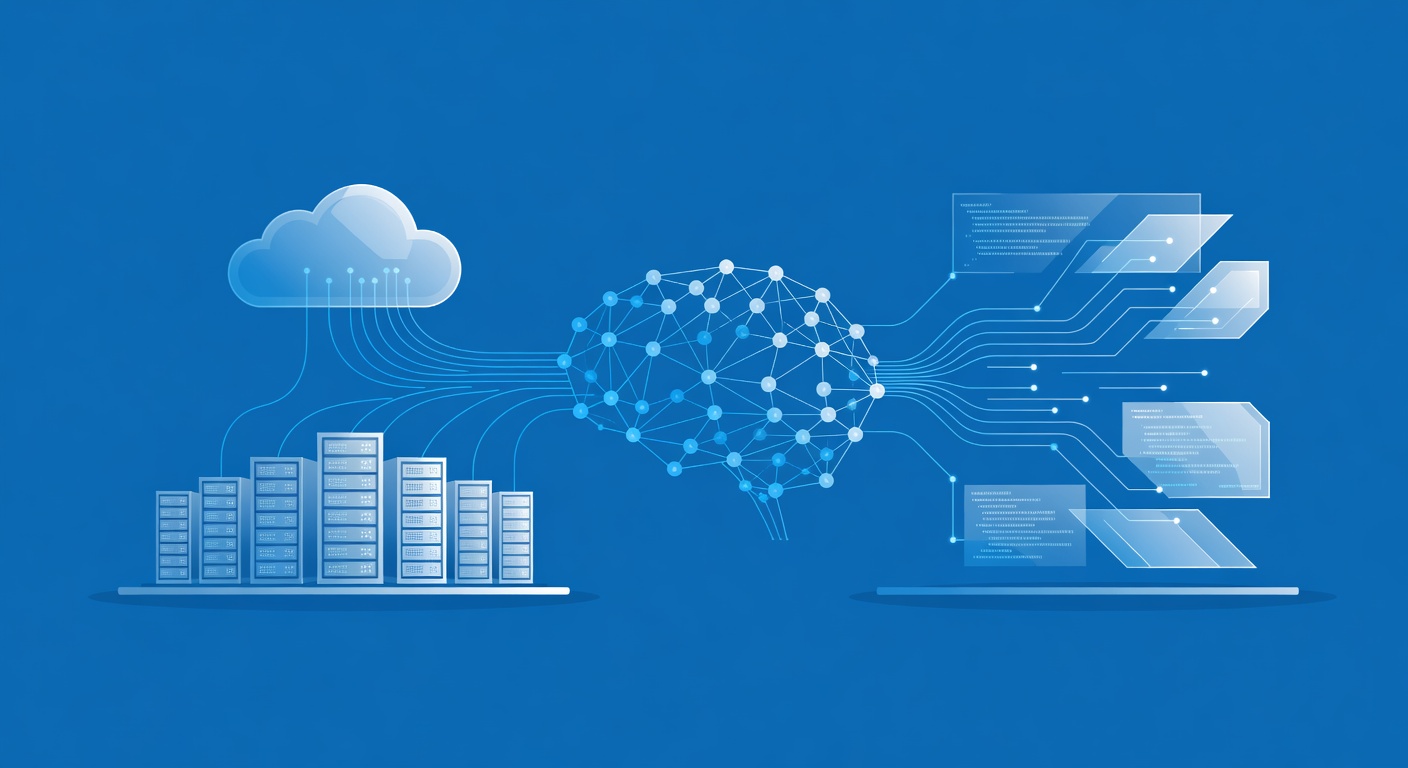
Building Data Pipelines That Don't Drain Your Budget: Smart Web Scraping for AI Teams
Building Data Pipelines That Don't Drain Your Budget: Smart Web Scraping for AI Teams
If you're building an AI startup in 2024, you've probably experienced the same scenario a hundred times: your data scientist asks for another 50GB of training data, your ops engineer winces, and suddenly you're staring at a five-figure bill for bandwidth and infrastructure.
The reality is brutal. Quality datasets are oxygen for machine learning models, but acquiring them at scale has traditionally meant choosing between three unpalatable options:
- Option A: Pay premium prices for curated datasets (enterprise licensing is rough)
- Option B: Build your own scraping infrastructure and maintain it yourself (engineering time bleeds budget)
- Option C: Use free tools that choke under production load (ask me how I know)
There's actually a fourth path that's worth exploring.
The Economics of Data Collection: Why Bandwidth Costs Matter
Let's talk numbers. When you're training language models, vision systems, or recommendation engines, you're not dealing with kilobytes—you're dealing with terabytes. A modest AI training pipeline might consume 100GB of data per week. At standard cloud bandwidth rates, you're looking at $3,000-$5,000 monthly just for data transfer.
Now multiply that by the number of scraping experiments you're running. The friction becomes real fast.
The challenge isn't just the cost—it's the opportunity cost. Money spent on infrastructure is money not spent on hiring, product development, or improving your core model. This is especially brutal for early-stage teams operating on seed funding.
Rethinking Your Scraping Architecture
Here's what we're seeing work well across the developer ecosystem:
1. Distributed Collection Over Monolithic Infrastructure
Instead of running massive scraping operations through a single cloud region, distribute your collectors across multiple lightweight nodes. This spreads bandwidth costs across different providers and reduces the damage when one source rate-limits you.
Think of it like load balancing, but for your data acquisition layer.
2. Residential IP Rotation
This is the unsexy but crucial part: most websites can detect and block data center IPs instantly. Residential IP networks that rotate requests through real user connections get significantly fewer blocks, which means less retry overhead and failed requests.
The efficiency gains here are real. You spend less time refetching data and more time actually training models.
3. Pay-as-You-Go Infrastructure
The old model required massive upfront commitments. Modern scraping infrastructure providers have figured out that startups need flexibility. Per-gigabyte pricing means you only pay for what you actually use, and you can scale up or down without renegotiating contracts.
This is genuinely transformative for early-stage teams because it removes commitment risk from your data pipeline.
What to Look For in a Scraping Partner
If you're evaluating infrastructure for data collection, ask yourself:
Cost Transparency: Can you actually predict what you'll spend? Watch out for hidden minimums, seat licenses, or surprise overage charges.
No Artificial Constraints: Do they require massive setup fees? Long-term contracts? Minimum orders? These are warning signs of inflexible pricing that will bite you when your needs change.
Performance Under Load: Lots of providers work fine at small scale. The real test is whether they maintain speed and reliability when you're pushing actual production volume through their network.
Setup Speed: Your data scientists shouldn't need weeks of back-and-forth with sales teams. You should be scraping within hours of deciding to use a service.
Practical Implementation Tips
Once you've chosen your infrastructure, here's what actually works:
Implement exponential backoff for rate limiting. Start with 1-second delays and double them each time you hit a 429 error. Most sites have reasonable rate limit tolerance if you're respectful.
Monitor your success rate obsessively. Track the percentage of successful requests. If it drops below 95%, you need to adjust your strategy—either rotate IPs more frequently, spread requests across more time, or find alternative data sources.
Cache aggressively. You're going to accidentally re-request the same data. Implement smart caching so that duplicate requests hit your local cache instead of the network. This reduces costs and improves speed simultaneously.
Consider batch collection. Real-time data collection at massive scale is expensive. For many ML applications, you can achieve 95% of the value by running large batch jobs during off-peak hours.
The Real ROI
Here's what proper data collection infrastructure actually enables:
- Faster iteration: You spend less time fighting infrastructure and more time experimenting with models
- Predictable costs: No more surprise bills that force emergency budget meetings
- Competitive positioning: Training on higher-quality, fresher data often beats complex models trained on stale data
- Team focus: Your engineers build your product instead of maintaining scraping tools
Wrapping Up
The mythology around scraping at scale suggests it requires massive capital and engineering resources. The reality is that modern, developer-friendly infrastructure has flipped this equation.
Smart data collection doesn't mean haphazard or unethical approaches. It means being intentional about infrastructure choices, respecting rate limits, and choosing partners that understand the constraints of early-stage teams.
Your AI model is only as good as your training data. Make sure the infrastructure supporting that data collection is building your competitive advantage, not draining your budget.
What's your data pipeline looking like? Building on something that works well for you? Drop a line on Twitter or in the comments—we're always excited to hear what's working in the field.