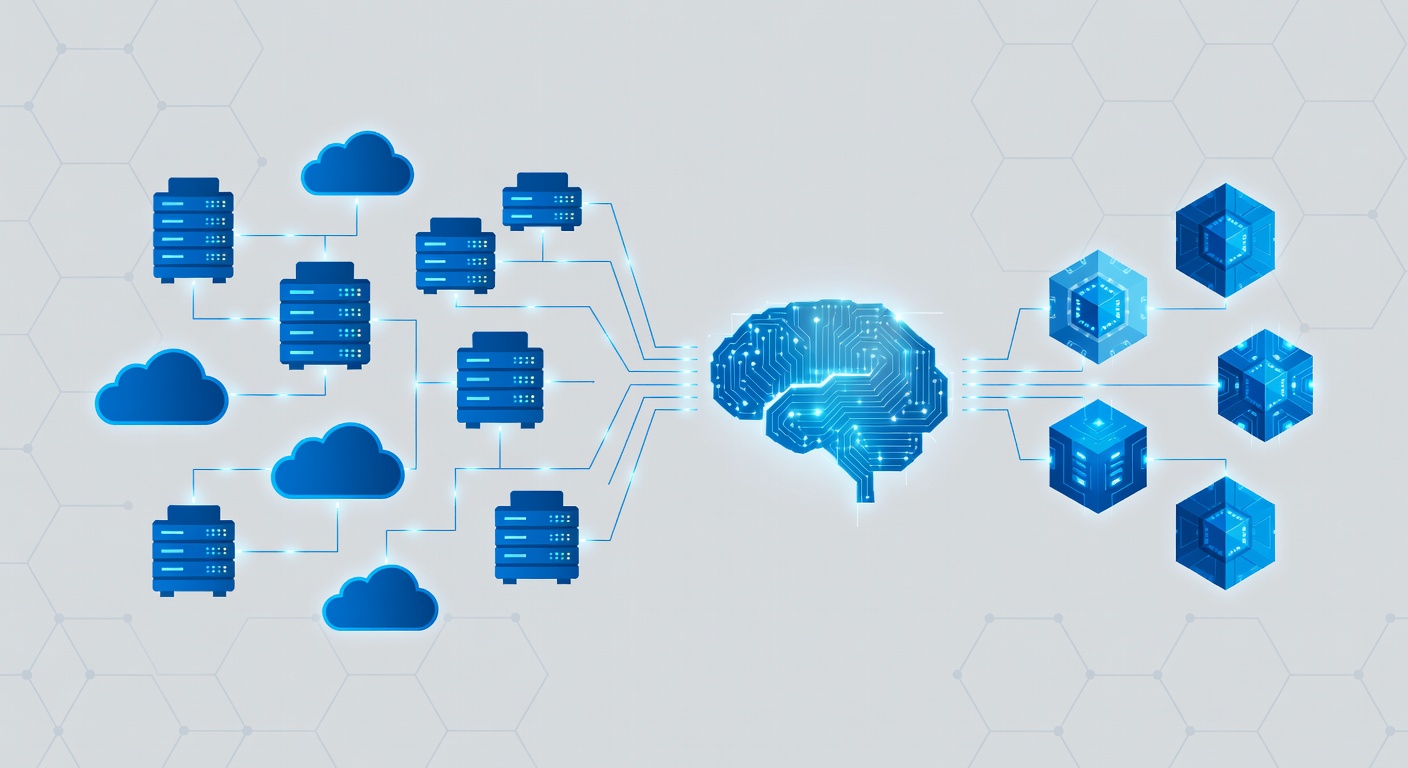
Building Brain-Like Memory Systems: The Rise of Local-First Context Management
Building Brain-Like Memory Systems: The Rise of Local-First Context Management
Remember the last time you switched between five different projects, lost your train of thought, and had to spend 30 minutes reconstructing what you were working on? Yeah, we've all been there. The friction between human memory and machine state management is real—and someone's finally building a solution.
The Memory Gap in Modern Development
As developers, we're constantly juggling context. Your AI assistant doesn't remember what you discussed yesterday. Your deployment notes get scattered across Slack threads. Your architectural decisions live in abandoned RFC documents. Meanwhile, machine learning models are getting smarter at understanding nuance, but they're doing it without access to your specific knowledge base.
This disconnect creates what we might call the "context collapse"—that moment when a tool has to start from scratch because it lost the thread of your ongoing work.
What Makes Local-First Memory Different
Enter the concept of convergent memory systems—a technical approach that's gaining serious attention in developer tooling circles. Unlike cloud-dependent systems that sync your data to external servers, local-first memory keeps everything on your machine while maintaining the ability to synchronize intelligently across devices and collaborate with teammates.
Here's what makes this approach compelling:
Ownership & Privacy: Your project context, architecture notes, and decision history stay encrypted and local. No third-party SaaS platform acts as a middleman.
Single Binary Simplicity: Instead of managing multiple tools, plugins, and integrations, you get one executable that handles memory persistence, context retrieval, and state management.
Convergence Over Conflict: Rather than traditional sync conflicts, a convergent memory system uses mathematical principles (often from CRDT technology—Conflict-free Replicated Data Types) to merge changes intelligently across your devices and team members.
Speed at the Edge: Everything runs locally first, meaning instant access to your context without network latency. It's the difference between a 50ms context retrieval and waiting for an API call.
Why This Matters for Humans AND Machines
The brilliance here is the "convergent" part. As AI agents become more integrated into development workflows, they need persistent memory of your preferences, past solutions, and project-specific patterns. But they shouldn't own that memory—you should.
Imagine:
- Your IDE suggests solutions based on architectural decisions made six months ago
- Your AI pair programmer remembers why you rejected similar approaches before
- Team members can asynchronously reference shared context without endless Slack scrollback
- Everything works offline, then syncs when you reconnect
This is the difference between "AI as a black box" and "AI as an informed collaborator."
The Technical Foundation
Under the hood, systems like this typically leverage:
- CRDT implementations for merge-without-conflict data synchronization
- Local file-based storage with optional encryption layers (ideal for developers already using Git)
- Graph-like memory structures that preserve relationships between concepts, not just linear logs
- Efficient indexing to make context retrieval fast enough for real-time use
The "single-binary" approach is particularly elegant—it eliminates the dependency hell of managing multiple services while staying lightweight enough to run on resource-constrained environments.
The Broader Trend: Reclaiming Developer Agency
This fits into a larger movement we're seeing: developers reclaiming agency over their tooling. After years of SaaS sprawl and subscription fatigue, there's renewed interest in:
- Self-hosted alternatives to cloud platforms
- Local-first applications that don't require constant connectivity
- Privacy-preserving tools that don't monetize your data through training datasets
- Open-source solutions you can audit and modify
For domain registrars and hosting providers (like NameOcean), this trend means rethinking how we serve developers. It's not just about DNS records and cloud resources anymore—it's about creating ecosystems where developers maintain control while getting intelligent assistance.
What's Next?
As AI becomes more integrated into development workflows, the importance of persistent, trustworthy context management will only grow. The question isn't whether you'll need memory systems—it's whether you'll trust them to external platforms or keep them under your own roof.
The local-first, convergent approach offers a path forward that respects both machine learning's need for context and developers' need for control.
Have you experimented with context management tools in your workflow? The conversation around this is just getting started.