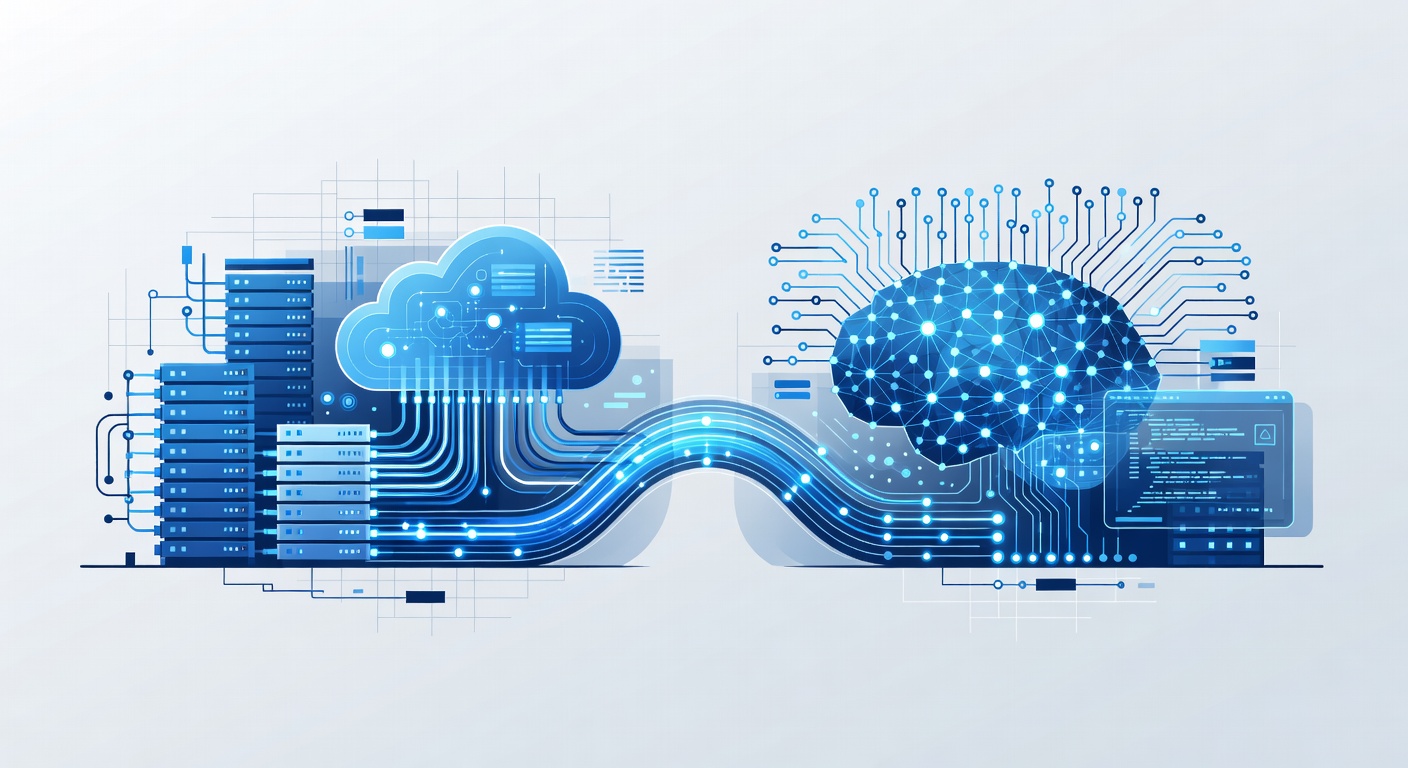
Building Better AI Coding Assistants: Understanding Memory Layers and MCP Integration
The Memory Problem in AI-Assisted Development
When you're working with AI coding assistants, you've probably noticed something frustrating: they sometimes lose context. You explain a coding problem, they offer a solution, but when you follow up with a related question, they seem to have forgotten crucial details about your project structure, naming conventions, or architectural decisions.
This isn't a bug in the AI model itself—it's a limitation in how assistants manage and persist information during development sessions. Traditional approaches treat each interaction as somewhat isolated, requiring developers to constantly re-provide context.
What's a Byte-Page Memory Layer?
Think of a byte-page memory layer as a structured filing system for code context. Instead of storing information as loose text snippets, this approach organizes data into discrete "pages"—fixed-size chunks of bytes that can be efficiently retrieved, updated, and managed.
The beauty of this architecture is its losslessness. Nothing gets corrupted, compressed, or distorted as it's stored and retrieved. For developers working with AI assistants, this means:
- Precise code references: Exact file paths, line numbers, and function signatures stay intact
- State consistency: Variable values, type definitions, and configurations don't degrade over time
- Efficient retrieval: The AI can quickly access exactly what it needs without parsing ambiguous representations
MCP: The Standard That Changes Everything
Model Context Protocol (MCP) is emerging as a crucial standard for how AI assistants interact with development tools and environments. Rather than each AI tool building its own integration layer with IDEs, version control systems, and build tools, MCP provides a unified interface.
When you combine a lossless byte-page memory system with MCP-capable AI assistants, you get something powerful: assistants that can meaningfully participate in your development workflow without constantly losing their bearings.
An MCP-enabled coding assistant with proper memory management can:
- Maintain awareness of your entire project structure across sessions
- Remember design decisions and architectural patterns you've established
- Access real-time information about your codebase through standardized protocols
- Provide contextually relevant suggestions based on accumulated project knowledge
The Real-World Impact for Developers
Let's ground this in practical scenarios:
Scenario 1: Complex Refactoring You're refactoring a large module. With proper memory management, your AI assistant can track all the changes you've made so far, understand interdependencies you've identified, and suggest refactoring patterns that align with decisions you've already committed to.
Scenario 2: Cross-File Consistency You're updating an API contract across multiple files. Instead of re-explaining the API structure each time, your assistant remembers the schema, naming conventions, and related endpoints. It catches inconsistencies proactively.
Scenario 3: Learning Your Preferences Over time, your assistant learns your coding style, preferred patterns, and architectural principles. It's not just offering generic solutions—it's offering solutions that fit how you work.
Why Lossless Matters
In traditional systems, information often gets lossy—meaning some details are sacrificed for efficiency or brevity. An AI might summarize your code structure using natural language approximations. When that information is retrieved, it's already imprecise.
Lossless byte-page architecture preserves the raw, exact information. This matters enormously because:
- Debugging becomes collaborative: When an AI knows the exact state of variables and function calls, it can actually help you trace problems
- Suggestions are more reliable: Generated code isn't based on fuzzy recollections of your code structure
- Integration is seamless: External tools connecting via MCP get accurate information to work with
Building the Future of AI Development Tools
Projects like Amnitex represent an important shift in how we think about AI-assisted coding. Rather than treating AI assistants as stateless tools that answer isolated questions, developers are building systems where these tools can maintain genuine understanding and awareness.
At NameOcean, we're watching these developments closely. As cloud infrastructure becomes more AI-integrated and development tools increasingly leverage AI assistance, having standardized protocols like MCP and robust memory architectures will be crucial.
The developers building these systems are essentially asking: "What if our AI coding assistants could actually remember our project?"
The Takeaway
Whether you're evaluating AI coding assistants for your startup or considering how AI might integrate into your development workflow, memory architecture matters. Systems that maintain lossless, structured context through standardized protocols like MCP represent a significant leap forward.
The next generation of AI-assisted development won't just be about smarter models—it'll be about better infrastructure for those models to work with. Byte-page memory layers and MCP integration are essential pieces of that foundation.
Stay curious about these evolving standards. They'll likely influence the development tools you use within the next couple of years.