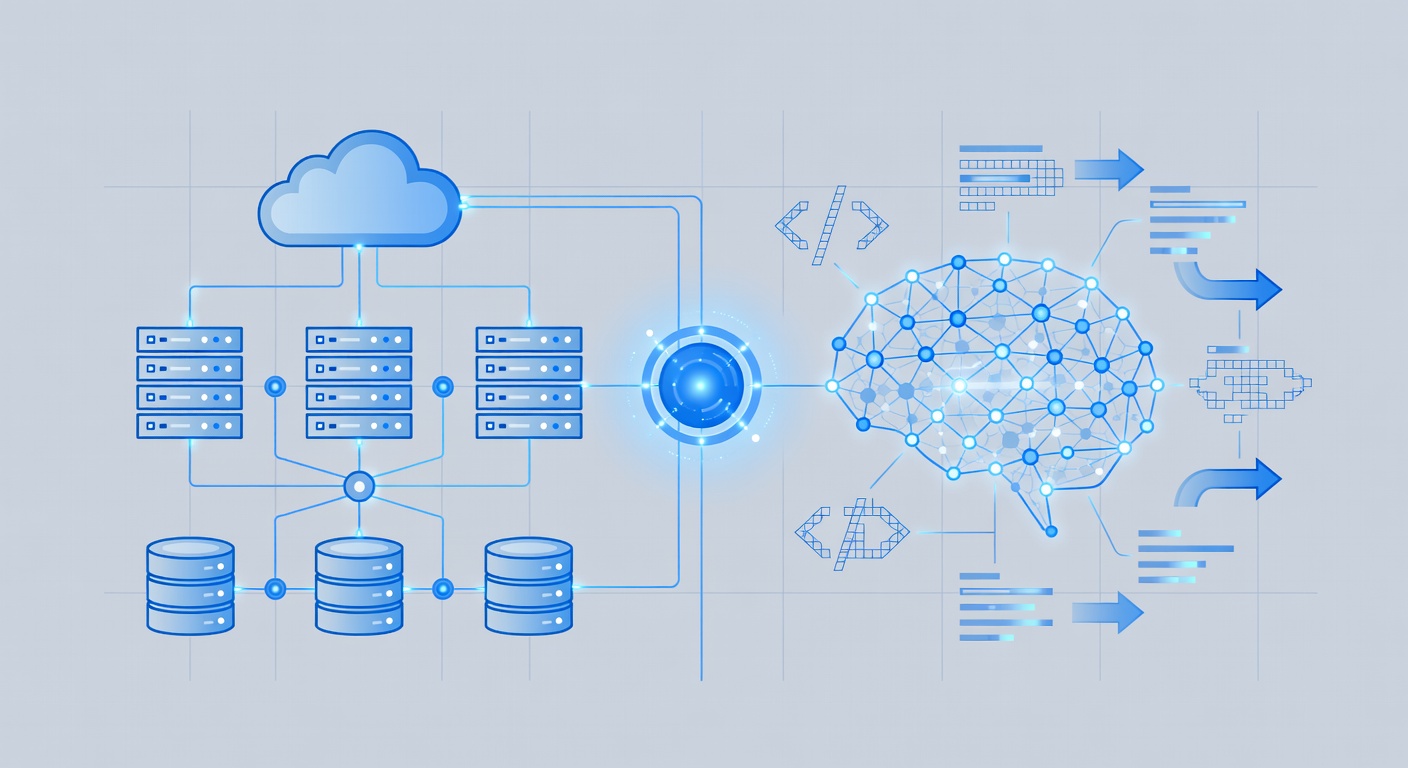
Bridging the Gap: How AI Coding Assistants Are Learning to Love Dev Containers
Bridging the Gap: How AI Coding Assistants Are Learning to Love Dev Containers
The Dev Container Problem Nobody Talks About
You've probably experienced this: You're working in a beautifully configured dev container—Node 18, PostgreSQL 15, Redis all running in perfect harmony. Your teammates have the exact same setup. Then you open Copilot or Claude Code expecting intelligent suggestions, and... the AI assistant has no idea what's actually running in your environment.
This isn't a hypothetical problem. It's a real friction point that teams face when trying to harness AI-powered development alongside containerized workflows. The AI sees your code, but it doesn't see your actual runtime context. It doesn't know about your dependencies, your database schema, or which version of your framework is actually running.
Enter the Model Context Protocol
The Model Context Protocol (MCP) is essentially a communication bridge between AI systems and external tools. Think of it as a translator that lets language models understand and interact with specialized environments in a structured way.
What makes the devcontainer-mcp project particularly elegant is that it specifically targets this container-to-AI gap. Rather than treating your dev container as a black box, the MCP makes it possible for Copilot and Claude Code to:
- Query what's actually installed in your container
- Execute commands and understand their output
- Access file systems and project structures with proper context
- Make suggestions based on your actual runtime environment
This is genuinely different from generic code completion. The AI isn't guessing—it's informed.
Why This Matters More Than You Think
Accuracy Gets a Boost
When Claude or Copilot understand your actual environment, suggestion quality improves dramatically. No more recommendations for a package version your container doesn't support. No more suggestions using syntax from a framework version you're not even running.
Onboarding Gets Faster
New team members can spin up a dev container and immediately have an AI assistant that understands the exact setup they're working with. The learning curve flattens. Pair programming with AI becomes more practical.
Container Strategy Meets AI Strategy
Companies investing in containerized development workflows can now fully leverage AI coding assistants without compromise. It's not an either-or decision anymore—it's additive.
How It Works (The Technical View)
While we won't dive into implementation details, the concept is straightforward:
The MCP acts as an intermediary that the AI can query. When you ask Copilot a question about your project, it can now ask the container: "What npm packages are installed?" or "What's the structure of the database?" The container responds, and the AI generates more contextually accurate responses.
This creates a feedback loop where your development environment becomes an active participant in the suggestion process, rather than invisible to it.
The Broader Implications
This project hints at something bigger happening in the dev tools ecosystem: context-awareness is becoming the baseline expectation for AI development assistants.
Tools that ignore your actual runtime environment will feel increasingly obsolete. Tools that integrate deeply with your workflow—containers, cloud platforms, databases—will become indispensable.
At NameOcean, we're thinking about how similar principles apply to web development. Whether you're deploying to our Vibe Hosting or managing domains and DNS configurations, the same principle applies: AI assistance is most valuable when it understands your actual infrastructure, not just your code.
What's Next?
If you're running a containerized development workflow, this is worth exploring. The open-source nature of the devcontainer-mcp project means it's evolving with community input. Expect to see:
- More robust integration with different container configurations
- Expanded support for additional AI models and coding assistants
- Better handling of multi-container architectures (Docker Compose setups)
- Closer integration with CI/CD pipelines
The future of development tools isn't about replacing your workflow—it's about making your workflow smarter and more aware of itself.
Want smarter development workflows? At NameOcean, we're committed to tools that understand your infrastructure. Whether you need reliable domain management, cloud hosting that scales with your containers, or DNS configuration that doesn't slow you down, we've built our platform with developers in mind. Check out Vibe Hosting to see how AI-powered infrastructure can complement tools like devcontainer-mcp.