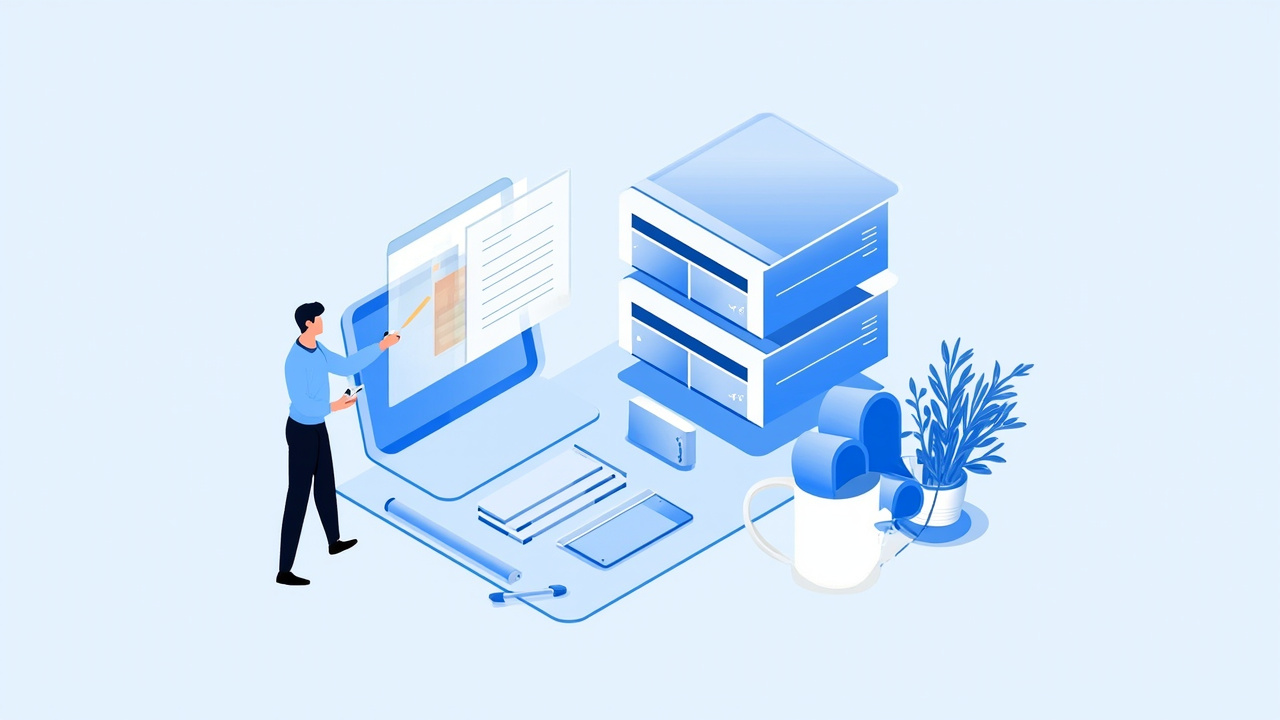
Kódtörténet: az MI-ügynökök csak a programozás legújabb fejezete
Why AI Won't Kill Software Development (And What It Will Change Instead)
Every few months, tech Twitter explodes with another doomsday prediction: "AI is coming for developer jobs." And every few months, senior engineers just sigh. This anxiety isn't new—it's been recycled since the first compiler was written.
Here's what the numbers actually show. In 1935, about 2,000 people worked as "calculator-tabulator operators" in the US. By 1965, we had 80,000 programmers. By 1995, half a million. Today? Over 2.5 million. The profession didn't just survive automation panic—it absolutely ballooned.
So what really changed? Not whether people write code, but how and why they write it.
The Moving Target
Here's what's fascinating: every decade, someone announces that the "real skill" of software development has finally been automated away.
First, compilers made assembly accessible. Then high-level languages hid memory management. Then frameworks handled the boring patterns. Now AI promises to write the actual code.
Each time, the same thing happened: the bottleneck just moved up the chain.
Back in the day, competitive advantage meant knowing hardware architecture inside and out. You held complex state in your head, spoke fluent compiler-ese. Today? That knowledge still matters, but it's expected. Baseline. Table stakes.
Modern developers spend most of their time on messier stuff: figuring out what to build, making sure it actually works and being the one to blame when it doesn't, and holding all that unspoken context that connects business reality to technical decisions. This has always been true. We just notice it more now that the "typing code" part is increasingly handleable by machines.
Think Like a Crane Operator
Researchers Arvind Narayanan and Sayash Kapoor made a point that stuck with me: as AI handles more of the execution layer, developers start looking more like crane operators on a construction site.
Modern construction sites are seriously impressive. A crane operator doesn't heave materials by hand—they command a powerful machine that does the heavy lifting. The skill isn't physical strength. It's knowing what to lift, where it goes, and how to coordinate with the whole operation.
Same thing with AI coding tools. Developers aren't frantically hammering out syntax anymore. They're guiding intelligent tools, checking outputs, snapping pieces together, and—crucially—deciding what those pieces should be in the first place.
Cranes didn't eliminate construction workers. They transformed construction. And suddenly we could build skyscrapers, not just two-story buildings.
The Real Bottleneck Was Never Code
Here's something that gets lost in all the AI-vs-developers hand-wringing: writing code was never the hard part.
If code generation were the bottleneck, we'd have solved software development ages ago. We have powerful languages, massive library ecosystems, decades of patterns to copy from. The actual blockers have always been:
Deciding what to build — Requirements are fuzzy, stakeholders fight about priorities, and the right solution often needs understanding stuff that doesn't fit in a Jira ticket.
Making sure it's actually correct — "Works" and "correct" are different things. Code might be insecure, fragile, or incompatible with everything else. Someone has to own that.
Holding the institutional memory — Codebases get tangled up with business logic, user quirks, and organizational history. Nobody writes this down. It lives in senior developers' heads.
AI tools are getting scary good at generating code. They're improving at context. But they're not about to navigate office politics, sign their name on a security audit, or explain why a business rule exists because of a decision made fifteen years ago.
The 270 Jobs Reality Check
This one should cool every AI evangelist's jets: the 1950 U.S. Census listed 270 distinct occupations. Exactly one was eventually fully automated—elevator operator.
Others got transformed or shrunk. Telegraph operators. Typesetters. But not zeroed out. Meanwhile, new technologies spawned whole categories of work that didn't exist before.
We're already seeing this. AI engineers and prompt engineers are now legitimate job titles. More quietly, developers who can effectively direct AI tools are in demand. These roles didn't exist five years ago.
What This Means in Practice
If you're running a startup or managing devs, here's the takeaway: the most valuable developers in the AI era aren't necessarily the fastest coders.
They're the ones who can:
- Clearly explain what to build and why it matters
- Understand the business deeply enough to make judgment calls
- Know how to review and trust (appropriately) AI-generated code
- Stitch different pieces into working systems
- Carry the institutional knowledge that lets future work happen
Technical skills still matter, obviously. The crane operator still needs to know load limits and physics. But raw typing speed? That's not the job anymore.
A Hosting Parallel
This connects to what we see with infrastructure. At NameOcean, we've watched hosting evolve from requiring deep sysadmin knowledge to mostly managed services. You used to need a Unix wizard to run a web server reliably. Now? A few clicks deploys a globally distributed application.
That automation didn't kill infrastructure expertise. It reshaped it. Today, the valuable skill is knowing which managed services to pick, how to architect for growth, and when you actually need to drop down to lower-level config.
AI coding tools are the same shift for software development. The grunt work automates. The judgment work stays human.
Looking Ahead
We're in that uncomfortable transition zone. The tools are powerful but imperfect. The workflows are still figuring themselves out. Nobody's cracked the "correct" way to use AI assistants yet.
That's the point, honestly. Every major software shift—from assembly to high-level languages, monoliths to microservices, on-premise to cloud—felt chaotic while it was happening. Chaos is where the opportunity lives.
The developers who thrive won't be the ones fighting AI tools. They'll be the ones who figure out how to use them well—who build the judgment, the context, the coordination skills that AI can't copy.
The code will increasingly write itself. The interesting questions—what code to write, and why—will stay beautifully, stubbornly human.
What shifts have you noticed in your own workflow? Using AI coding assistants yet? What's actually changed about how you spend your time? Drop your experience below—I'd love to hear how this evolution is playing out in real teams.